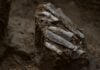
A groundbreaking DNA analysis has identified the earliest confirmed case of a genetic disorder in a human, dating back 12,000 years. The remains, discovered in an Italian cave in 1963, belonged to a teenage girl who suffered from a severe form of dwarfism called acromesomelic dysplasia, Maroteaux type (AMDM). This condition dramatically shortened her limbs, impacting her forearms, legs, hands, and feet.
The First Genetic Diagnosis of its Kind
The discovery, published in the New England Journal of Medicine, marks a milestone in medical history. Researchers extracted DNA from the skeleton – nicknamed “Romito 2” after the Romito Cave where she was found – and pinpointed mutations in the NPR2 gene responsible for bone growth. This is the earliest diagnosis of a rare genetic disease by roughly 10,000 years, and the first definitive familial case identified through ancient DNA.
A Family History of Genetic Variation
Interestingly, Romito 2 was buried alongside another individual, “Romito 1,” who DNA testing revealed was her close relative – likely either her mother or sister. Romito 1 also carried one copy of the mutated NPR2 gene, though she was not as severely affected, standing at around 4’9” tall compared to Romito 2’s 3’7”. This suggests the genetic condition may have been present in the family lineage.
Implications for Early Human Populations
The findings offer insight into the genetic diversity of early hunter-gatherer populations in Europe. Both Romito 1 and Romito 2 belonged to the Villabruna genetic cluster, a group that migrated across Southern Europe around 14,000 years ago. While the small population size likely meant limited genetic variation, there’s no evidence of extensive inbreeding.
Community Care in the Stone Age
Despite the challenges posed by her condition, Romito 2’s remains indicate she was well-cared for by her community. Her diet and nutritional status were comparable to other individuals buried in the cave, suggesting she received adequate support. There are no signs of trauma to indicate foul play or neglect. The researchers conclude that the family group met her challenges with care.
This discovery highlights that even in prehistoric times, communities provided for those with genetic conditions, challenging the notion that early humans only valued physical strength and survival. The ancient DNA of Romito 2 offers a rare glimpse into the lives of our ancestors, revealing that compassion and support were present long before modern medicine.