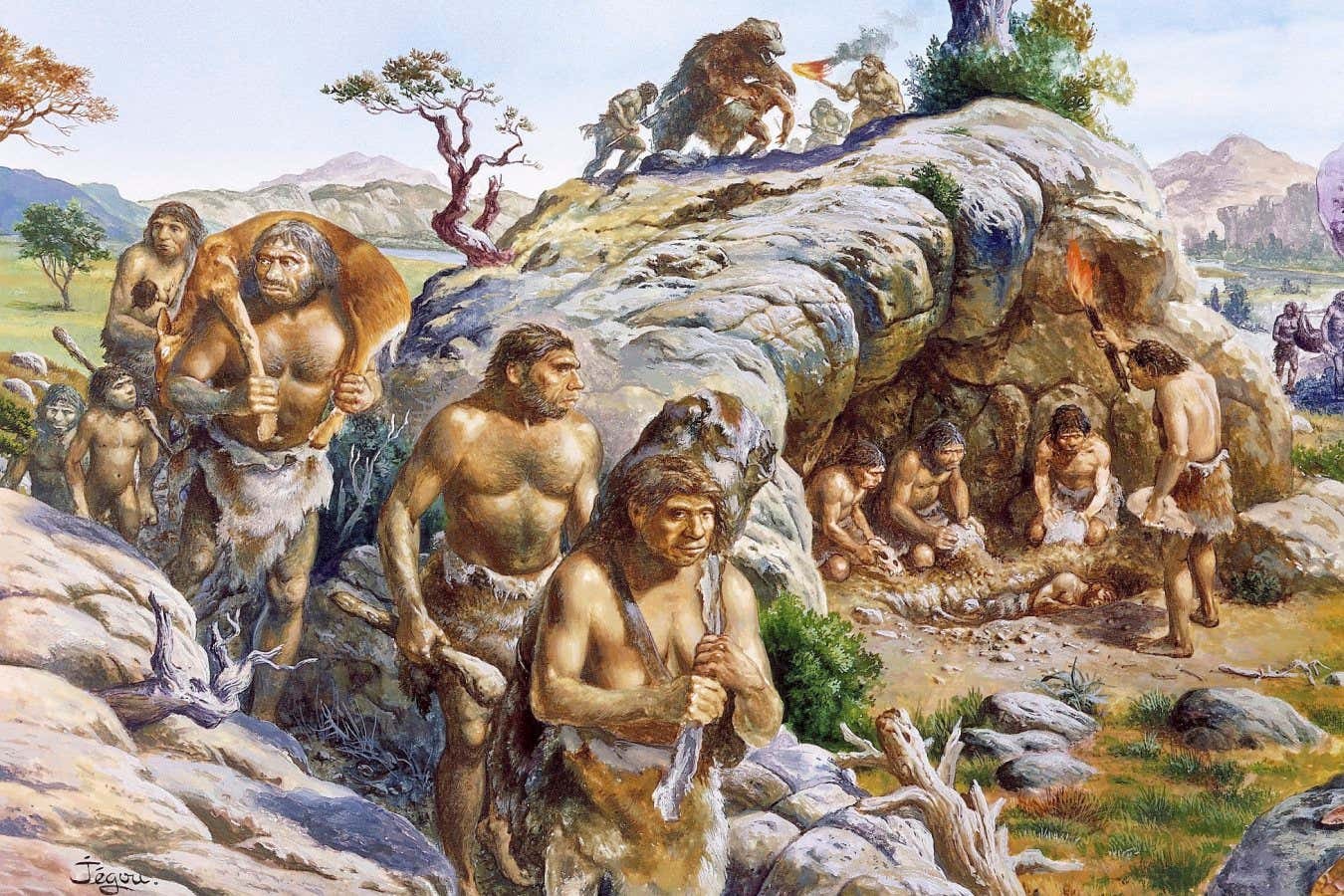
Recent genetic studies confirm that interbreeding between Homo sapiens and Neanderthals wasn’t limited to a single region, but occurred across much of Eurasia. The analysis of over 4,000 ancient genomes reveals a sustained period of hybridization as modern humans expanded out of Africa roughly 50,000 years ago, suggesting this wasn’t a rare event but a common feature of early human migration.
The Scope of Interbreeding
For decades, scientists have known that most modern non-African populations carry around 2% Neanderthal DNA. This proves past interbreeding, but the location and scale of these encounters remained unclear. New research indicates that the hybrid zone stretched from western Europe deep into Asia, covering most of the known Neanderthal range. This zone wasn’t a single isolated event; instead, genetic data suggests a continuous series of interactions over thousands of years.
How the Study Was Conducted
Researchers led by Mathias Currat at the University of Geneva analyzed genetic variants from 4,147 ancient samples, dating back 44,000 years. They tracked the proportion of Neanderthal-derived DNA (introgressed alleles) to map the extent of hybridization. The proportion of Neanderthal DNA increased consistently the further away from the eastern Mediterranean region, eventually plateauing at around 3,900 kilometers in both western and eastern directions.
Implications of the Findings
This study challenges previous theories that interbreeding was concentrated in western Asia. The evidence now points to a broader, more geographically dispersed pattern. Homo sapiens populations likely encountered and hybridized with smaller, isolated Neanderthal groups as they spread across Eurasia, effectively “mopping them up” as one researcher put it.
The genetic signature of this interbreeding is visible today in the genomes of people worldwide, though the Neanderthal Y chromosome has largely been replaced by Homo sapiens lineages. Notably, the Atlantic fringe of Europe – western France and Iberia – appears less affected, either because hybridization didn’t occur there, or because the available genetic samples don’t capture it.
The study highlights the complexity of early human history and underscores how interactions between species shaped the genetic makeup of modern populations. While the exact timing remains unclear, the evidence suggests that interbreeding was a sustained process, not a singular event.
This discovery reinforces the idea that early human expansion wasn’t simply a replacement of Neanderthals, but a messy, intertwined story of coexistence and genetic exchange.