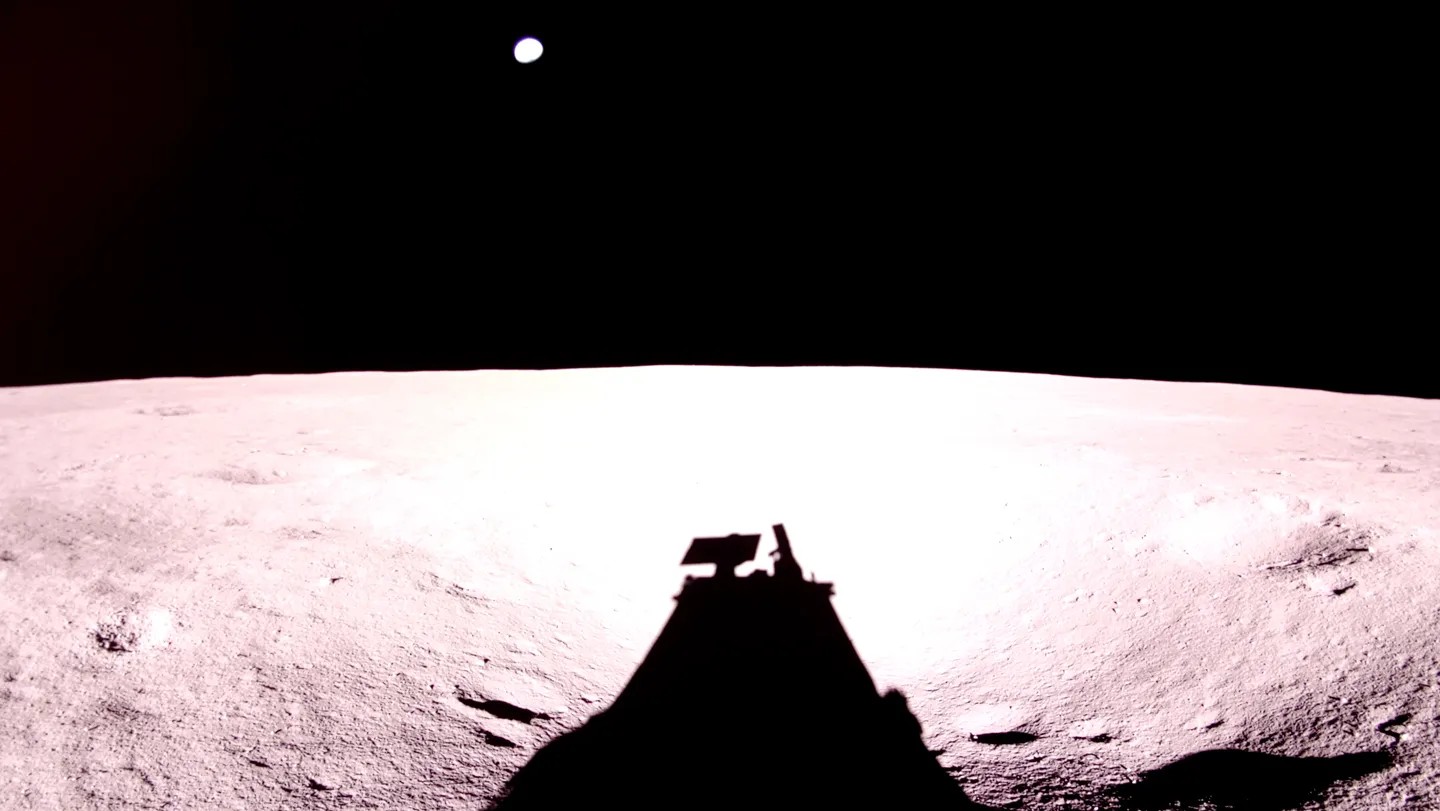
New data from the first privately-funded moon lander suggests that the long-held explanation for the moon’s uneven volcanic activity – concentrated heat-producing elements on the near side – may be incomplete. Measurements taken by Firefly Aerospace’s Blue Ghost lander show surprisingly similar underground temperatures to those recorded by Apollo missions decades ago. This finding raises questions about whether chemical composition alone accounts for the moon’s distinct geological features.
The Mystery of the Moon’s Dark Patches
The moon’s near side is marked by dark, flat plains called maria, formed by ancient lava flows. For years, scientists believed these flows were primarily caused by a concentration of radioactive elements (KREEP) under the nearside, providing enough heat to sustain volcanism. The idea was that the far side lacked this concentration, explaining its lack of extensive lava plains. The Blue Ghost mission aimed to test this theory by landing outside the suspected heat-rich region, in an area called Mare Crisium.
The Unexpected Results
The Blue Ghost lander carried two instruments for measuring internal temperatures: one drilling nearly a meter deep, and another inferring temperatures down to 200 kilometers below the surface. The results were unexpected. The temperature readings were surprisingly similar to those taken by Apollo missions in the 1960s and 70s, despite landing in an area thought to be outside the high-KREEP zone.
Specifically, heat flow measurements from the drill were comparable to those from Apollo 15 and 17. Deeper measurements differed from Apollo 12 by less than 230 degrees Celsius—far less than the expected 700-degree difference. This suggests that the distribution of heat-producing elements may not be the sole determining factor in lunar volcanism.
Alternative Explanations and Ongoing Debate
One alternative explanation proposed by researchers is that the lunar crust is thinner within the Procellarum KREEP Terrane (PKT) – the region with high KREEP concentrations – making volcanic activity easier regardless of heat-producing elements. This suggests that magma may have found easier pathways to the surface due to the thinner crust, rather than relying solely on localized heat.
However, not all scientists agree. Some argue that the 200-degree temperature difference could still be consistent with higher concentrations of heat-producing elements near Apollo 12, and that the PKT may be smaller than previously thought. The debate highlights the need for further data.
Future Missions and the Search for Answers
Another private mission planned for 2027 will carry similar instruments to the Schrödinger crater on the moon’s far side—an area lacking both maria and high concentrations of heat-producing elements. This mission should provide a more definitive test of the current theories.
“Geophysicists might argue about how to interpret the results,” says planetary scientist Mark Wieczorek, “but we are all in agreement that we need more measurements.”
The Blue Ghost mission has already forced a reevaluation of long-held assumptions about lunar volcanism. Further research will be crucial to unraveling the complex processes that shaped the moon’s unique geological landscape.