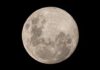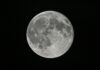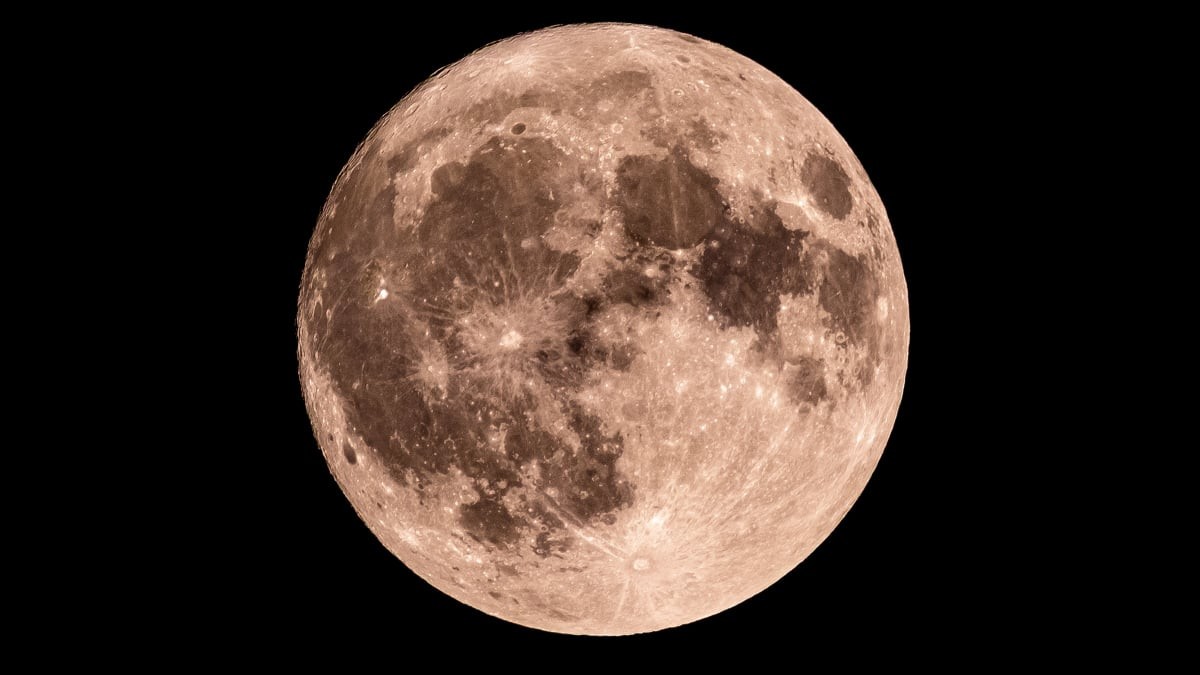
On April 1, 2026, the Moon will reach its full phase, appearing fully illuminated in skies across much of the world. This means that, barring cloud cover, the entire lunar disk will be visible, offering a bright spectacle after sunset or in the early hours of the following morning, particularly for observers in North America.
Observing the Full Moon
The full moon presents an excellent opportunity for stargazers, even without specialized equipment. Visible features include prominent dark areas like the Kepler Crater, the Mare Vaporum (Sea of Vapors), and the Mare Serenitatis (Sea of Serenity).
For those with binoculars, additional details come into view: the Mare Nectaris (Sea of Nectar), Alphonsus Crater, and the Endymion Crater. Amateur astronomers with telescopes can even pinpoint historic landing sites from the Apollo 11, 14, and 15 missions. This is a rare chance to see where humans first walked on another world.
Lunar Cycle Explained
The Moon’s full phase is not an isolated event but part of a predictable 29.5-day cycle. This period governs the progression through eight distinct phases:
- New Moon: The Moon is between Earth and the Sun, rendering its visible side dark.
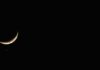
- Waxing Crescent: A sliver of light appears, growing over time.
- First Quarter: Half of the Moon is lit on the right side.
- Waxing Gibbous: More than half is illuminated, nearing fullness.
- Full Moon: The entire face shines brightly.
- Waning Gibbous: Light begins to decrease on one side.
- Third Quarter: The left side is now half-lit.
- Waning Crescent: A diminishing sliver remains before the cycle restarts.
This consistent pattern is due to the Moon’s orbit around Earth and how sunlight reflects off its surface. The Moon’s orbit isn’t perfectly aligned with Earth and the sun, so we never see exactly the same view of the moon twice.
Next Full Moon
The next full moon is projected for May 1, 2026. Notably, May will feature two full moons, an occurrence sometimes referred to as a “Blue Moon” (though this term has various definitions).
The full moon is a reliable spectacle in the night sky, reminding us of Earth’s natural satellite and our place in the cosmos.