For much of the history of digital interaction, our experience with technology has been limited to what we can see and hear. We watch pixels dance on screens and listen to spatial audio, but the sense of touch —the most fundamental way humans interact with their environment—remains largely absent in the digital realm.
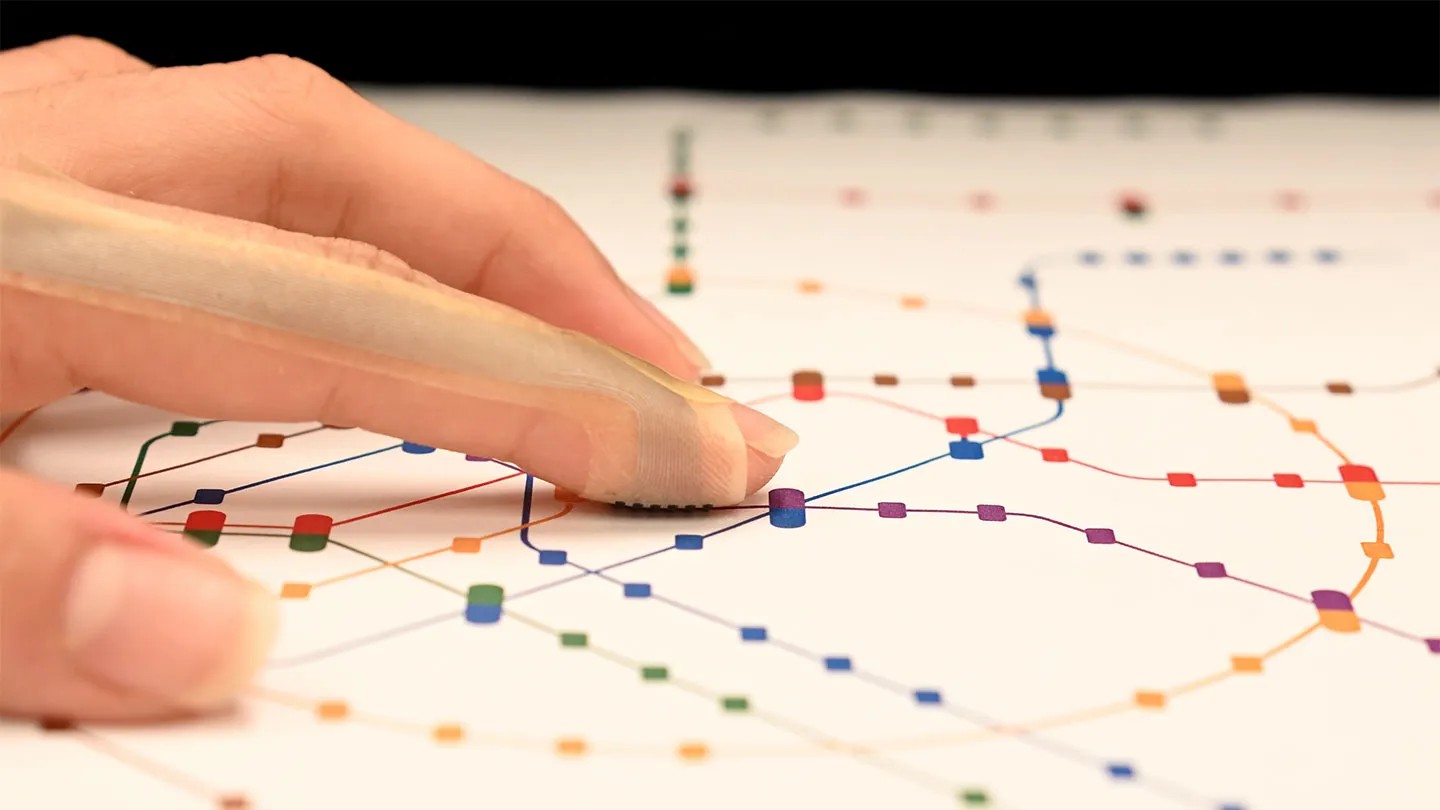
A new breakthrough in haptics (the science of touch) is aiming to change that. Researchers are developing a wearable, flexible device—resembling a simple Band-Aid—that allows users to “feel” virtual objects as if they were physically present.
The Science of Digital Sensation
To make a virtual object feel real, a device must do more than just vibrate; it must mimic the complex electrical signals that our nervous system sends to our brain.
The core of this technology lies in creating a conductive circuit that is thin, flexible, and wearable. Unlike traditional electronics that rely on rigid wires and heavy components, this new prototype uses advanced materials to create a “skin-like” interface. This allows the device to:
– Transmit electrical signals directly to the skin.
– Mimic tactile sensations, such as pressure or texture.
– Integrate seamlessly with the body without restricting movement.
Why This Matters: Beyond Gaming
While the most immediate application for this technology is likely immersive gaming and Virtual Reality (VR), the implications reach much further. We are seeing a trend toward “embodied computing,” where technology is not just something we look at, but something we inhabit.
This “Band-Aid” approach addresses several critical hurdles in the field of haptics:
1. Form Factor: Traditional haptic devices (like heavy gloves or bulky vests) are cumbersome. A small, adhesive patch is unobtrusive and can be worn anywhere on the body.
2. Accessibility: By using flexible, low-cost materials, researchers are moving toward making high-fidelity touch sensations available outside of expensive laboratories.
3. Precision: Because the device can be placed on specific nodes of the skin, it can target precise areas, allowing for a more nuanced “map” of sensations.
The Path Forward
The development of such devices is a multidisciplinary feat. It requires materials scientists to engineer fabrics that are both conductive and breathable, and engineers to design the software that translates digital data into physical sensations.
As these prototypes move from the lab toward real-world applications, we may see them used in:
– Remote Medicine: Surgeons performing delicate procedures using robotic tools while “feeling” the resistance of the tissue.
– Education: Students interacting with complex, three-dimensional models in a digital classroom.
– Prosthetics: Providing users of prosthetic limbs with a sense of touch, bridging the gap between mechanical limbs and biological sensation.
This technology represents a shift from merely observing a digital world to truly inhabiting it, turning virtual data into physical experience.
In summary, by shrinking complex electrical circuits into a wearable patch, researchers are laying the groundwork for a future where the boundary between the physical and digital worlds becomes increasingly indistinguishable.