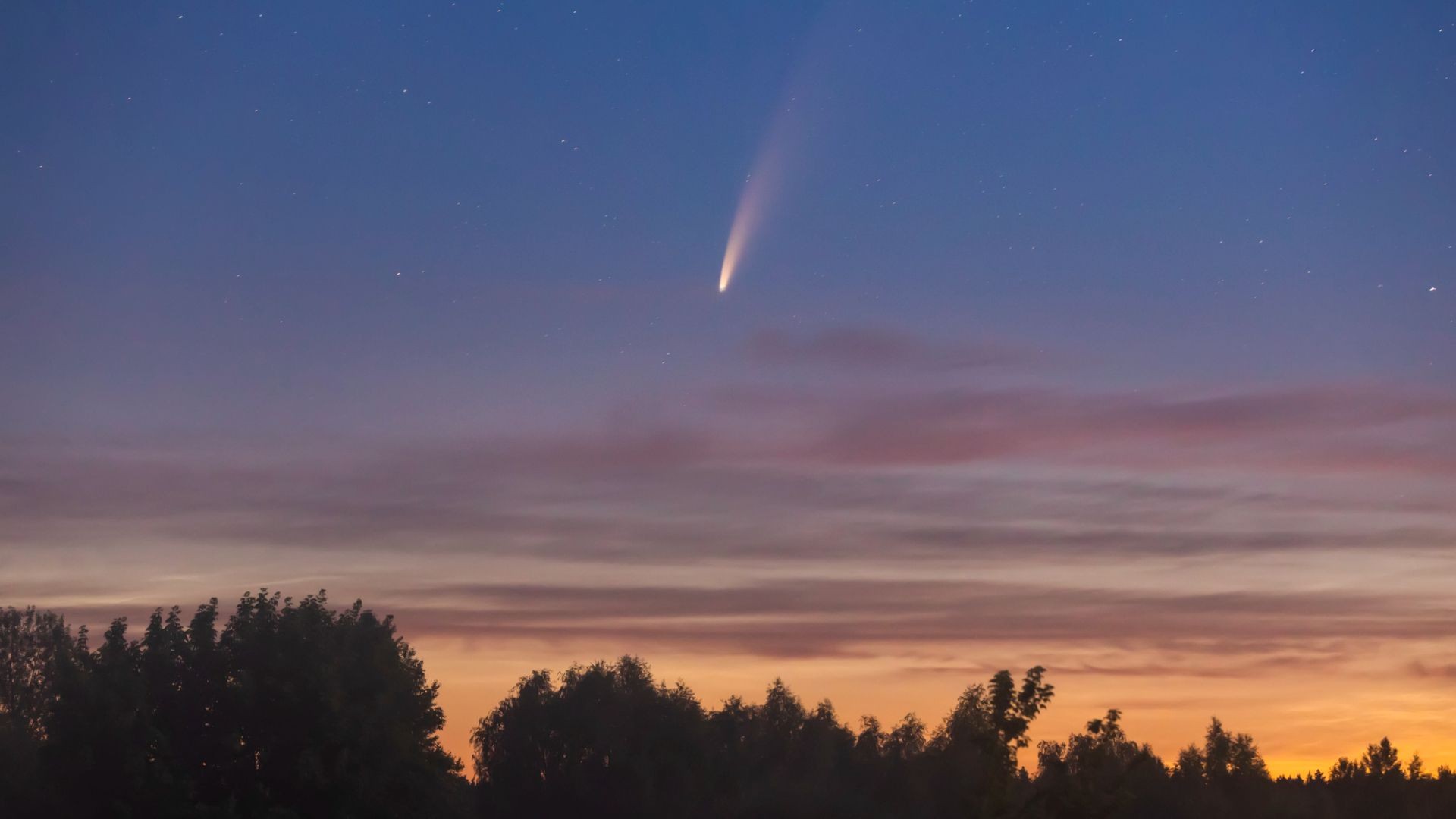
A rare opportunity for stargazers is approaching as Comet C/2025 R3 (PanSTARRS) begins to brighten in the night sky. While comet appearances are notoriously fickle, current data suggests this celestial visitor could become one of the most significant astronomical events of the year.
The Science of Brightness: What to Expect
In astronomy, brightness is measured by magnitude —the lower the number, the brighter the object. In early April, PanSTARRS sat at magnitude 6, a level that requires perfect conditions and very dark skies to see with the naked eye.
However, recent light-curve data from the Comet Observation database suggests a positive trend: the comet may brighten to magnitude 4 in the coming weeks. If this holds true, it will move from a faint smudge to a visible object that can be seen without specialized equipment.
Why this matters: Comets are essentially “dirty snowballs” of ice and dust. As they approach the sun, solar radiation causes the ice to sublimate (turn directly from solid to gas), creating a glowing coma and a visible tail. This process is what drives the sudden increase in brightness.
A Note on Predictability
Skywatchers should remain cautiously optimistic. Comet behavior is famously unpredictable; many comets disintegrate as they face the intense heat of the sun. This was recently demonstrated by Comet C/2026 A1 (MAPS), which was vaporized during its solar approach, leaving observers disappointed.
While PanSTARRS appears more stable than its predecessor, its ultimate visibility depends on how much gas and dust it releases as it nears the sun. Even if it fails to reach naked-eye brightness, it is expected to be a spectacular target for binoculars.
Key Dates and Viewing Windows
To catch the comet at its best, observers should note two critical milestones:
* April 20 (Perihelion): The comet reaches its closest point to the sun (47.4 million miles). This is when solar heating is most intense, potentially triggering peak brightness.
* April 27 (Perigee): The comet makes its closest approach to Earth (44 million miles).
How to Watch (Northern Hemisphere)
The optimal viewing window occurs in mid-April. Here is a breakdown of how to find it:
- Timing: Look to the sky roughly one hour before sunrise.
- Location: Between April 13 and April 15, look near the Great Square of Pegasus just above the eastern horizon. Afterward, it will transition into the constellation Pisces.
- Conditions: The timing is bolstered by a new moon on April 17, which will ensure dark skies—a crucial factor for seeing faint celestial objects.
Note: By the time the comet reaches its closest point to Earth on April 27, there is a risk it may be obscured by the glare of the rising sun.
Summary
Comet PanSTARRS offers a fleeting chance to witness a brightening celestial body, provided observers look toward the eastern horizon in the pre-dawn hours of mid-April. While its ultimate brightness remains uncertain, the window between April 13 and April 20 provides the best balance of dark skies and comet activity.