New research confirms that deer leave glowing ultraviolet (UV) trails in forests, enabling them to communicate in ways invisible to humans. The discovery sheds light on how deer perceive their environment and interact with one another, suggesting a sophisticated form of signaling beyond scent.
How Deer Use UV Communication
Male white-tailed deer mark their territories during mating season by rubbing antlers against trees and creating scent-marked scrapes on the ground. These “deer rubs” and scrapes serve as warnings to rivals and attract potential mates. Scientists at the University of Georgia (UGA) have now found that these markings also glow under UV light, which deer can see.
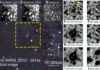
The study, conducted in a 337-hectare research forest, tracked 109 rubs and 37 scrapes. Using UV flashlights, researchers confirmed that these markings emitted significantly brighter light than the surrounding environment at wavelengths deer eyes are sensitive to. This means deer can easily detect these glowing signals during dawn and dusk, when they are most active.
What Causes the Glow?
The exact source of the UV glow remains under investigation. Deer urine contains compounds that react to UV light, as do secretions from forehead glands and damaged plant tissue. Whether the glow comes from deer fluids, the plants they mark, or a combination of both, the markings create a visible contrast for deer in low-light conditions.
This is the first documented evidence of mammals actively using photoluminescence in their environment. While UV-induced glow has been studied in mammals for over a century, this research provides strong evidence it serves a biological function.
Why This Matters
Deer eyes are adapted to see UV light, making them uniquely suited to detect these glowing signals. The study suggests that deer are using light-up “noticeboards” throughout the forest to communicate, but the exact meaning of these signals remains unknown.
The timing of increased UV glow coincides with rising deer hormone levels during breeding season, hinting that this communication method may be linked to mating behavior. Further research is needed to confirm whether deer respond to these glowing trails in a measurable way.
“Whether the photoluminescence is the result of deer forehead glandular secretions or wood properties, the fact remains that rubs visually contrast the surrounding environment in a way that is uniquely suited for deer vision.” — UGA Research Team
The discovery adds another layer to our understanding of animal communication and highlights the hidden world of signals beyond human perception.