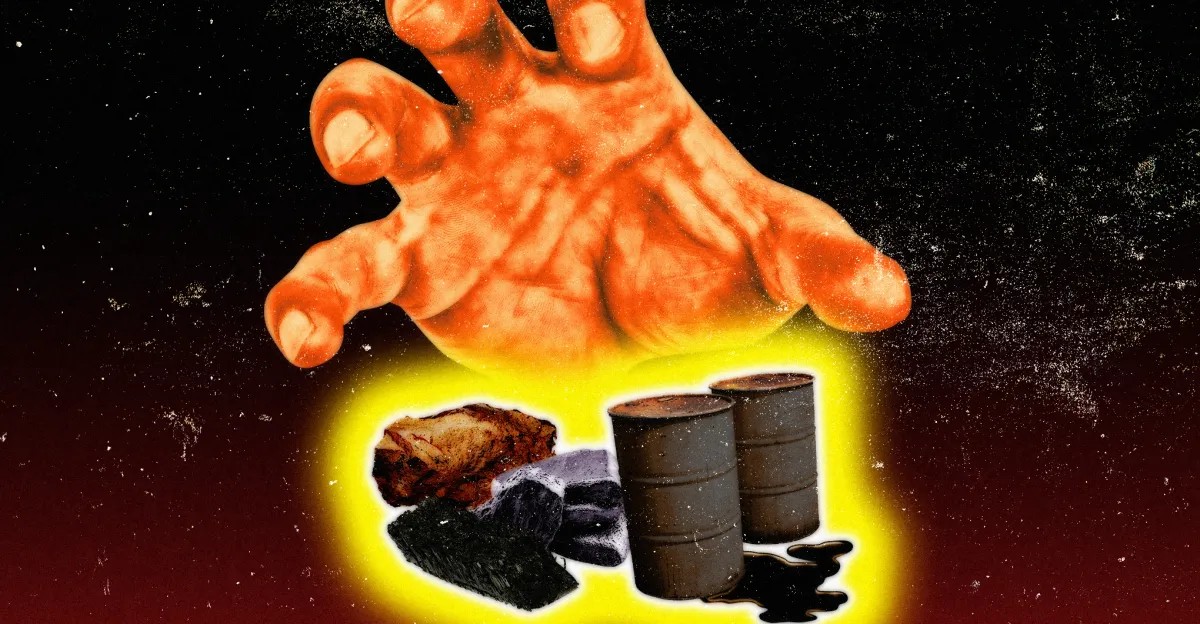
The administration of former President Donald Trump openly pursued a strategy of aggressive resource acquisition in the Western Hemisphere and beyond. This shift, revealed through direct statements and policy shifts, signaled a return to a more assertive—and some critics say, imperialistic—approach to energy and material dominance.
The Venezuela Intervention
In January, Trump described his administration’s actions in Venezuela bluntly: “We’re gonna get the oil flowing the way it should be.” This followed an unannounced intervention in Caracas that led to the arrest of President Nicolás Maduro, framed under federal drug trafficking charges but widely seen as a power grab. Trump explicitly linked this action to “energy dominance,” warning Colombia, Mexico, Cuba, and other nations to expect similar pressure. The administration also expressed interest in acquiring Greenland, with a senior advisor stating that the territory “should be part of the United States.” This signaled a willingness to disregard international norms in pursuit of strategic resources.
Beyond Oil: A Broader Resource Grab
The focus wasn’t limited to oil. Trump’s administration also targeted Greenland for its rare earth elements, critical for both fossil fuel refinement and military applications. The U.S. seized Venezuelan oil tankers, claiming the right to control future sales and extract 30–50 million barrels of oil at market price. Despite skepticism from industry analysts about the viability of a quick Venezuelan oil resurgence, speculation drove up stock prices for companies like Chevron, which had existing deals with the Maduro regime.
The Rationale and Consequences
Experts like Catherine Abreu of the International Climate Politics Hub described the moment as “really uncertain, scary,” where aggressive business practices were openly prioritized. Abreu noted that Venezuelans had mixed reactions, with some supporting regime change but fearing U.S. intervention. The U.S. strategy was driven by a desire to control global energy flows and geopolitical influence, with Trump’s former energy director, Landon Derentz, admitting that Venezuelan oil was merely an “enabler” for broader dominance.
The Monroe Doctrine Reborn
The Trump administration revived a modern version of the Monroe Doctrine, asserting the right to intervene in Latin America to install governments aligned with U.S. interests. This approach was formalized in a new national security strategy document that called for enforcing a “Trump Corollary” to the doctrine. Critics, including Basav Sen of the Institute for Policy Studies, characterized this as “naked 19th-century imperialism,” warning that it signaled to the world that countries must yield resources to the U.S. or face intervention.
Renewable Energy and the Future
Abreu argued that a transition to renewable energy could reduce vulnerability to such tactics, as fossil fuels inherently require constant pursuit of new sources. However, even renewable energy development was framed through the same lens: Greenland’s minerals were sought not only for green technology but also for oil refining and military purposes. The administration’s withdrawal from international climate agreements further underscored its rejection of multilateral norms in favor of unilateral action.
Ultimately, the Trump administration’s actions represented a clear shift toward prioritizing resource control over international law, setting a dangerous precedent for global power dynamics. The willingness to disregard sovereignty in pursuit of economic and strategic advantage signaled a more aggressive era of U.S. foreign policy.