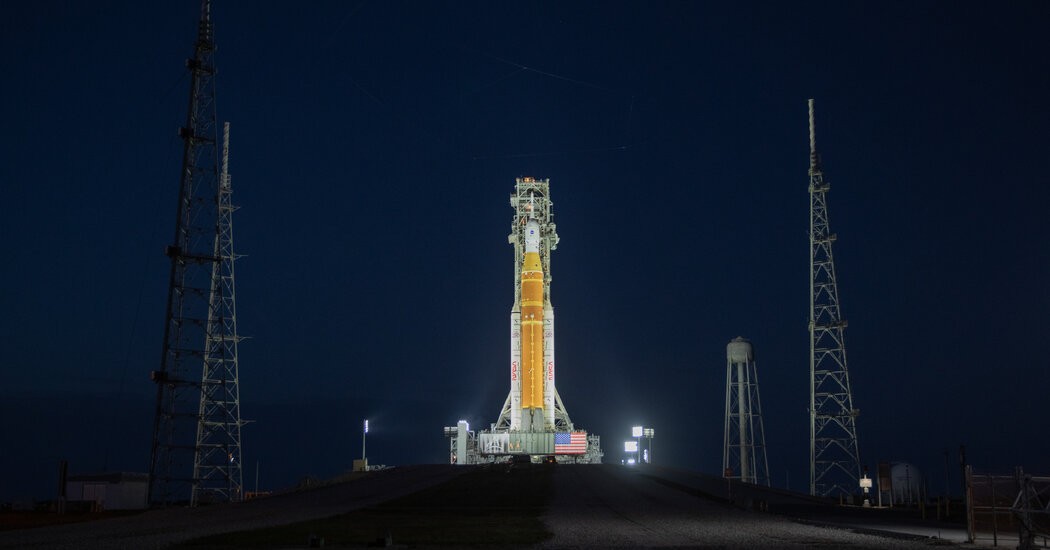
NASA has postponed the launch of the Artemis II mission, the first crewed flight beyond low Earth orbit in over half a century, until at least March. The delay follows failed attempts to complete a critical “wet dress rehearsal” test at Kennedy Space Center, highlighting ongoing challenges with the Space Launch System (SLS) rocket’s volatile hydrogen fuel.
Recurring Hydrogen Leak Issues
The rehearsal, which involves filling the SLS rocket with millions of pounds of supercooled liquid hydrogen and liquid oxygen, was aborted Saturday after a hydrogen leak was detected at the connection point between the rocket and the launchpad. This mirrors similar problems that previously delayed the uncrewed Artemis I mission in 2022.
Hydrogen’s extreme volatility makes it notoriously difficult to contain, even in advanced space-grade systems. The tiny molecular structure of hydrogen allows it to seep through microscopic gaps, creating persistent leak risks. Engineers attempted to address the issue by allowing seals to warm up and re-seal, but the problem persisted.
Implications for Future Missions
The SLS rocket, a key component of the Artemis program, incorporates repurposed hardware from the retired Space Shuttle program. This reliance on legacy components may contribute to these recurring issues. The Artemis II mission is crucial for NASA’s long-term lunar ambitions, which include establishing a sustainable human presence on the Moon and preparing for future missions to Mars.
The latest setback underscores the complexities of deep-space exploration and the ongoing need for rigorous testing and refinement of launch systems. NASA will now focus on analyzing the leak data and implementing corrective measures before attempting another countdown rehearsal.
The successful execution of the Artemis program hinges on resolving these hydrogen leak challenges, ensuring the safety and reliability of crewed missions to the Moon and beyond.