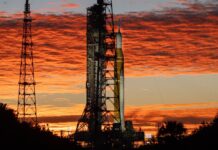
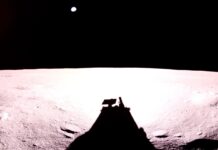
NASA unveiled plans for a permanent lunar base, estimated to cost $20 billion, as wildfires rage across the western and central United States. The agency’s administrator, Jared Isaacman, announced the shift in strategy, repurposing planned orbital infrastructure for surface development, while simultaneously accelerating a nuclear-powered mission to Mars. This decision reflects a growing urgency in the renewed space race, with China as a key competitor.
Lunar Ambitions Accelerated
The overhaul of NASA’s Artemis program aims for annual lunar missions, potentially excluding SpaceX and Boeing from future contracts. The agency intends to establish a nuclear power station on the Moon by 2036, relying on robotic landers and drone fleets. Whether this is feasible remains to be seen, given the project’s scale and logistical challenges.
The move signals a clear intent to reassert American dominance in space exploration, with the Moon serving as a critical stepping stone for deeper missions. This long-term commitment comes at a time when scientific budgets are under scrutiny, and the underlying motivation is as much geopolitical as it is exploratory.
Unprecedented Wildfire Season
Meanwhile, the U.S. is grappling with an exceptionally early and intense wildfire season. Major blazes have erupted in Colorado, the Great Plains, and Nebraska, where one fire consumed over 600,000 acres in a matter of days.
These outbreaks are driven by extreme heat, strong winds, and low humidity, raising concerns about a prolonged and destructive wildfire season. The situation is further complicated by reported staffing shortages at federal disaster response agencies, which could hinder effective containment efforts.
Global Temperatures Soar
Compounding these crises, global sea surface temperatures continue to break records, with a potential “super El Niño” event looming later this year. The trend suggests that 2024 could surpass previous temperature extremes, underscoring the escalating urgency of climate action.
Recent studies indicate that Iran’s ongoing conflict has released a staggering amount of carbon dioxide, with the destruction of infrastructure—schools, homes, and buildings—being a primary source. This underscores the interconnectedness of geopolitical instability and environmental degradation.
“America will never give up the Moon again.” — Jared Isaacman, NASA administrator
The convergence of these events—ambitious space exploration, escalating wildfires, and record-breaking temperatures—highlights a world facing multiple simultaneous crises. The allocation of resources toward projects like the lunar base must be weighed against the immediate and pressing need for climate mitigation and disaster preparedness.
The situation demands a reevaluation of priorities, as both planetary exploration and terrestrial survival depend on sustainable long-term solutions.