The largest extinction event in Earth’s history, the end-Permian extinction roughly 252 million years ago, eliminated over 80% of marine life. Yet, contrary to expectations, ecosystems didn’t collapse completely; many retained complex food webs with functioning predator-prey relationships. This suggests that even catastrophic losses don’t necessarily mean a return to simplicity.
The End-Permian Extinction: A Planetary Reset
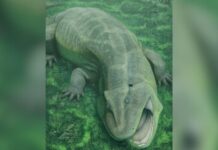
The end-Permian extinction was triggered by massive volcanic activity in Siberia, leading to runaway global warming, ocean oxygen depletion, and widespread environmental stress. While some groups, like trilobites and sea scorpions, vanished entirely, others endured. The aftermath saw the rise of new species, including the ancestors of dinosaurs and ichthyosaurs.
Scientists previously assumed that such a severe event would drastically simplify ecosystems, stripping away trophic levels (the position of an organism in the food chain). Top predators, reliant on abundant prey, were thought to be particularly vulnerable. However, new evidence challenges this view.
Ecosystems Retained Complexity Despite Losses
A study by Baran Karapunar and colleagues at the University of Leeds analyzed fossil records from seven marine ecosystems before and after the extinction. The results show that five out of seven retained at least four trophic levels, meaning they still had plants, herbivores, predators, and top predators in place.
The key finding is that the fate of each ecosystem depended on its specific composition. Losses were not uniform: herbivores that lived on the seafloor suffered the most, while open-water fish were more resilient.
Geographic Recovery Patterns
Ecosystem recovery also varied by latitude. Tropical regions became dominated by low-trophic herbivores, while polar ecosystems saw an increase in predatory fish migrating from the equator to escape heat stress. This indicates that climate change, even on a geological scale, influences species distribution and ecosystem structure.
Implications for Modern Marine Conservation
The study’s findings carry weight for today’s marine ecosystems, which face threats from human-induced climate change and pollution. If past ecosystems retained complexity despite extreme stress, it suggests that modern marine life may also demonstrate unexpected resilience. However, this doesn’t mean we should underestimate the severity of current threats.
As Peter Roopnarine from the California Academy of Sciences points out, these models rely on incomplete fossil data. The specific consequences of losing certain species (like photosynthetic organisms) remain difficult to simulate. Nevertheless, the study reinforces the idea that ecosystems are not monolithic: they respond in diverse ways to environmental change.
This research emphasizes that even after the most devastating extinction events, life finds a way to reorganize, adapt, and retain essential ecological functions. Understanding these past responses can inform our efforts to conserve biodiversity in the face of modern challenges.