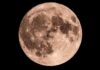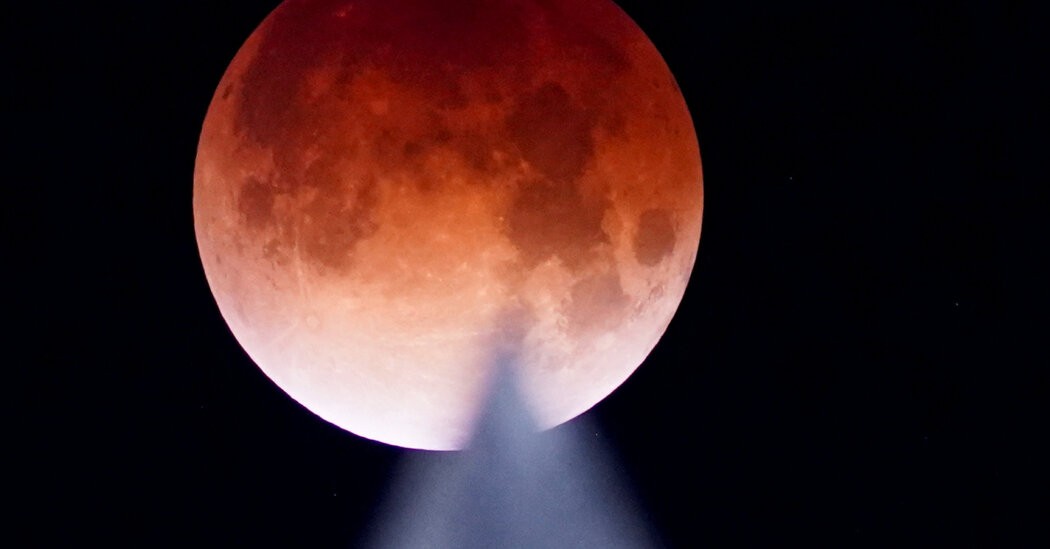
A total lunar eclipse turned the moon a striking shade of red early Tuesday morning, captivating observers across North and Central America, parts of South America, and later, East Asia and Australia. This event – often called a “blood moon” – occurred as the Earth passed directly between the sun and moon, casting a shadow that blocked direct sunlight.
What Causes a Blood Moon?
During a total lunar eclipse, the moon doesn’t disappear completely. Instead, some sunlight bends around the Earth’s atmosphere and filters through, scattering blue light while letting red wavelengths pass through. This is why the moon appears reddish during totality. The effect is similar to how sunsets and sunrises appear red – a phenomenon explained by Rayleigh scattering.
Visibility: Who Saw It and When?
Observers in the Americas had the best view during the early hours of Tuesday. Those on the night side of Earth could witness the entire eclipse sequence, from the first dimming to the peak redness and then the gradual return to normal brightness. Viewers in East Asia and Australia caught the eclipse later in the evening.
The timing and appearance of the eclipse varied slightly based on location. However, the core experience – a dramatic, crimson-hued moon – was consistent for those under clear skies.
Why Lunar Eclipses Matter
Lunar eclipses are valuable events for astronomers and casual skywatchers alike. They provide a clear demonstration of Earth’s position in space, the mechanics of solar systems, and atmospheric effects. Unlike solar eclipses, lunar eclipses are safe to view with the naked eye, making them easily accessible to the public.
The blood moon serves as a reminder that even in darkness, light finds a way through. This eclipse was a captivating display of physics in action, visible from across the globe.