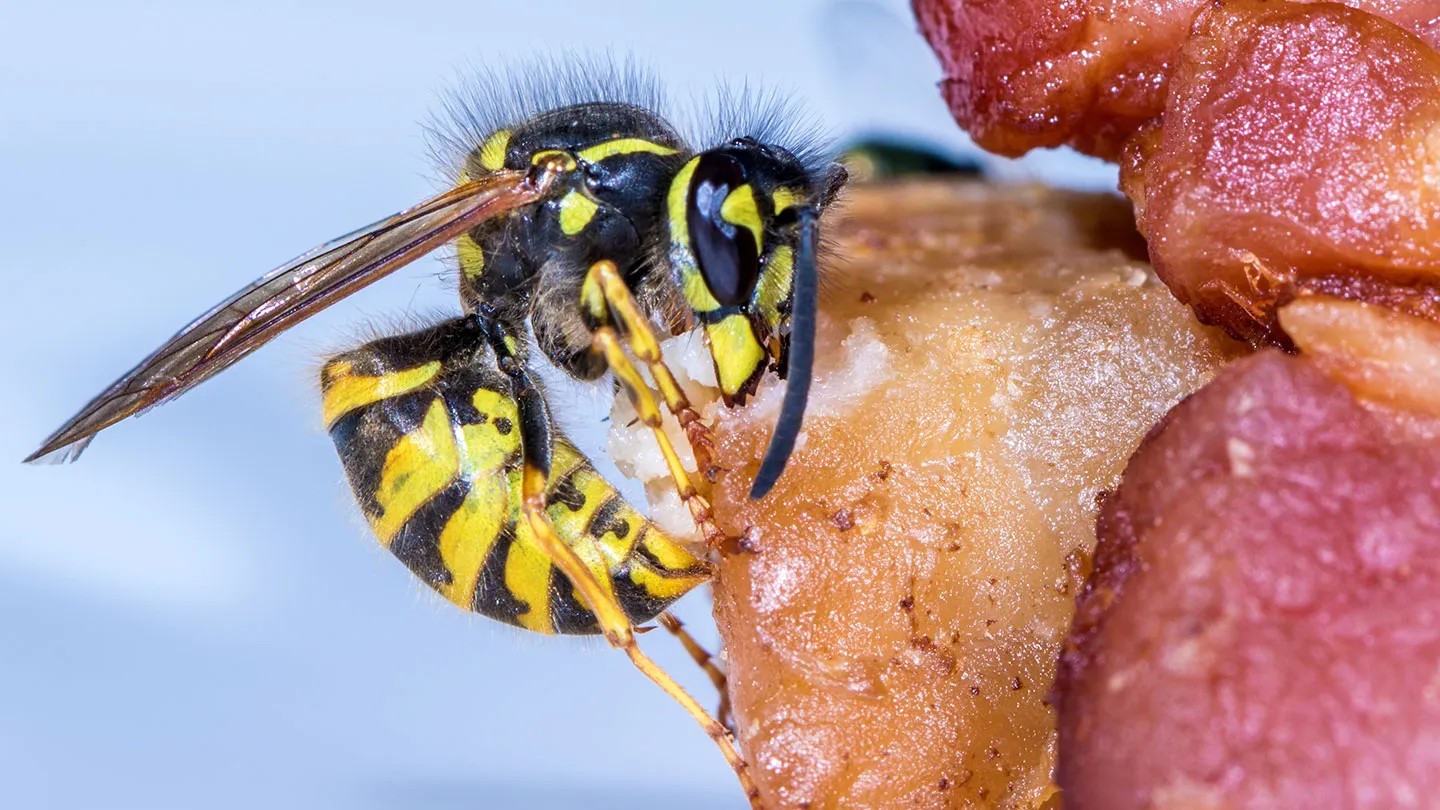
Have you ever noticed how a swarm of yellow jackets seems to move against the breeze, heading straight for your picnic despite a strong wind? This isn’t just luck or random movement; it is a sophisticated feat of biological engineering that allows these insects to navigate their environment with startling precision.
The Challenge of the Wind
For most small organisms, wind is a massive obstacle. A gust can easily blow an insect off course, making it nearly impossible to find food sources or return to a nest. However, yellow jackets have evolved specialized biological mechanisms to overcome this.
To successfully forage, these insects must be able to fly upwind. By navigating against the direction of the wind, they can pick up “scents” or chemical signals carried by the air. If they only flew with the wind, they would be flying away from the very signals they need to find resources.
Sensory Precision and Chemical Tracking
The ability to “defy” the wind relies on a combination of advanced biological sensors and chemical intelligence:
- Chemical Markers: Yellow jackets rely on detecting specific chemical substances in the air. These act as biological markers, signaling the presence of food or other environmental cues.
- Advanced Sensors: Much like a robot uses sensors to detect light or temperature, an insect uses specialized structures to sense wind direction, moisture, and chemical concentrations.
- Navigational Intelligence: By processing these sensory inputs, the insect can calculate how to adjust its flight path, ensuring it remains on course even when the atmosphere is turbulent.
Why This Matters
Understanding how insects navigate provides more than just trivia about backyard pests; it offers profound insights into biomimicry —the practice of looking to nature to solve human engineering problems.
The way a yellow jacket processes environmental data to maintain a steady course is remarkably similar to how engineers design drones and autonomous robots. By studying these tiny navigators, scientists can develop better sensors and more efficient flight algorithms for machines operating in unpredictable weather conditions.
Summary: Yellow jackets use sophisticated biological sensors to detect chemical signals and wind direction, allowing them to fly upwind and navigate successfully despite environmental challenges.