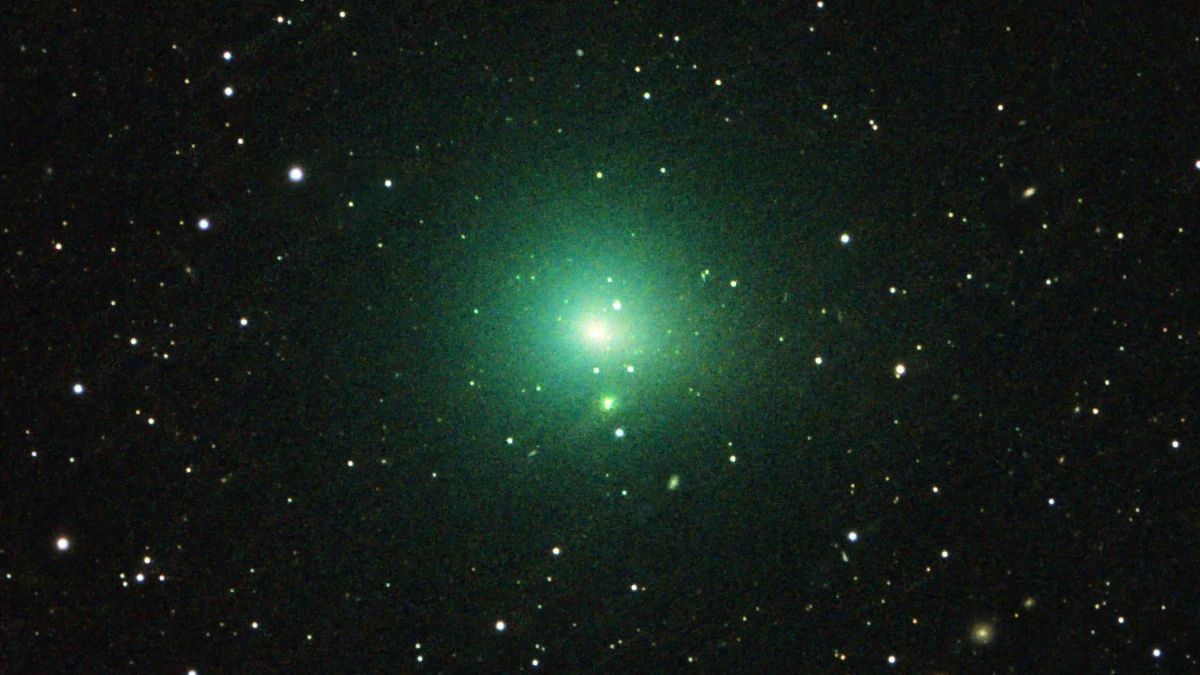
A comet has defied expectations by reversing its spin after a close encounter with the Sun, challenging our understanding of these icy celestial bodies. Comet 41P/Tuttle-Giacobini-Kresák exhibited an unprecedented shift in rotation speed, slowing to a complete stop before spinning in the opposite direction. The phenomenon is not entirely new—cometary spins do change near the Sun—but the speed of this reversal has baffled astronomers.
The Record-Breaking Slowdown
Previous observations of comets slowing their spin took months; 103P/Hartley 2, for instance, took 90 days to alter its rotation from 17 to 19 hours. Comet 41P, however, underwent a more than tenfold change in just 60 days. In March 2017, it rotated once every 20 hours. By May, that period had stretched to 53 hours, and by December, it was spinning at 14.4 hours – evidence of a complete reversal around June.
How Comets Spin: A Matter of Ice and Gas
The key lies in the sublimation process: as comets approach the Sun, their ice turns directly into gas, creating jets that push against the nucleus. These jets impart torque on the comet, altering its spin. Smaller comets, like 41P (roughly a kilometer wide), are particularly susceptible to this effect due to uneven heating or lopsided ice distribution.
The rapid reversal is not mysterious in theory. It is a natural consequence of gas jets acting on a small nucleus. However, the fact that this spin reversal has never been seen before demands attention.
The Missing Direction
Current measurements can determine the comet’s spin rate but not its direction. Astronomer David Jewitt concluded that the spin reversed by plotting light curves and comparing them to size estimates from Hubble Space Telescope data.
Future Fate: Spin-Out or Survival?
If 41P continues to spin at this rate, it could disintegrate within decades. The next opportunity to monitor its spin will be its 2028 perihelion (closest approach to the Sun).
This comet is likely a remnant of a much larger body, slowly eroded by the Sun’s heat over billions of years. These findings remind us that comets, fragile relics of the early Solar System, are still around despite being subjected to extreme conditions.