


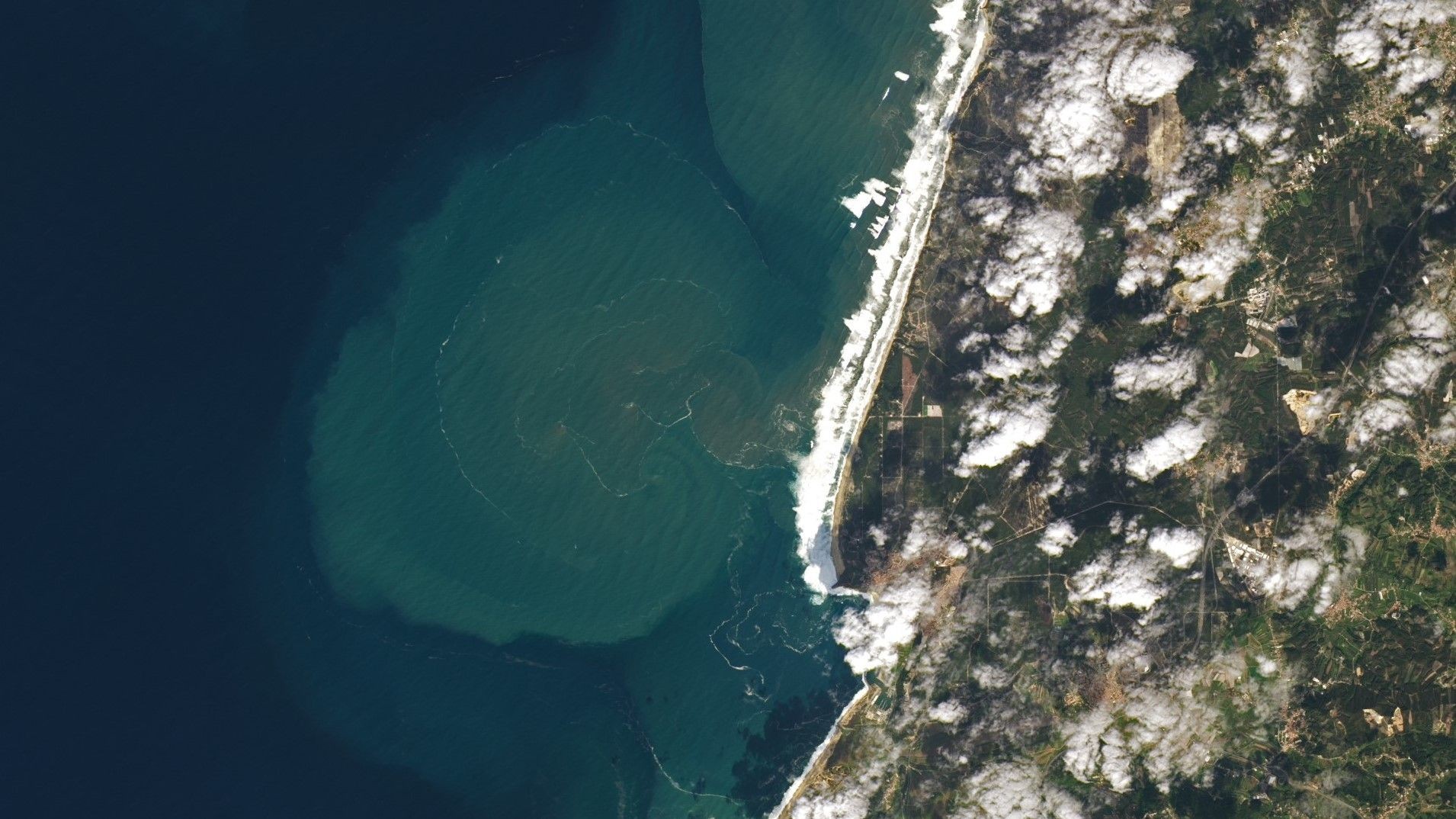
The Portuguese coast near Nazaré has once again demonstrated its legendary status as a “big-wave” hotspot, with recent satellite imagery capturing the immense power of waves reaching up to 80 feet (24 meters) high. These waves aren’t just a spectacle for surfers; they trigger massive underwater sediment plumes that extend up to 6 miles (10 kilometers) from the shoreline—visible even from space.
The Anatomy of a Monster Wave
Nazaré’s exceptional waves are no accident. The region sits atop the Nazaré Canyon, Europe’s largest submarine canyon, stretching 130 miles (210 kilometers) and plunging nearly 3 miles (4.8 kilometers) into the Atlantic. This underwater geological feature accelerates water flow, creating waves at depth that are then focused toward the coast. When these waves collide with swells from the northwest, they amplify dramatically, resulting in the towering crests Nazaré is known for.
The conditions are often amplified by offshore winds. In this case, the swells were partially fueled by the remnants of Hurricane Epsilon, according to NASA’s Earth Observatory. This combination of factors explains why seven of the top 10 largest waves ever surfed have occurred at Nazaré.
A New Record, But Not Officially Recognized
On the same day the satellite image was captured, local surfer António Laureano rode an estimated 101.4-foot (30.9-meter) wave, potentially setting a new world record. However, the World Surf League (WSL) has not officially recognized this height, as no WSL representatives were present to verify the measurement. Instead, oceanographers at the University of Lisbon analyzed video footage provided by Laureano, confirming the extraordinary size of the wave. The current WSL record stands at 93.7 feet (28.6 meters), set by Sebastian Steudtner in Nazaré last February.
The Dark Side of Giant Waves
Nazaré’s powerful waves come with inherent danger. While surfers chase these behemoths, the same forces that create them can threaten unsuspecting beachgoers. In 2012, a rogue wave tragically killed a five-year-old girl and her grandfather as they walked along the shore, highlighting the unpredictable nature of these extreme events.
The phenomenon is highly seasonal, peaking between November and February before subsiding in the warmer months. Even then, the risk remains. The plumes of sediment kicked up by breaking waves are not only visible from space, but also a reminder of the raw energy unleashed by these natural forces.
The combination of geological features, weather patterns, and sheer ocean power makes Nazaré a unique and dangerous location—a place where the ocean’s fury is on full display.


