This article defines essential terms related to celestial events, explosions, and fundamental physics. Understanding these definitions is crucial for interpreting scientific reporting on space phenomena, nuclear technology, and basic astronomical concepts.
Defining Space Objects and Phenomena
Several terms describe objects in the cosmos:
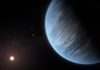
- Planet: A large celestial body orbiting a star, incapable of generating its own visible light.
- Moon: A natural satellite that orbits a planet.
- Star: The building block of galaxies, formed when gravity compresses gas clouds until they emit light and radiation. Our closest star is the sun.
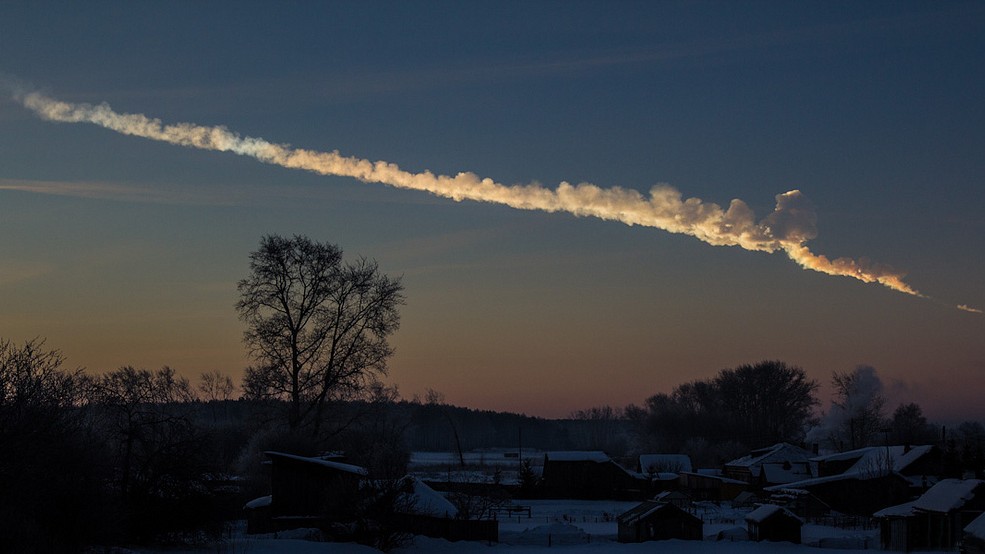
- Meteor: A rock or metal fragment from space that enters Earth’s atmosphere. Before entering the atmosphere, it’s a meteoroid, and after landing on Earth, it’s a meteorite.
Explosive Events and Terminology
Explosions in space and on Earth have specific classifications:
- Airburst: An explosion occurring high in the atmosphere, often caused by large events like nuclear detonations or meteor breakups.
- Atomic Bomb: A nuclear weapon releasing energy through rapid chain reactions splitting heavy elements (like plutonium or uranium) with neutrons.
- Sonic: Relating to sound; explosions often produce sonic booms.
Measuring Intensity and Shape
Terms like magnitude are used to quantify properties:
- Magnitude: In astronomy, this measures star brightness.
- Arc: A curved line, often representing part of a circle.
Atomic and Atmospheric Basics
The underlying science includes the following:
- Atomic: Relating to atoms, the smallest unit of a chemical element.
- Atmosphere: The layer of gases surrounding a planet or moon.
Understanding these terms is fundamental for anyone following scientific reports on space, nuclear physics, or related fields. These definitions provide clarity in interpreting complex events, ensuring informed comprehension of the universe and our technology.