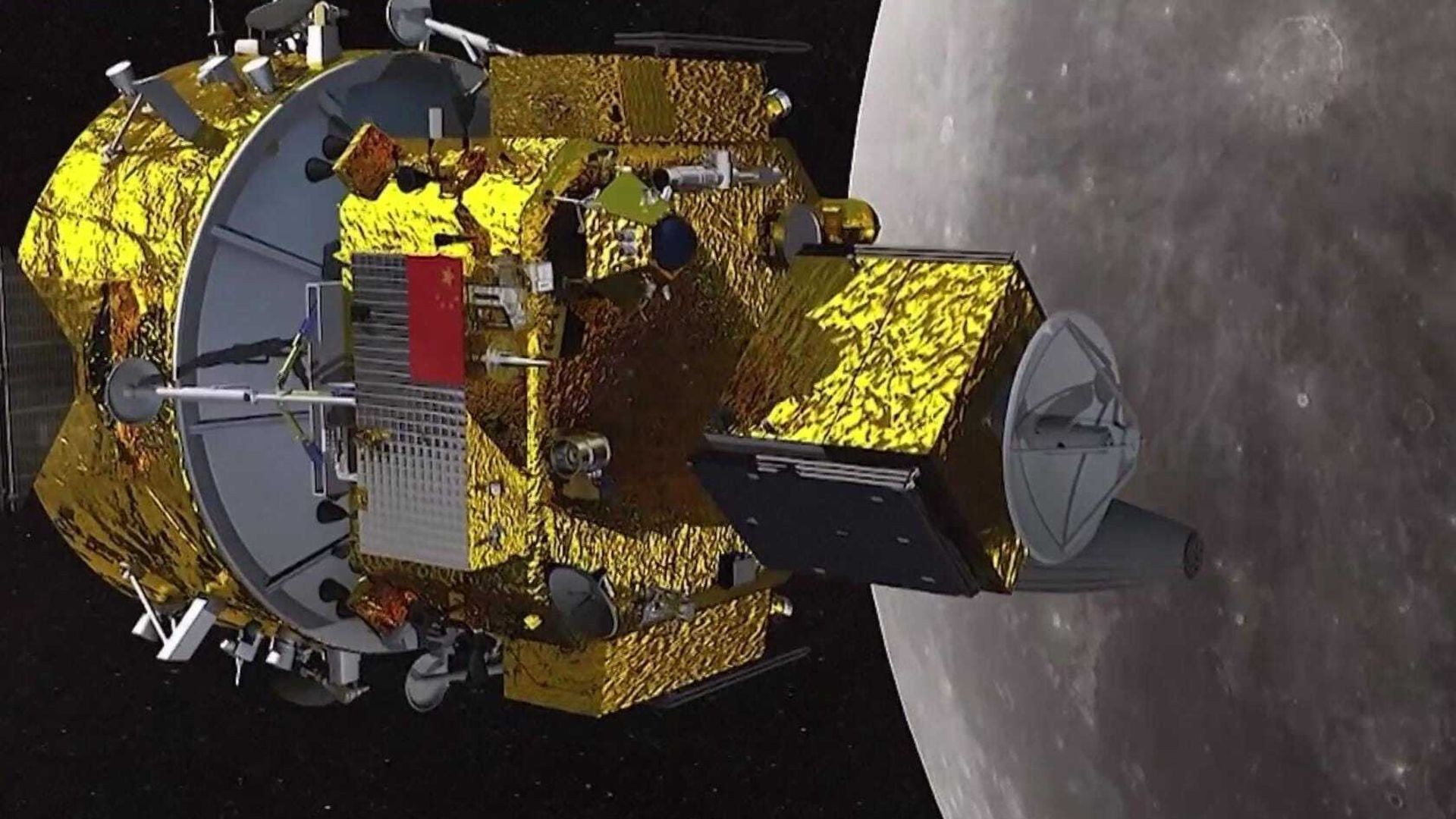
China’s next robotic mission to the moon, Chang’e 7, is slated for launch later this year. This mission is not just another lunar flyby; it represents a critical step in China’s ambitious plan to establish a permanent, multi-phase lunar outpost – and the search for water ice at the south pole is at the heart of it.
The Mission’s Core Objectives
Chang’e 7 will employ a sophisticated suite of tools: an orbiter, lander, rover, and a unique lunar hopper designed to actively seek out water deposits. This isn’t merely about confirming the presence of water – though that’s a major goal – it’s about mapping its distribution and assessing its usability as a resource for future lunar settlements. The mission will also contribute significantly to the International Lunar Research Station (ILRS), a collaborative effort between China, Russia, and other nations.
Why This Matters: The Lunar South Pole’s Strategic Importance
The lunar south pole is a prime target for water ice accumulation due to permanently shadowed craters where sunlight never reaches, allowing water to freeze and persist for billions of years. Water is not just a scientific curiosity; it’s a potential source of rocket fuel, drinking water, and breathable air for astronauts. Securing access to these resources could dramatically lower the cost and complexity of long-term lunar operations.
Key Technologies and International Collaboration
The Chang’e 7 lander will likely target Shackleton Crater, equipped with a diverse array of instruments from multiple countries, including Russia, Egypt, Bahrain, Italy, Switzerland, and Thailand. Russia’s “Dust Monitoring of the Moon” instrument will analyze lunar dust composition, while a Hong Kong-based telescope collaboration will provide wide-field astronomical observations from the lunar surface.
The mission includes several cutting-edge technologies:
- Lunar Hopper: A mini-flying probe with shock-absorption capabilities, enabling access to steep slopes and permanently shadowed regions.
- LUWA (Lunar soil Water molecule Analyzer): A crucial instrument designed to characterize the form, abundance, and origin of water ice.
- Deep-Space Landmark Image Navigation: Ensuring precise and safe landings in challenging terrain.
China’s Long-Term Lunar Ambitions
Chang’e 7 is a precursor to Chang’e 8, scheduled for 2028, which will test in-situ resource utilization (ISRU) technologies for building habitats using lunar soil. China aims to begin constructing the ILRS by the 2030s, envisioning a fully automated research station capable of long-term unmanned exploration and supporting short-term human presence.
“We hope that on the basis of phase four of our lunar exploration program, there will be a large international scientific-technological research project initiated by China, with the participation of multiple countries.” – Wu Weiren, chief designer of the Chinese Lunar Exploration Program.
Looking Ahead: A New Era of Lunar Exploration
The Chang’e 7 mission represents a pivotal moment in lunar exploration. It’s not just about confirming the existence of water; it’s about laying the groundwork for a sustained human presence on the moon, potentially reshaping space exploration for decades to come. With rigorous scheduling and substantial government backing, China is positioned to lead the race toward establishing a permanent lunar outpost, accelerating scientific discovery and resource utilization in the final frontier.