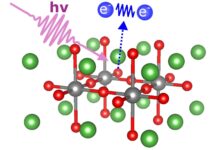
Researchers are actively pursuing light-based computers —systems that use photons rather than electrons for data storage and computation. These innovative computers hold the promise of significantly improved energy efficiency and faster processing speeds compared to traditional electronics. However, a key obstacle in their development is precisely controlling light signals within the computer’s microchips, minimizing signal loss as they are routed. This bottleneck stems from a fundamental need for specialized materials.
The Challenge of Isotropic Bandgap Materials
These future computers require materials capable of blocking extraneous light from all directions, a quality known as an isotropic bandgap. This prevents unwanted light from interfering with delicate light signals, ensuring that calculations remain accurate and efficient. The issue lies in designing such materials—an intricate task of materials science.
Introducing Gyromorphs: A Novel Material Design
Scientists at New York University have announced the discovery of gyromorphs, a groundbreaking material that uniquely combines the characteristics of liquids and crystals. The research, published in Physical Review Letters, demonstrates that gyromorphs outperform existing materials in their ability to block light from all angles.
“Gyromorphs are unique,” says Stefano Martiniani, an assistant professor at NYU and senior author of the study. “Their unusual makeup provides better isotropic bandgap materials than current approaches allow.”
The Quest for Quasicrystals and Their Limitations
In their search for effective isotropic bandgap materials, researchers have previously explored quasicrystals. First theorized by physicists Paul Steinhardt and Dov Levine in the 1980s and later observed experimentally by Dan Schechtman (who received the 2011 Nobel Prize in Chemistry), quasicrystals possess a mathematical order, yet lack the repeating patterns found in traditional crystals.
However, quasicrystals present a challenge: they either block light from only a few directions or partially attenuate light from all directions. This trade-off prompted continued investigation into alternative material designs.
Engineered Structures and the Power of Disorder
The NYU team employed metamaterials, engineered structures whose properties are determined by their design rather than their chemical composition. However, creating metamaterials effectively demands understanding how structure dictates material properties.
To overcome this hurdle, the researchers developed an algorithm to design functional disordered structures. This led to the discovery of a novel form of correlated disorder – materials that aren’t fully disordered nor fully ordered.
“Think of trees in a forest,” explains Martiniani. “They grow at random positions, but not completely random because they’re usually a certain distance from one another.” This new pattern, gyromorphs, merges features previously considered incompatible, outperforming ordered alternatives, including quasicrystals.
A Common Structural Signature
The researchers observed that every known isotropic bandgap material shared a common structural signature.
“We wanted to make this structural signature as pronounced as possible,” adds Mathias Casiulis, a postdoctoral fellow and the paper’s lead author. “The result was a new class of materials—gyromorphs—that reconcile seemingly incompatible features.”
How Gyromorphs Work
Gyromorphs lack the fixed, repeating structure of a crystal, which grants them a liquid-like disorder. Simultaneously, viewed from a distance, they exhibit regular patterns. These combined properties create bandgaps that lightwaves cannot penetrate from any direction. The research also included Aaron Shih, an NYU graduate student.
Gyromorphs represent a significant step towards realizing the potential of light-based computing, offering a new approach to controlling light signals within computer chips.
In conclusion, the discovery of gyromorphs provides a novel avenue for creating next-generation materials essential for light-based computers, potentially revolutionizing computing technology with enhanced efficiency and speed. Their unique combination of liquid and crystal properties offers a new strategy for precisely controlling light signals, paving the way for advanced optical devices and more powerful computational capabilities.