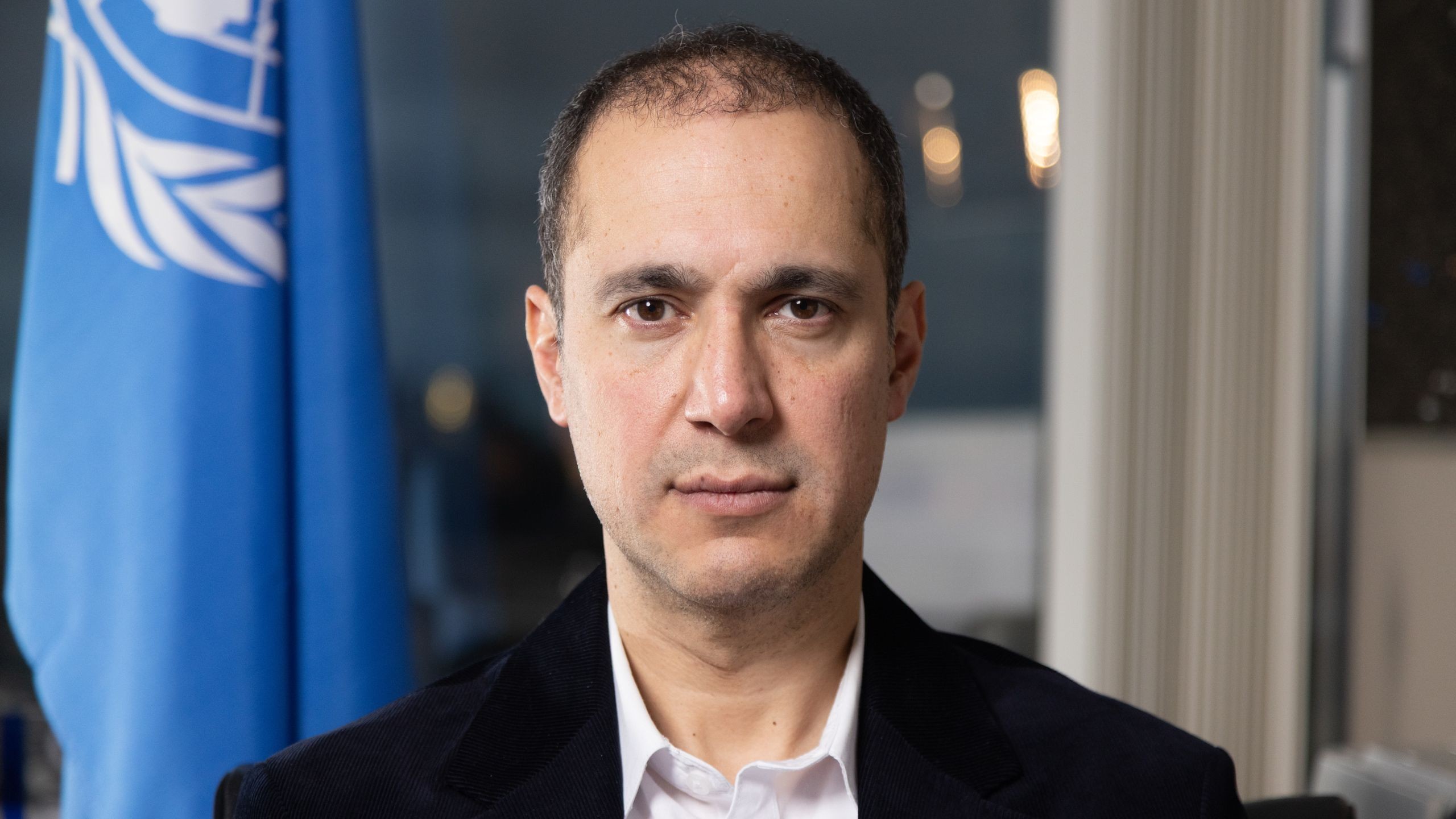
The global water crisis has moved beyond mere scarcity into a much more dangerous territory: water bankruptcy. This term, popularized by scientist Kaveh Madani, describes a state where humanity is not just using water faster than nature can replenish it, but is also causing irreversible damage to the very systems that provide us with life.
In a recent interview, Madani—the 2026 Stockholm Water Prize laureate—explained that we are no longer facing temporary shortages, but a fundamental breakdown of our most precious resource.
Understanding “Water Bankruptcy”
To understand the gravity of the situation, Madani breaks the concept down into two critical components: insolvency and irreversibility.
- Insolvency: This occurs when our “water spending” (extraction from rivers, lakes, and groundwater) far exceeds our “income” (natural replenishment through rain and snow).
- Irreversibility: This is the most alarming stage. When we overdraw water for too long, ecosystems lose their ability to bounce back. Once a wetland dries up or an aquifer collapses, the system cannot return to its historical state.
“What once was an abnormality becomes a new normal,” Madani warns. “That’s when water shortage and scarcity becomes a chronic problem.”
A Global Problem, Regardless of Wealth
A common misconception is that water bankruptcy only affects arid regions like the Middle East or the American West. However, Madani clarifies that no continent is immune.
Just as financial bankruptcy can affect even the wealthiest individuals if they mismanage their budgets, water bankruptcy can hit water-rich regions. The crisis manifests in two primary ways:
1. Quantity: The physical disappearance of water (e.g., drying rivers and depleted aquifers).
2. Quality: The presence of water that is too polluted to be used (a major issue in parts of Southeast Asia).
This mismanagement leads to secondary environmental disasters, including land subsidence (the sinking of the earth) and massive sand and dust storms that impact everything from human health to global aviation.
Moving Beyond “More Dams and Deeper Wells”
For decades, the global response to water scarcity has been focused on supply-side solutions : building more dams, digging deeper wells, and investing in desalination. Madani argues that this approach is insufficient and, in many cases, has actually worsened the problem.
To avoid a total disaster, countries must shift their focus toward demand control. This requires:
* Capping Consumption: Implementing policies that limit how much water is used by various sectors.
* Economic Diversification: Helping regions—particularly in the Global South—move away from water-intensive agriculture toward services and industry to reduce the pressure on natural resources.
* Smart Water Accounting: Rather than “naming and shaming” a single sector (like agriculture or industry), countries must analyze where each drop of water provides the highest return for society, balancing economic growth with food security.
The New Challenge: AI and Data Centers
As the digital economy expands, a new competitor for water has emerged: Artificial Intelligence. Data centers require massive amounts of water, both for direct cooling and for the energy production required to power them.
Madani suggests that while we shouldn’t stifle technological progress, we must be proactive. The transition of water from traditional uses (like farming) to high-tech uses (like AI) is only justifiable if the economic benefits of that growth are distributed fairly and do not compromise basic human needs like food security.
Conclusion
The shift from water scarcity to water bankruptcy represents a permanent change in our planetary reality. To survive this “new normal,” humanity must move away from trying to engineer more supply and instead focus on the disciplined management of consumption and the protection of irreplaceable ecosystems.