Kissing, a behavior often considered deeply human, actually has roots stretching back to the common ancestors of humans and modern great apes – approximately 21 million years ago. A new study published in Evolution and Human Behavior suggests this intimate act predates Homo sapiens by millions of years, even extending to our extinct relatives, the Neanderthals.
Defining Kissing Across Species
Researchers began by defining what constitutes kissing, distinguishing it from similar behaviors in the animal kingdom. Behaviors like food-sharing between mothers and offspring (as seen in orangutans and chimpanzees) and “kiss fighting” in certain fish were excluded. The study defined kissing as non-aggressive, mouth-to-mouth contact without food transfer.
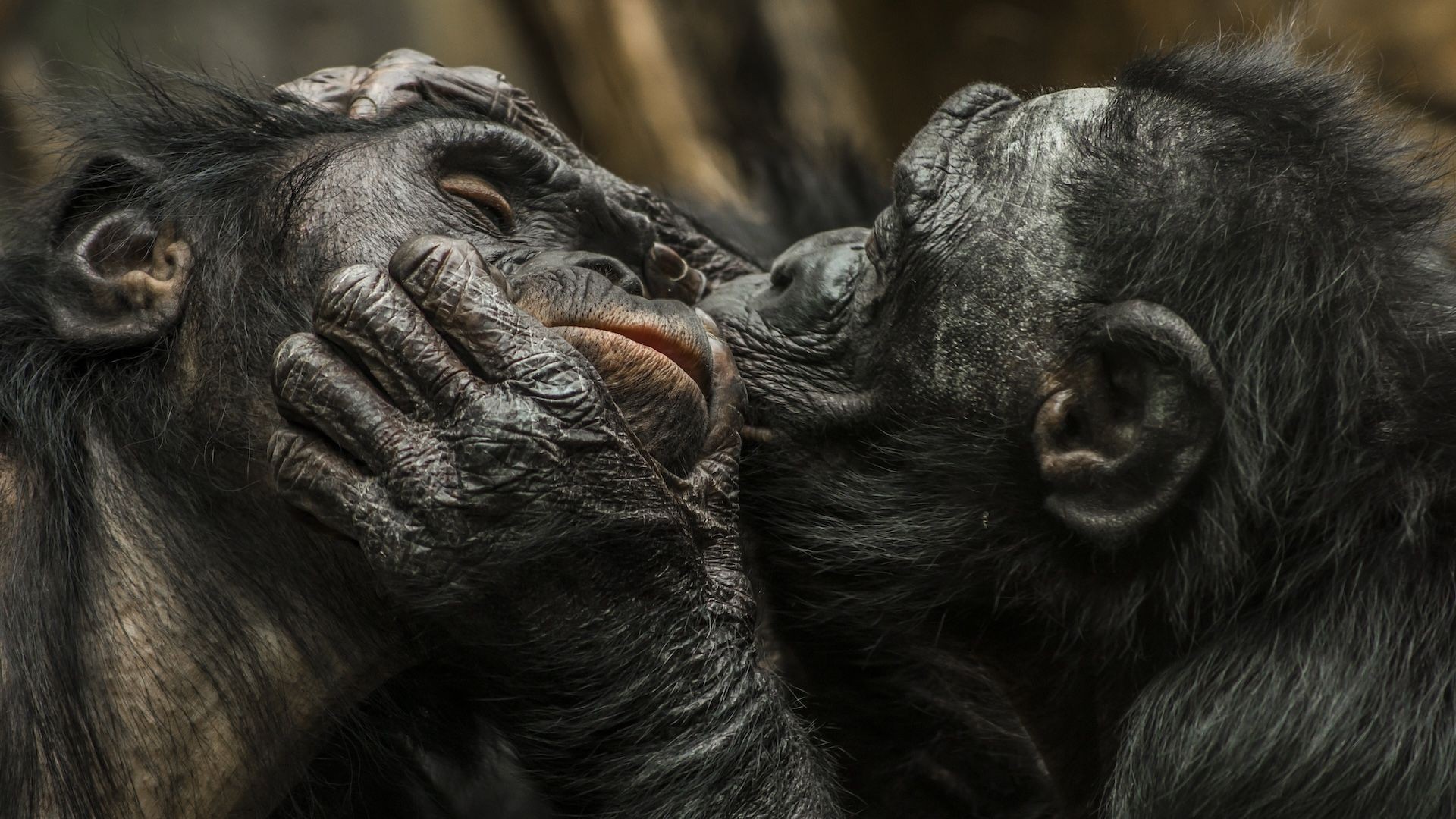
Based on this definition, kissing has been observed in various modern primates, including bonobos, gorillas, chimpanzees, orangutans, macaques, and baboons. This observation allowed researchers to trace the behavior back through evolutionary history.
Modeling Evolutionary Origins
Using Bayesian modeling, the international team simulated 10 million possible scenarios to reconstruct kissing’s evolutionary timeline. The results point to a single origin of kissing in the common ancestor of large apes, between 21.5 and 16.9 million years ago. Interestingly, the behavior did not evolve in macaques and baboons, suggesting separate developments in other species.
The study suggests that kissing might have evolved from the practice of mothers pre-chewing food for their infants. This practical behavior could have gradually transformed into the affectionate act we recognize today.
Neanderthals and Modern Humans: Shared Kisses?
The findings align with previous research suggesting that Neanderthals engaged in kissing, and even shared this behavior with early Homo sapiens. A 2017 study analyzing dental plaque from a 48,000-year-old Neanderthal revealed microbial overlap with modern humans, hinting at possible kissing or shared food/water. Given that interbreeding between Neanderthals and humans occurred over a period of 7,000 years, the possibility of shared intimate behaviors is plausible.
However, the prevalence of kissing in ancient populations remains unclear. As not all modern cultures practice kissing, it’s likely that the behavior varied among different Neanderthal communities. Some may have kissed, while others did not.
The Purpose of Kissing: Beyond Romance
The persistence of kissing across species raises questions about its function. While romantic and social bonding are common explanations, kissing may also serve biological purposes. It could allow individuals to assess potential mates through chemical cues – detecting indicators of health, genetic compatibility, and immune system strength. The exchange of microbes during kissing might even benefit immunity or strengthen social bonds.
Ultimately, the study highlights that even seemingly uniquely human behaviors have deep evolutionary roots. Kissing, far from being a modern invention, is an ancient practice shared with our primate ancestors and possibly even with our extinct cousins, the Neanderthals.