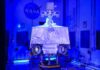
Jim Bridenstine, the former Administrator of NASA, has transitioned from public service to lead one of the private sector’s most ambitious space ventures. On May 5, it was announced that Bridenstine will assume the role of Chief Executive Officer at Quantum Space, a Maryland-based company specializing in maneuverable spacecraft for both military and commercial applications.
This appointment marks a significant convergence of government expertise and private innovation. Bridenstine’s tenure at NASA (2018–2021) was defined by the expansion of public-private partnerships and the revitalization of U.S. lunar ambitions. Now, he brings that experience to a company aiming to redefine how spacecraft operate in orbit.
A New Era for Quantum Space
Founded in 2021, Quantum Space is positioning itself as a critical player in the evolving landscape of space defense and exploration. The company’s flagship product, the Ranger spacecraft, is designed to address a growing strategic need: the ability to maneuver effectively across various orbital environments, from Low Earth Orbit (LEO) to the lunar vicinity.
Unlike traditional satellites that are largely stationary once deployed, Ranger utilizes patented propulsion technology to offer:
* Modularity: Adaptable hardware for different mission profiles.
* In-space Endurance: The capability to refuel and operate for extended periods.
* Dynamic Maneuverability: The ability to change orbits or positions as needed.
Kam Ghaffarian, Quantum Space’s co-founder and executive chairman, highlighted Bridenstine’s unique fit for the role. “Jim is a transformational leader who has defined the most significant partnerships and policy initiatives between government and the commercial space industry,” Ghaffarian stated. “He is poised to lead Quantum during this next phase of growth as spending on space defense and exploration accelerates.”
Strategic Context: Why Maneuverability Matters
The shift toward maneuverable spacecraft is not merely a technical upgrade; it is a response to changing geopolitical realities. As space becomes increasingly crowded and contested, static satellites are vulnerable. The U.S. military and commercial operators now prioritize Space Domain Awareness (SDA) —the ability to track and understand objects in space—to prevent “operational surprise.”
Bridenstine emphasized this strategic shift in his announcement. “As every domain of warfare is dependent on space, the United States must have ubiquitous space domain awareness, unpredictability for resilience, and freedom of action in every orbit,” he noted.
Quantum’s approach, which Bridenstine refers to as the “Theory of Competitive Endurance,” focuses on three pillars:
1. Avoiding operational surprise.
2. Denying first-mover advantage to adversaries.
3. Engaging in counterspace campaigning through agile, refuelable assets.
Timeline and Future Missions
While the strategic vision is clear, the technology is still in development. Ranger has not yet launched. The company successfully raised $80 million in its Series A funding round to support this development, with the first test mission, Ranger Prime, scheduled for mid-2027.
If the test flight proves successful, Ranger will transition to operational missions. Potential applications include:
* Missile defense support.
* Enhanced space domain awareness.
* Satellite life-extension services (refueling or repairing existing satellites).
Leadership Transition
Bridenstine’s background includes service as a U.S. Navy pilot and a Republican Congressman representing Oklahoma’s 1st district from 2013 to 2018. His time at NASA was marked by the launch of the Artemis program, which aims to return humans to the Moon, and the expansion of the Commercial Lunar Payload Services (CLPS) program, which contracts private companies to deliver scientific cargo to the lunar surface.
With Bridenstine taking the helm, Quantum Space’s former CEO, Kerry Wisnosky, will step down from the executive leadership role but remain as President. Wisnosky will focus on operations and advancing the company’s spacecraft development, leveraging his engineering expertise to support the new strategic direction.
Conclusion
Jim Bridenstine’s move to Quantum Space signals a deepening integration between former government leadership and private space innovation. By focusing on maneuverable, refuelable spacecraft, Quantum aims to provide the agility required for modern space operations, blending military resilience with commercial efficiency as the industry prepares for a more competitive orbital future.