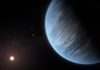
Astronomers have significantly narrowed the search for extraterrestrial life, identifying 45 rocky exoplanets as the most promising candidates for further investigation. This represents a major step forward in answering one of humanity’s most fundamental questions: Are we alone in the universe?
Refining the Search: Habitability Zones and Stellar Energy
The research, led by Lisa Kaltenegger of the Carl Sagan Institute at Cornell University, leverages data from the European Space Agency’s Gaia mission and the NASA Exoplanet Archive to pinpoint planets within their stars’ habitable zones. This zone represents the orbital range where temperatures could allow liquid water to exist on a planet’s surface—a key ingredient for life as we understand it. From over 6,000 known exoplanets, these 45 worlds stand out as high-priority targets.
The study isn’t just about finding planets that might support life, but about defining the very boundaries of habitability. Researchers deliberately included planets at the edge of these limits to better understand when a world becomes too hot, too cold, or otherwise inhospitable.
“We know Earth is habitable, while Venus and Mars are not. We can use our solar system as a reference to search for exoplanets that receive stellar energy between what Venus and Mars get,” explains study co-author Abigail Bohl.
Beyond Temperature: Orbital Dynamics and Atmospheric Stability
The team also considered factors beyond temperature, such as orbital eccentricity. Highly elliptical orbits can cause extreme temperature swings, potentially making habitability unsustainable. The research aims to determine how much orbital variation a planet can tolerate before losing its ability to support life.
This catalog is designed as a strategic roadmap for future observations, guiding instruments like the James Webb Space Telescope toward the most promising candidates for detecting biosignatures—evidence of life—in exoplanetary atmospheres.
Key Targets: Trappist-1, LHS 1140 b, and Proxima Centauri b
Among the most compelling targets identified in the study are:
- TRAPPIST-1 e: A planet in a system 40 light-years away, potentially tidally locked to its star (one side always facing it). Despite this, it remains a strong candidate for liquid water.
- LHS 1140 b: A “super-Earth” 48 light-years away, significantly denser than Earth, possibly possessing a deep ocean.
- Proxima Centauri b: Orbiting our nearest stellar neighbor at just 4.25 light-years away. Though plagued by stellar flares that could erode its atmosphere, it remains a subject of intense interest.
The Future of Exoplanet Research
The identification of these 45 exoplanets marks a critical turning point in the search for extraterrestrial life. With next-generation observatories coming online, scientists are poised to conduct more detailed investigations, bringing humanity closer than ever to answering the question of whether we are alone in the universe.
This focused approach—rather than a broad, undirected search—will maximize the chances of discovering biosignatures and ultimately determining if life exists beyond Earth.