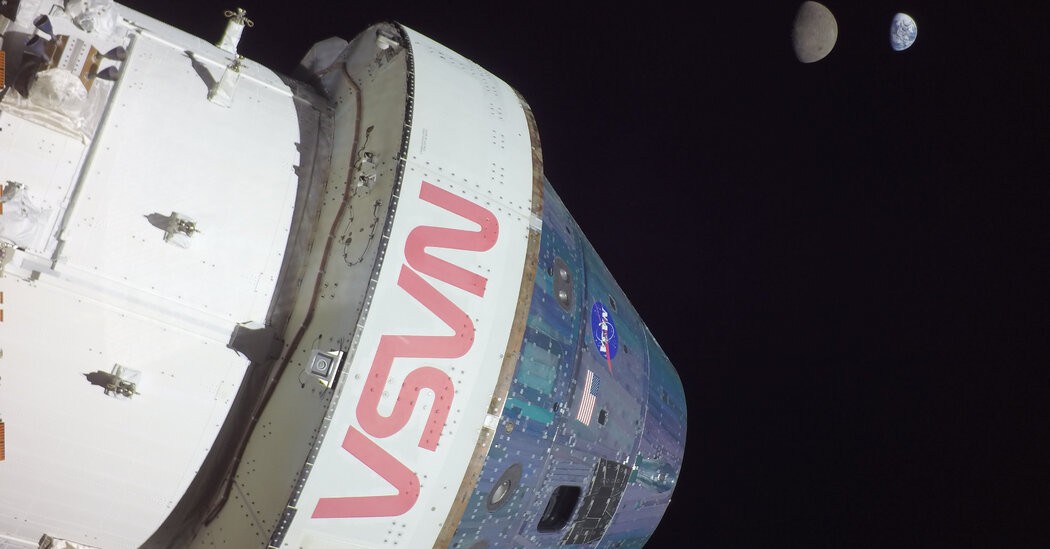
NASA is poised to launch Artemis II, the first crewed mission to the Moon since 1972. The mission, scheduled for Wednesday at 6:24 p.m. Eastern from Kennedy Space Center in Florida, will send four astronauts – three Americans and one Canadian – on a 10-day journey around the Moon and back. While this flight won’t involve a landing, it is a crucial test of the Orion spacecraft and life support systems before NASA aims to return humans to the lunar surface as early as 2028.
Testing the Future of Lunar Travel
The Artemis II crew will not set foot on the Moon during this mission. Instead, they will fly thousands of miles above the surface, pushing Orion’s capabilities to their limits. This is a deliberate step: the first priority is to validate the spacecraft’s performance in deep space conditions, ensuring it can sustain human life during extended lunar missions. Future crews will rely on SpaceX or Blue Origin-built landers for the actual surface landings.
A Return to Deep Space After Decades
The United States last walked on the Moon with Apollo 17 in December 1972. After the initial space race with the Soviet Union concluded, interest in lunar exploration waned, and NASA’s budget was slashed. The following decades saw astronauts focus on Earth-orbit missions aboard the Space Shuttle and International Space Station. However, under both the Trump and Biden administrations, a renewed push for lunar exploration has gained momentum.
The Crew Making History
The Artemis II crew includes:
- Reid Wiseman (Commander): A veteran astronaut with previous ISS experience.
- Victor Glover (Pilot): The first Black astronaut to journey around the Moon, a milestone in space exploration.
- Christina Koch (Mission Specialist): The first woman to make this deep space trip, building on her record-breaking time spent on the ISS.
- Jeremy Hansen (Mission Specialist): The first Canadian astronaut to venture beyond Earth orbit.
Launch Preparations and Viewing Options
As of Wednesday afternoon, NASA has successfully loaded the rocket’s propellant tanks with liquid hydrogen and liquid oxygen. Weather conditions look favorable, with an 80% chance of clear skies during the two-hour launch window.
For those who want to watch, NASA will stream full coverage on YouTube, X, its website, and other digital platforms. The launch itself is expected to be visible from Florida and southern Georgia.
A Legacy of Exploration
The Artemis program represents a significant shift in space exploration. It not only aims to return humans to the Moon but also to establish a sustainable presence there as a stepping stone for future missions to Mars. The success of Artemis II is vital to this long-term vision.
This mission is more than just a flight around the Moon; it is a reaffirmation of humanity’s ambition to explore the cosmos and push the boundaries of what is possible.