


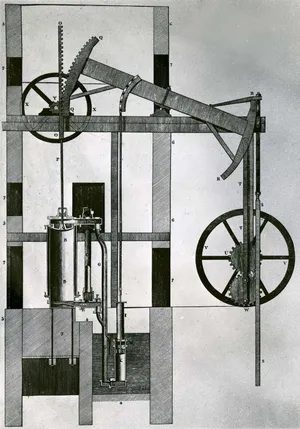
Thomas Newcomen was a British engineer and inventor born in 1664. He baptized in Dartmouth, Devon. He died in London in 1729.
His most famous creation was the atmospheric steam engine. It came before James Watt’s improvements. But it mattered just as much.
Newcomen worked as an ironmonger in Dartmouth. He saw a problem. Cornish tin mines were drowning. Water kept filling the shafts. Miners had to pump it out.
They used horses for this. Horses cost money. A lot of money. The power of horses was expensive to maintain.
Newcomen didn’t like the waste. He wanted something better. He teamed up with John Calley. Calley was a plumber. His assistant.
Together they tried steam. It took over ten years. Ten years of experiments.
Their design beat Thomas Savery’s crude pump. Savery’s engine had limits. It relied on steam pressure. Newcomen’s engine didn’t care about steam pressure limits.
Instead it used a vacuum. Steam condensed in a cylinder. This created a vacuum.
Atmospheric pressure did the work. The air outside pushed the piston down. Nature did the heavy lifting.
This was the first practical steam engine. It solved a real problem. It saved mines from flooding.
Atmospheric pressure pushed the piston down after the condensation of steam had created a vacuum in the cylinder.
Newcomen didn’t invent motion from nothing. He used the weight of the air. Simple physics. Powerful results.
The Cornish mines kept working. Tin flowed out. Industry moved forward.
Who knew a plumber and an ironmonger would change the world? Probably not Newcomen. But his engine did.

Savery had locked down a broad patent for his pump back in 1698. This legal wall meant Thomas Newcomen could not file his own patent for the atmospheric engine he was perfecting. So he did what any practical engineer would do. He partnered up. Newcomen and Savery entered into an agreement that let Newcomen build while Savery collected the royalties.
The partnership didn’t just stay on paper. It resulted in real iron and steam. The first recorded Newcomen engine was erected near Dudley Castle in Staffordshire in 1712. This wasn’t a prototype in a lab. It was an industrial machine built to solve a specific problem that had plagued miners for decades. Water was flooding deep coal shafts. Wooden pumps failed. Iron pumps broke. The Newcomen engine was the first practical device to reliably remove this water using steam power.
Why does a machine from 1712 matter today? Because it proved that heat could be converted into mechanical work on a scale that changed the world. It wasn’t efficient by modern standards. It wasted more fuel than it used for useful work. But it worked. And it worked where it was needed most: in the damp, dark depths of English mines. The Dudley Castle installation marked the beginning of the age of steam. Not because it was the fastest or the cleanest, but because it was the first to bridge the gap between scientific theory and industrial application.
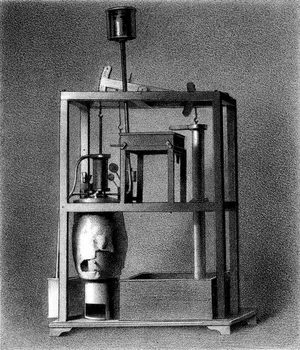


The magic of Thomas Newcomen’s invention wasn’t high-pressure steam. It was the vacuum. He designed an internal-condensing jet to suck the air out of the cylinder, creating that empty space needed for the atmosphere to push down. This was the engine’s real workhorse. An automatic valve gear managed the steam flow, too. No human hand needed to pump levers constantly.
Why Atmospheric Pressure Mattered
Newcomen played it safe. He used steam at atmospheric pressure. This kept him within the working limits of his materials. The metal could handle it. The seals held. It wasn’t flashy. It wasn’t dangerous. It just worked.
For years, this machine drained mines. Water was the enemy of early mining operations. Flooded shafts meant lost ore and lost workers. The Newcomen engine pulled that water out. It kept the mines operational. It also raised water to power waterwheels. Industrial applications spread beyond just pumping.
A Practical Revolution
This wasn’t a scientific curiosity. It was a tool. It solved a specific problem. Mining needed drainage. The Newcomen engine provided it. The automatic valve gear reduced labor costs. The low-pressure design reduced maintenance risks.
The impact was immediate. Mines could dig deeper. Water could be moved without muscle power alone. The engine became the backbone of early industrial mining. It wasn’t about speed. It was about reliability. And for a long time, that was enough.