


they are everywhere. Maybe you just don’t know the name.
Amines are a large class of nitrogen-containing organic compounds. When you look at chemical names, they almost always end in -ine. This little ending says it all. These come from ammonia (NH3). This is a simple premise, but the chemistry quickly gets complicated.
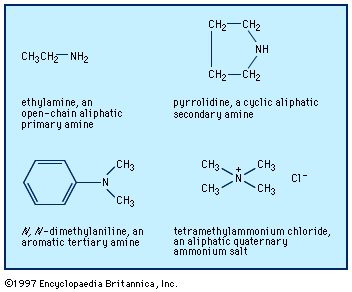
Think of ammonia as the central hub. If you replace this hydrogen atom with an organic group, you get different types of amines. Swap one? You have a primary amine. two? Secondary. All three? Tertiary. Do we add a fourth hydrogen to make the nitrogen positively charged? It is a quaternary amine. The structure changes, the behavior changes.
Why is this important? Because nature uses them to run your brain.
Naturally occurring amines are more than just lab curiosities. They actively participate in the field of biology. Alkaloids are amines found in plants, which often give them a unique taste and effect. Next are the neurotransmitters. Dopamine. Adrenaline. These control how you feel, react to stress, and move. Without these specific molecular arrangements, the nervous system would go offline.
Histamine is another one. Although it is best known for allergies, it is also an important part of the immune response and stomach acid regulation.
But the story doesn’t end with the body. Industry is also heavily dependent on these compounds.
Take aniline. It is a primary amine used in the production of dyes. The bright colors on your clothes? Often associated with aniline. Ethanolamine is used in gas cleaning and in the production of other chemicals. These industrial amines are the backbone of rubber manufacturing, pharmaceuticals and synthetic resins. They are useful in the production of clothing textiles and equipment plastics.
In chemistry, a nitrogen atom with one or two hydrogens attached is often called an amino group. It is a functional part of a larger molecule. It is a hook that allows other atoms to bond. It’s reactive. It is very versatile.
You may wonder which amines are responsible for the effects of certain medications. Or why secondary amines are preferred over tertiary amines in some industrial processes. The answer usually lies in how large the organic group is or how the molecule interacts with water. Steric hindrance plays a role. Solubility is important.
Amines are the silent workhorses of organic chemistry, bridging the gap between simple ammonia and the complex machinery of life and industry.
These are not just textbook definitions. These are the reasons why your phone feels the way it does, why certain medicines work for you, and why certain foods taste bitter. Chemical reactions are precise. The field of application is very wide.
The next time you see the -ine ending, pause. You are looking at a nitrogen atom that are exchanged, re-exchanged, or charged. This is a minor structural change. A massive change in function.
The question is not how they work. what else we haven’t discovered yet.


