


Imagine Ernest Hemingway asking Salvador Dali to draw the illustrations for The Old Man and the Sea. The idea sounds improbable, but the concept holds water. A story told through both powerful prose and masterful visual symbols creates a narrative layer that text alone cannot achieve. While we will never see that specific pairing, the legacy lives on in graphic novels, a form that blends illustration and text to tell complex stories.
Defining a graphic novel is messy. There is no single consensus, but distinct differences separate them from standard comic books. Length is the biggest factor. Graphic novels are typically much longer than the average comic book. While comic books often run in monthly series, graphic novels usually tell a complete story in one book, or sometimes spread a narrative across multiple volumes. Physically, they look like books. They are square-bound, not stapled comic booklets.
Despite these differences, the visual DNA is similar. Both rely heavily on fonts to drive the story and use boxy frames that resemble traditional comic strips. Technically, graphic novels are a type of sequential art. They convey narrative through a combination of text and drawn art. Each page is divided into panels, usually square or rectangular boxes with borders that separate them from other frames.
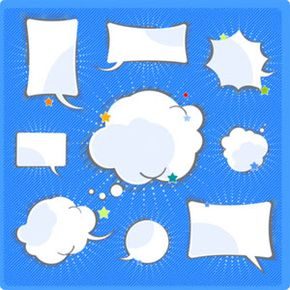
The space between these panels is called the gutter. It is just blank space, but it matters. Like white space in painting, gutters control the flow of the story. A wide gutter around a single panel can make that moment feel more important. Characters communicate using speech balloons or thought bubbles, known simply as bubbles. In basic terms, the layout looks a lot like a newspaper comic strip.
But calling them “Sunday funnies” does them a disservice. The storylines are longer and far more complicated. The themes are dense. The artwork is intricate, and the page layout itself becomes part of the message.
Misconceptions still cloud the genre. Graphic novels are not just books with pictures thrown in for decoration. They are not movie scripts, despite the recent wave of Hollywood adaptations. They are also not simply collections of serialized comics bound together. Those bound collections are called trade books or trade publications. Some purists argue that graphic novels are not a genre of comic books at all. They view the form as an independent artistic medium, distinct in the same way that music, poetry, and sculpture are unique categories.
One thing is not debatable: popularity is exploding. In 2006, graphic novel sales hit around $330 million. That is more than four times the dollar amount from 2001. The medium is adding evermore zam, blam, and pow to its pages, especially compared to its ancestors.
What Makes a Graphic Novel Different From a Comic Book?
The distinction often comes down to scope and format. A comic book is usually part of an ongoing series released monthly. A graphic novel is a self-contained story, or a collection of stories, published in a book-like format. The length allows for deeper character development and complex plotting that a single 22-page comic book cannot support.
How Do Graphic Novels Use Visual Space to Tell a Story?
The gutter is the key. It is the empty space between panels. Artists use it to control pacing. A tight gutter creates urgency. A wide gutter creates a pause, emphasizing the importance of the image. This visual rhythm is as important as the dialogue in the bubbles.
Why Are Graphic Novels More Popular Than Before?
Sales data speaks to the shift. The jump from 2001 to 2006 shows a massive surge in consumer interest. The medium has moved beyond niche underground culture into the mainstream. Readers are drawn to the visual storytelling and the ability to tackle serious themes in a format that feels less intimidating than a traditional novel.

The Graphic Novel Wars: Why the Name Still Matters
The shift from “comic book” to “graphic novel” wasn’t just a marketing ploy; it was a fight for legitimacy. When Will Eisner dropped A Contract with God in 1978, he wasn’t just publishing four short stories set in a gritty, poverty-stricken corner of New York City. He was weaponizing a label. Eisner pitched the work to publishers specifically as a “graphic novel,” believing he had coined the term.
He was wrong. Richard Kyle, a fan of the amateur press scene, had used the exact phrase in a 1964 Comic Amateur Press Alliance newsletter. Eisner found out later, but the damage was done, and in the best way possible. The term stuck. It signaled a break from the “comic book” moniker that still carried the stink of the 1950s moral panic.
Why did that panic matter so much? Because it almost killed the medium.
Frederic Wertham’s 1954 book, Seduction of the Innocent, didn’t just scare parents; it triggered a federal crackdown that led to the creation of the Comics Code Authority. The result was a decade of beige. Publishers stripped away anything controversial to keep their products on shelves. Superheroes became safe, sanitized, and boring. If you wanted to read something that actually felt human, you had to go underground.
That’s where comix came in.
The late 1960s saw the rise of independent publishers pushing boundaries with a deliberate misspelling: comix. The “x” wasn’t a typo. It was a badge of honor. It signaled adult themes, drug use, raw sexuality, and political dissent. It was a direct rejection of the Comics Code Authority. Artists like those in the underground scene used the medium to talk about things mainstream comics wouldn’t touch. They proved that sequential art could be just as complex as a novel, just as raw as a punk zine.
“The letter X was also a nod at the racy and sometimes X-rated material they featured.”
This era redefined what people thought a comic could be. It wasn’t just for kids. It wasn’t just for soldiers reading about Superman saving the day in a cheap black-and-white pamphlet. It was for adults dealing with messy, real-life problems.
So when Eisner released his “graphic novels” in the late 70s, he was tapping into a reservoir of legitimacy that the underground comix had built. The term allowed creators to bypass the stigma of the “comic book” label, which still felt like a juvenile diversion to many readers and critics.
Today, some artists still insist on the distinction. They reject the word “comic” because it triggers memories of the 1950s crackdowns and the simplistic storytelling that followed. They want their work recognized as literature, not pop culture. They want the weight of the format to match the weight of the subject matter.
Whether you call it a comic or a graphic novel, the core argument remains: the medium has outgrown its cage. The pictures that once were just cave drawings and political cartoons have become a sophisticated language capable of holding the same narrative complexity as any text-only novel. The war over the name is less about semantics and more about who gets to define what art is.


Why the Label Matters (And Why It Doesn’t)
The 1930s and 1940s cemented a specific image in the public imagination: capes, sidekicks, and hyper-masculine tropes. That legacy still clings to the word “comics” today. To distance themselves from those outdated stereotypes, many artists and critics have started using terms like graphic literature or graphic memoirs. It is a deliberate linguistic maneuver. They want to shed the baggage of the Golden Age.
But honestly? It is mostly semantics. The medium itself is far broader than the stereotypes suggest. Sequential art is not a single lane. It is a highway with dozens of exits. You find action and superhero stories, yes. But you also find mystery, drama, horror, and romance. The audience spans the entire spectrum, from young children to adults who need to process complex emotions through images.
The Literary Depth Hidden in Panels
Graphic novels are not just visual gags. They can be flippant and fun, or they can be grave and weighty. They tackle the same complicated themes found in traditional novels. The literary toolkit is fully available to the artist: symbolism, foreshadowing, flashbacks, anthropomorphism, plot twists, and metaphor.
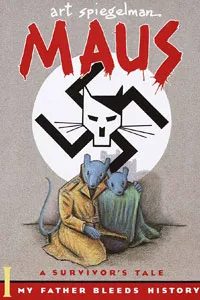
Take Art Spiegelman’s Maus. It is largely autobiographical. Spiegelman used the medium to recount his father’s experiences during the Holocaust. The visual metaphor is stark: Jews are depicted as mice, the Nazis as cats. It is a gut-wrenching memoir that earned a Pulitzer Prize. That was the only Pulitzer ever awarded to a graphic novel.
Could Spiegelman have released it as a long-running comic book series? Sure. He could have. The content was the same. The medium was just the vessel he chose to express that specific story. The label does not change the weight of the words.
Where to Actually Buy Them
There is one consistent differentiator between regular comic books and graphic novels: the shelf they sit on. Street newsstands usually stock the monthly issues. But if you want the collected, self-contained stories, you have to go to a comic book shop or a bookstore. The location signals the format.
Now that the scope is clear, it is worth diving into those examples. Why settle for a single genre when the shelves offer such a wide range? Your local bookstore’s graphic novels section is worth a proper dig.
From Watchmen to manga: how graphic novels became serious art
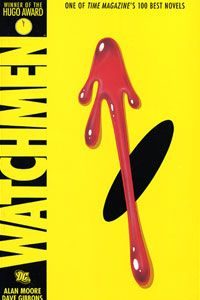
The medium didn’t always feel this heavy. Before Watchmen landed on Time Magazine’s top 100 novels list, comics were often dismissed as childish fare. That changed when Alan Moore, Dave Gibbons, and colorist John Higgins dropped twelve issues that later compiled into a single trade paperback.
It’s a Cold War alternate reality. No almighty heroes here. Just flawed, masked “vigilantes.” Moore used them to dissect power, control, and nuclear anxiety. The tagline? “Who watches the watchmen?” It felt like a shift in gear. Adult-oriented artistry entered the mainstream.
Frank Miller’s bleak Gotham
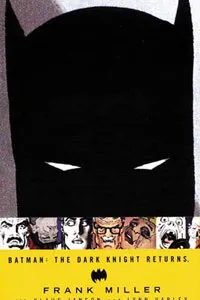
The Dark Knight Returns hit around the same time. Frank Miller stripped away the invincible iconography. Bruce Wayne is retired, old, and broken. Crime runs wild in Gotham until he puts the suit back on.
Miller paints a grim landscape. Not a perfect balance of good and evil, but a messy, human struggle. Like Watchmen, it treats the superhero as a character with psychological weight, not a symbol of invincibility.
Superhero excess and odd geography
Then there’s the outlandish stuff. The Mighty Avengers leans into massive, evil-fighting spectacle, featuring a character named Ironman. The Incredible Hercules takes a different turn. A Greek protagonist defends the city of Atlantis from constant challengers. It’s less about moral philosophy and more about relentless action in a mythic setting.
Geography doesn’t stop the spread. Japan’s manga market is a beast of its own. Readers there devour titles across every genre imaginable. The fan base spans men, women, and all ages.
This popularity crossed the Pacific. In the United States, manga titles now compete with native-language bestsellers for shelf space. The boundary between “comics” and “graphic novels” has blurred, especially as Japanese styles challenge traditional Western narratives.
Where to find groundbreaking titles
You don’t need a degree in literary theory to find these works. They’re everywhere. Bookstores, digital platforms, and libraries carry the heavy hitters. The next page details more of these foundational texts, but the core idea remains: the medium grew up, got complex, and refused to shrink back.
Which title do you think holds up best today?
Why Neil Gaiman Broke the Mold with The Sandman
Neil Gaiman didn’t start out as a comic book guy. He was a literary novelist first. That background gives The Sandman a weight most graphic novels lack. The series follows immortal entities like Death and Desire as they navigate human history. It’s not just superpowers. It’s Freudian analysis, serial killers, and pop culture references woven into a dense, historical tapestry. Gaiman blends literary traditions with sequential art, creating layers that reward repeated reading.
How Stuck Rubber Baby Connected Civil Rights and Identity
In 1995, DC Comics released Stuck Rubber Baby by Howard Cruse. The story tracks a white, gay man in the South who gets tangled in the Civil Rights movement. It’s a specific, painful look at how identity politics and racial justice collided during that era. The art and prose work together to show the confusion and danger of living between two worlds.
Why Persepolis Still Resonates with Readers Today
Marjane Satrapi’s Persepolis is an autobiography, but it feels like a thriller. It covers her childhood in Iran right as the revolution hit. The book tackles gender roles and cultural upheaval without holding back. The stark, black-and-white illustrations mirror the harsh reality of the political changes around her. It’s personal, but the stakes are national.
The Art of Silence in Jimmy Corrigan
Chris Ware’s Jimmy Corrigan, the Smartist Kid on Earth is different. Some pages have no words at all. Just pictures. Ware uses blank space and detailed illustration to move the story forward. The narrative jumps between flashbacks and layered plots, dealing with family dysfunction and race. It’s a test of patience, but the visual storytelling carries the emotional weight.
How Joe Sacco Turned Reporting into Graphic Art
Joe Sacco doesn’t draw what happened to him. He draws what he saw. Palestine is built on his visits to the West Bank and Gaza Strip. The drawings are bleak, direct, and heavy. He documents the daily life of people stuck in conflict. Safe Area Gorazde does the same for the Bosnian War, using interviews with survivors to reconstruct the horror. It’s journalism, but it hits harder because you see the faces.
The Reality of the Creative Machine
Making these books takes years. It’s exhausting. But the writer is rarely the only hand on the wheel. The process is collaborative. You need artists, editors, and designers to make the vision stick. The writer is just one part of the engine that drives the story forward.

The collaborative machinery behind the pages
One person can bang out a novel at a desk. A graphic novel is different. It’s a committee. Usually, you’re looking at a writer, a penciler, an inker, a colorist, and a letterer. Five distinct jobs. One shared vision.
The writer sets the stage. They handle plot, dialogue, character arcs, and themes. But text alone is just a script. It needs visuals to breathe.
Enter the penciler. They don’t just draw; they architect the page. Panels, gutters, character placement, environment. It’s a skeleton. A blueprint. Think of them as a generalist illustrator. They need to nail a human face, a skyscraper, and a puppy all in the same spread. Their lines are rough. Deliberately so.
Then the inker gets to work. This is where precision takes over. They take that skeleton and give it muscle. Brushes, pens, shading. They add depth and form. Often, they erase the pencil work as they go. Why? Because stray, jagged pencil lines ruin the clean finish. The inker decides how much of the original sketch survives.
The inker’s job isn’t just to outline. It’s to sculpt light and shadow into the flat drawing.
Colorists step in next. Unless the book is strictly monochromatic. Their palette sets the emotional temperature. Dark hues signal danger. Bright ones lift the mood. They used to mix paints by hand. Now, it’s mostly digital, usually in Adobe Illustrator or similar software. They don’t just pick colors; they build atmosphere.
Letterers finish the look. They draw the speech bubbles and thought balloons. Then they choose the font. This matters more than you’d think. A heavy, bold typeface screams emphasis. A thin, shaky font whispers uncertainty. The letterer is the last visual voice in the room.
When the team clicks, the result is magic. Ideas bounce around. The story sharpens. When they don’t? Well, let’s just say the walls absorb a lot of energy.
Who calls the shots in a graphic novel studio?
It depends on the project and the people. Sometimes, the writer is the dictatorial boss of the art direction. They have a specific vision for every panel. Other times, they hand the reins over.
Take Dean Koontz’s “Frankenstein,” for example. Koontz let the artists take the lead on how to illustrate the story. He didn’t micromanage the visuals. He trusted the team’s instincts. That’s not always the case. The hierarchy shifts based on the scope and the personalities involved.
But here’s the kicker. If you see a famous name on the cover, the cameras are already rolling. Hollywood doesn’t just watch; it invests. The film adaptation pipeline for graphic novels is wide open, and the crowds are showing up.
Graphic novels go to Hollywood
The jump from page to screen is no longer a novelty. It’s a major revenue stream. When a graphic novel gains traction, studios see the IP potential. They see the built-in fan base. They see the visual language already established.
The collaboration model described above is exactly why these properties translate so well to film. The visual storytelling is dense, cinematic, and character-driven. It’s ready for adaptation. You don’t have to invent the look; you just have to bring it to life with actors and motion.
Which is why, next time you see a superhero or a sci-fi thriller in theaters, check the credits. There’s a good chance it started as a pencil sketch on a shared desk, debated by five people who probably didn’t get along perfectly but made something that stuck.
Why schools were historically hostile to comics
The classroom door used to be a fortress. For decades, teachers and administrators treated graphic novels with suspicion. Why? Because they looked like “junk” to the people holding the curriculum.
Jimmy Corrigan, the protagonist of Chris Ware’s Jimmy Corrigan: The Smart Alek, becomes the symbol of this exclusion. He isn’t just a character; he’s a proxy for the medium itself. Ware, a Pulitzer Prize-winning cartoonist, creates a world where the protagonist is deeply troubled, intelligent, and visually complex. Yet, in many school libraries and curricula, books like this were banned or ignored.
The reason wasn’t just moral panic. It was a fundamental misunderstanding of literacy.
“Comics aren’t just pictures. They’re a distinct narrative form that requires a different kind of reading.”
This argument gained traction slowly. Teachers began to realize that the visual language of comics actually aids comprehension. The interplay of text and image forces students to engage in a type of reading that is more active than pure text. It’s not “easy reading.” It’s layered.
How graphic novels entered the academic canon
The shift didn’t happen overnight. It required a few key catalysts.
- Critical recognition: When Maus by Art Spiegelman won the Pulitzer Prize in 1992, it signaled that comics could handle serious subject matter. Holocaust history, told through mouse-and-cat avatars, was undeniably literary.
- Educational frameworks: Teachers started using graphic novels to teach history, science, and literature. March by John Lewis became a staple in American history classes. Persepolis by Marjane Satrapi found its way into sociology and political science syllabi.
- Student demand: Kids wanted to read them. And when students ask for something, teachers often cave.
The resistance didn’t vanish. Some parents still complained. Some administrators still labeled them “distracting.” But the tide had turned.
Which graphic novels are actually taught in schools?
Not all of them. But a specific set has become standard issue.
- Maus (Art Spiegelman) – History, literature
- Persepolis (Marjane Satrapi) – History, politics
- March (John Lewis, Andrew Aydin, Nate Powell) – Civil rights, history
- The Adventures of Tintin (Hergé) – Literature, art
- Jimmy Corrigan (Chris Ware) – Advanced literature, art
These titles share a trait: they are visually rigorous. They don’t rely on action alone. They use layout, silence, and imagery to convey emotion and meaning.
Why teachers are finally letting Jimmy Corrigan into the classroom
Because it works.
Studies have shown that students who read graphic novels often perform better in reading comprehension tests. Why? Because they’re learning to decode multiple layers of information simultaneously. It’s a skill that transfers to other subjects.
And it’s not just about test scores. It’s about engagement. A teenager who wouldn’t touch a 300-page novel might spend hours on a 200-page graphic novel. That’s a win.
The “off-limits” era is ending. Not because the books changed, but because the readers did. Teachers are learning to trust the medium. And students are proving they can handle it.
So, where does Jimmy Corrigan go from here? Into the syllabus. Into the library. Into the hands of kids who need a story that looks like the world they actually live in.
The school gate is opening. Slowly. But it’s opening.

Why Graphic Novels Are Finally Getting a Seat at the Desk
The old stereotype holds strong in many faculty lounges. A student slumps in a desk, textbook open, eyes scanning the page. But the text isn’t Sociology: An Introduction. It’s Silver Surfer tucked into a cover of educational material. For decades, that was the extent of the comic book’s role in education: the contraband, the distraction, the thing teachers had to confiscate.
That dynamic is shifting. Not because students are suddenly more disciplined, but because educators are realizing that the medium itself might be the tool. Graphic novels are moving from the back of the backpack to the front of the curriculum. Why? Because the way humans absorb information isn’t one-size-fits-all. Some brains light up on dense prose. Others process information faster when it’s paired with visual cues.
Jeff Hayes, a Ph.D. candidate in secondary education English language arts at the University of Alabama, points to a blind spot in the U.S. education establishment. For too long, the system operated under the assumption that learning happens best through text stripped of visual context.
“Our educational system became obsessed with the idea that information was and is best learned through prose, poetry, and script devoid of visual context or connection of any kind.”
That obsession created a gap. Students whose learning styles didn’t match the prose-heavy curriculum were left behind. Hayes argues that graphic novels fill that gap, offering a variety of communication styles that traditional texts ignore.
The Barriers to Adoption
If the benefits are clear, why isn’t every classroom using them? Change in education is slow, often because the infrastructure is rigid. Hayes notes that colleges of education and teacher training programs have very little room to maneuver. Standardized testing dominates. Funding is tied to those tests. Add the lingering stigma that comics are “not real books,” and you have a powerful force resisting new curriculum ideas.
Parents play a role, too. Many still view comics as a detriment to “real” reading. To them, the visual element is a crutch. But for reluctant readers and students with learning disabilities like dyslexia, that visual support is exactly what makes the text accessible.
The mechanics are simple. A page of dense text can feel like a wall. A comic page breaks that wall down. Smaller word counts reduce intimidation. Colorful panels grab attention. The visual flow helps students follow the narrative without getting lost in syntax.
What Students Actually Learn
It’s not just about keeping kids interested. The skills transfer.
- Basics: Punctuation, paragraph structure, and outlining become clearer when visualized.
- Advanced Skills: Comics force readers to make inferences. If a character is silent but the art shows a trembling hand, the reader has to interpret emotion.
- Literary Concepts: Satire, parody, irony, allusion, and symbolism are easier to grasp when embedded in images rather than explained in abstract text.
These are hard concepts to pin down in text-only mediums. In comics, they are active, visible, and immediate.
Beyond the Classroom
There is a broader cultural argument, too. We live in tech-saturated societies. Passive consumption is the norm. Cable TV. Mindless web surfing. The brain goes on autopilot. Graphic novels, whether digital or hard copy, require active engagement. You have to read the text, interpret the art, and connect the two. It’s a cognitive workout disguised as entertainment.
The medium is maturing. It tells frivolous stories and serious ones alike. It’s used for pure fun and for rigorous education. The line between “comic book” and “literature” is blurring, and that’s a good thing. The result? A more engaged student body. A classroom that feels less like a lecture hall and more like a place where ideas actually land.
It’s the kind of outcome that would make Superman proud.