


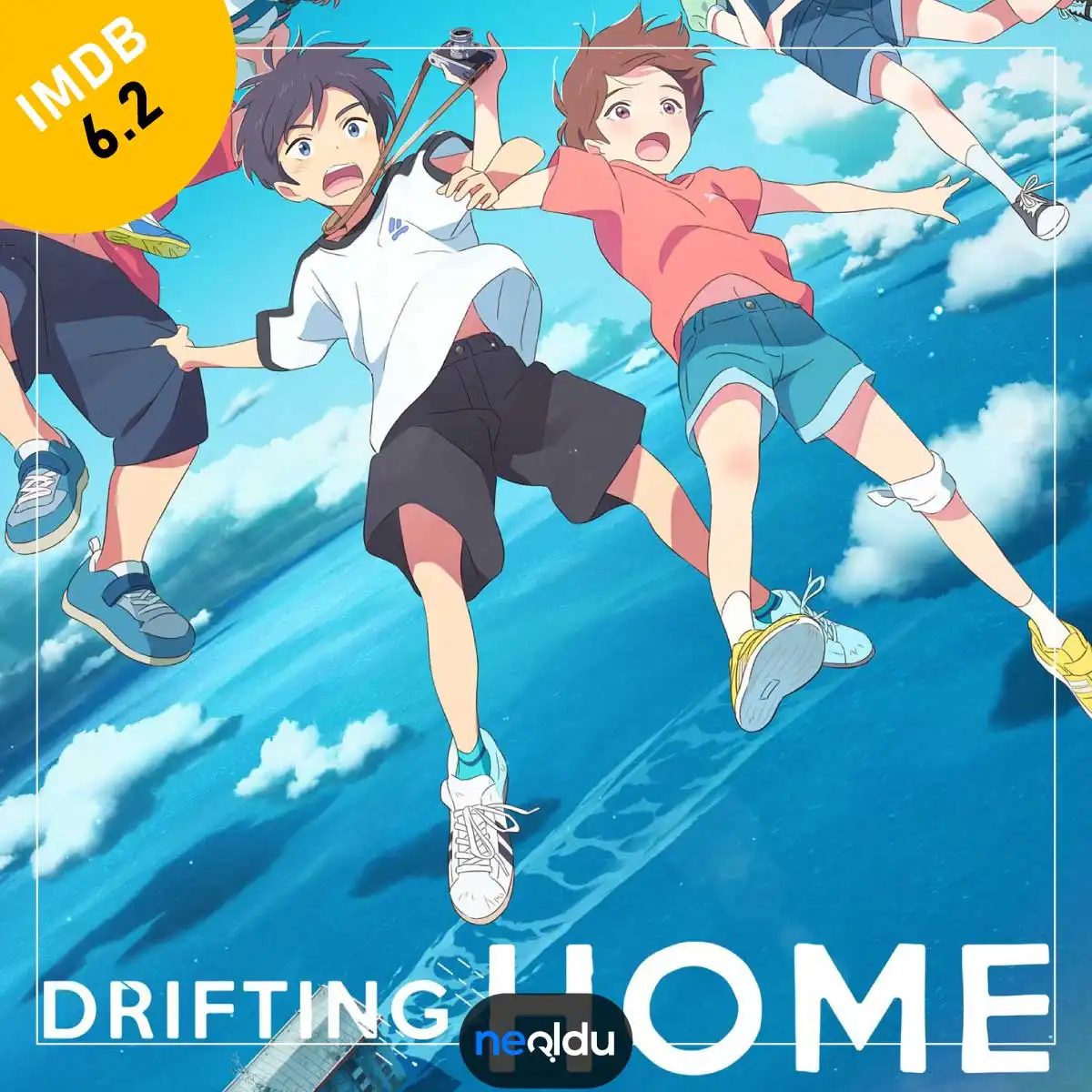
We dug deep into our Asian movie archives to bring you this curated list. The goal is simple. Find visually stunning films from China, Japan, South Korea and Thailand that are rated on IMDb. These are not just random choices. They truly define modern East Asian filmmaking. If you’re looking for the best Asian movies to add to your watch list right away, start here.
1. 漂流家园
这部动漫电影脱颖而出,成为高质量最佳亚洲动漫推荐 的典范。 该故事改编自村田佑介的漫画,讲述了两个小男孩在计划的台风疏散过程中发现他们的社区漂向大海的故事。 这是一种将平凡与神奇融为一体的视觉奇观,捕捉到一种超越日本起源的失落感和冒险感。
The dynamic between Kosuke and Natsume is a study in awkward proximity. Friends since childhood, the two sixth-graders have reached that specific developmental stage where shared history feels less like a bond and more like a trap. They are actively dodging each other. It is a universal kind of teenage angst, packaged in anime form and set against the backdrop of a summer vacation that goes horribly wrong.
They head to a resort site, a place that has seen better days. The location is steeped in memories for the pair, a physical archive of their past interactions. But nostalgia is a fragile thing. While playing a game within the grown-up, slightly dilapidated environment, the atmosphere shifts. The air gets heavy. The sky changes. They are pulled into a mysterious phenomenon that defies explanation.
When they wake up, the ground is gone.
They are floating in a mysterious sea. The transition from a dusty summer resort to an endless, enigmatic ocean is abrupt and disorienting. This is the core premise of Hot Blooded, a Japanese animated adventure film that premiered in 2022.
A Dive into Mystery and Memory
Directed by Hiroyasu Ishida, the film operates within the anime and adventure genres, aiming for a tone that balances the whimsy of childhood games with the weight of supernatural events. The production hails from Japan, a market known for its ability to blend slice-of-life realism with high-concept fantasy. The film holds an IMDb score of 6.2, suggesting a modest but dedicated audience that appreciates its atmospheric storytelling.
The voice cast brings the emotional weight of the characters’ isolation and subsequent peril. Kana Hanazawa provides the vocal texture for one of the leads, while Daiki Yamashita and Mutsumi Tamura round out the cast, lending their voices to this tale of survival and unexpected connection.
The narrative hook is simple but effective: two kids who can’t stand to be in the same room are now forced to rely on each other to survive in an unknown aquatic environment. The “hot blooded” title hints at the adrenaline and raw emotion that follows, rather than just literal heat. It is a story about how shared trauma—or at least shared confusion—can force a relationship to evolve rapidly.
Why It Resonates
For fans of character-driven anime adventures, Hot Blooded offers a focused look at interpersonal dynamics under extreme stress. The setting, a forgotten resort, serves as a metaphor for the pair’s own stagnant relationship. The ocean that swallows them represents the unknown future they have been trying to avoid.
The film does not rely on massive spectacle. Instead, it focuses on the immediate, visceral experience of the characters. The mystery of the sea is not just a plot device; it is a catalyst. It forces Kosuke and Natsume to drop their defensive postures and engage with each other, whether they want to or not.
The animation style, typical of its genre, uses visual cues to heighten the sense of disorientation. The shift from the familiar textures of the resort to the fluid, shifting visuals of the ocean is stark. This contrast underscores the theme of loss of control.
There is a certain charm in watching two characters who have spent years building walls suddenly find those walls washed away by water.
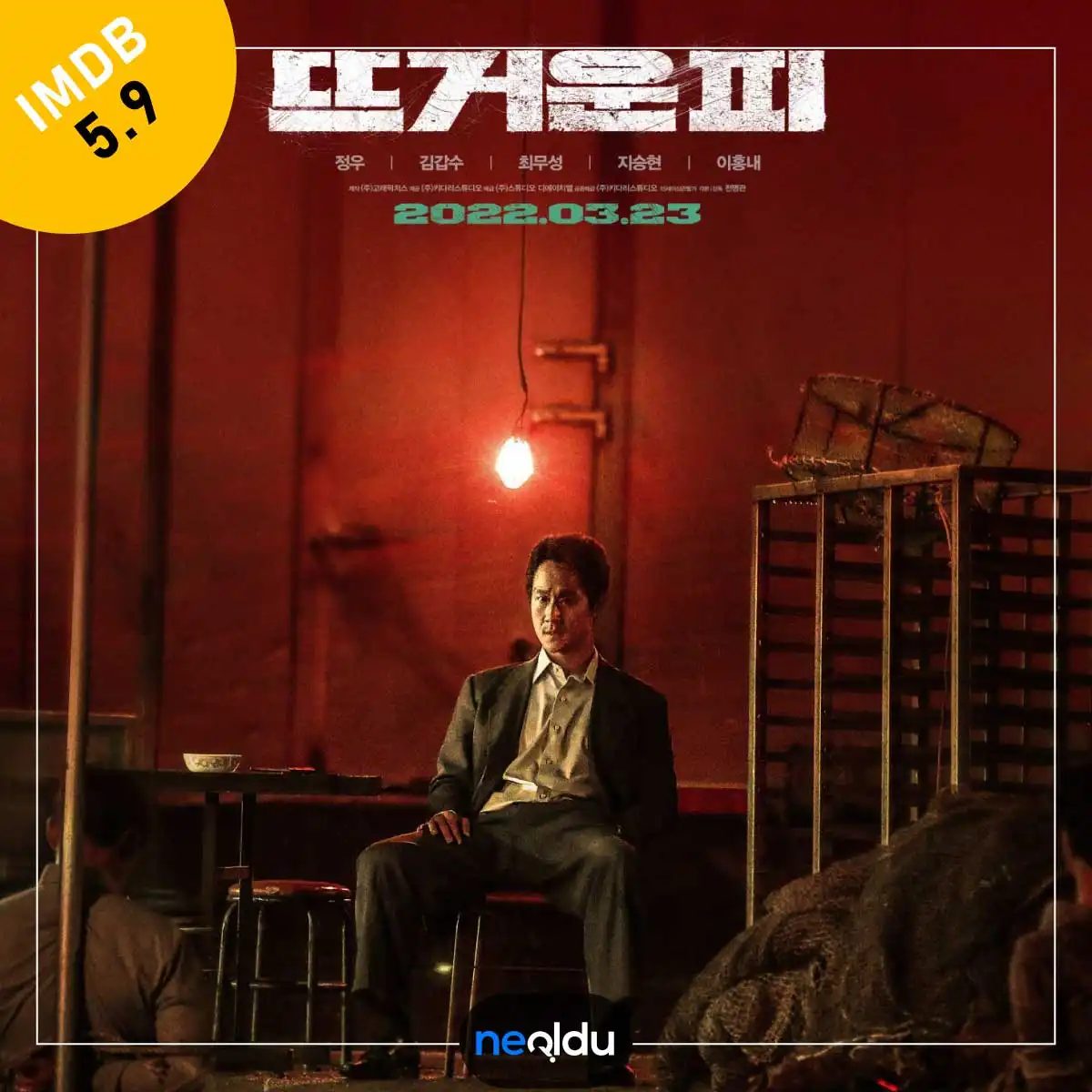

A Killer’s Return and the Busan Underworld’s Chaos
The streets of Busan don’t forgive. For one man, staying alive means diving headfirst into a gang war that refuses to end. Yong-kang fits the bill. A murder suspect who fled the country, he suddenly returns home. His reappearance isn’t a reunion. It’s a spark in a powder keg.
Chaos erupts across the town. Every corner holds trouble. The past catches up. And Hee-soo? She’s facing a deadline. Her soul and her future hang in the balance. She has to make big decisions. Fast.
The Action Crime Blueprint
This isn’t a slow burn. It’s an action-crime thriller rooted in South Korea’s gritty urban landscape. Released in 2022, the film targets viewers who want high stakes and local flavor. The rating sits at a modest 5.9 on IMDb. It’s not a masterpiece, but it delivers the goods for genre fans.
The direction falls to Cheon Myeong-Gwan. He keeps the pace moving. The cast anchors the tension. Hyun Bong-sik plays the lead, bringing a hardened edge to the role. Choi Moo-Seong and Jeong Ho-bin round out the main trio. Their chemistry drives the conflict.
Why Busan Matters in Crime Narratives
Busan is more than a backdrop. It’s a character. The city’s port history and industrial grit bleed into the story’s tone. Gang wars here feel visceral. The coastal setting adds isolation. You can’t outrun the ocean. You can’t outrun the debt.
Yong-kang’s return disrupts the status quo. He doesn’t just come back. He brings the violence with him. The town’s peace is an illusion. His presence shatters it.
Hee-soo’s Crucible
Hee-soo stands at the center of the fallout. She’s not just watching. She’s acting. The pressure mounts. Her choices define the outcome. Survival isn’t about strength. It’s about timing. And will.
The film leans into this personal stakes. The gang war is the engine. But Hee-soo’s survival is the fuel. Her arc forces the narrative toward a breaking point.
Is It Worth the Watch?
If you like Korean crime thrillers with a focus on loyalty and betrayal, this fits the slot. The action is direct. The drama is grounded. The 5.9 score suggests it’s forgettable to some, but engaging to others.
It’s a straightforward tale. A killer returns. Chaos follows. One woman fights for her life. Nothing more. Nothing less.
The ending? It lands. But it doesn’t tie everything up in a bow. Some threads remain loose. That’s the reality of the genre. Not every knot gets cut.

The devil’s mission in Professor Aim’s horror thriller
If you’re looking for a horror movie that turns the stress of schoolwork into a literal curse, check out this 2022 Thailand release directed by Lertsiri Boonmee, Vutichai Wongnophadol, and Nophand Boonyai. The plot revolves around a student to whom Professor Aim has given an old single-lens reflex camera, which he ostensibly uses for his thesis. However, this is not a typical youth school drama. This is a trap.
A camera is not a tool. This is a test. And the researcher is not a university professor, but the devil himself.
The premise is simple, but effective. The students realize that they cannot escape this supernatural test. Once this fact is understood, the character moves from confusion mode to combat mode. They stopped running and started preparing to fight. This is a twist on a classic horror trope. Instead of running away from the killer, prepare to fight the forces that created the situation.
Starring Korapat Kirdpan, Cherprang Areekul and Nophand Boonyai, the film leans heavily on the roots of the genre. It combines elements of Thai horror and psychological thriller. The result is a tense, atmospheric ride that is characterized by the fear of being watched and the fear of failure.
With an IMDb rating of 4.7, it hasn’t become a cult classic yet, but it has created a niche for regional supernatural thrillers fans. The film’s strength is its commitment to high stakes. The professor’s gift is temptation. The camera is bait. A student is a fish that eventually stops swimming and starts biting.
Is this the perfect movie? No, it has its flaws. But as a piece of Thai cinema, this production delivers on its promise. It amplifies the daily stress of the thesis and turns it into a life-or-death battle against evil. For viewers tired of generic jump scares, this one offers something different: a story where the main character actively interacts with his tormentor.
The director’s team combines visual excitement and psychological horror. It’s not just about seeing fear. you feel the weight of the assignment. The camera becomes a character in itself, a silent observer that demands a performance. When students realize that the audience is not human, the genre changes. Passing the class is no longer important. It’s about getting through the final exam.
Because of the change, tensions are still high. This fight is not a physical confrontation in the traditional sense. This is a battle of wills. The students are mentally and physically ready for battle. They know they have nowhere to go, so they are ready to face the darkness. In horror, this perception is often scarier than the monster itself.
The film fits perfectly into the horror landscape of 2022 and offers a unique voice from Southeast Asia. It does not rely on Western tropes. Instead, they exploit local cultural fears and academic pressures. The result is a story that is both universal and specific. We all know the fear of deadlines. But few people think of it as a deal with the devil.
For fans of Korapat Kirdpan or anyone interested in independent Asian horror, this is a must watch. short and sharp
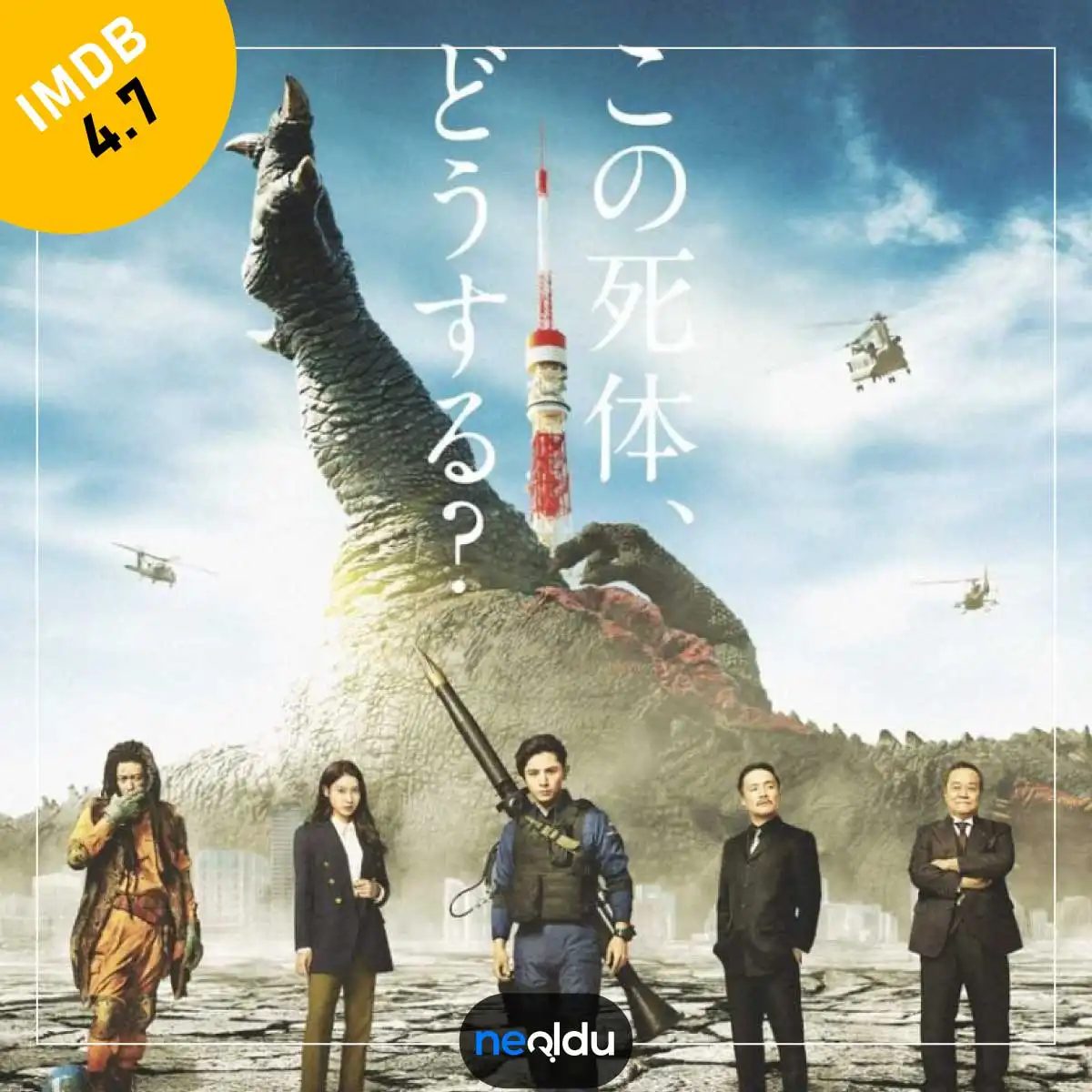
Backyard monster
It begins like any other monster attack. Panic turns to pure chaos when a giant creature attacks Japan. People ran away. People screamed. Standard alien attack protocols are in full effect. And suddenly the monster died. There was no explosion. There are no dramatic battles. Just… died.
People around the country heaved a sigh of relief. We can breathe easy. We went back to work thinking the nightmare was over. This is not true.
The body had not decomposed properly. It slowly but surely starts to rot and swell. And here’s the kicker. if that thing bursts, the entire country would be wiped off the map. We sit on a ticking time bomb and celebrate our victories.
Why watch?
- Genre: A strange combination of comedy and romance, but feels impossible until you see it with your own eyes.
- Atmosphere: Ironic, dark and surprisingly human.
- Director: Satoshi Miki brings a unique visual style that leans toward the absurd.
- Cast: Starring Ryosuke Yamada, Tao Tsuchiya and Gaku Hamada.
Reality Check
The film doesn’t take itself too seriously, but the stakes are there. This isn’t about saving the world with a big laser. It’s about dealing with the mess that’s left behind. literally.
IMDb rating: 4.7
Release Year: 2022
The Homestay Hook
这就是“寄宿家庭”这个标题的意义所在。 你不只是躲起来; 你正生活在世界末日之中。 这部电影问了一个简单的问题:当你的后院有一个巨大的腐烂外星人导致世界末日时,你如何约会?
很乱。 这很有趣。 它对待灾难的方式也是日本独有的。
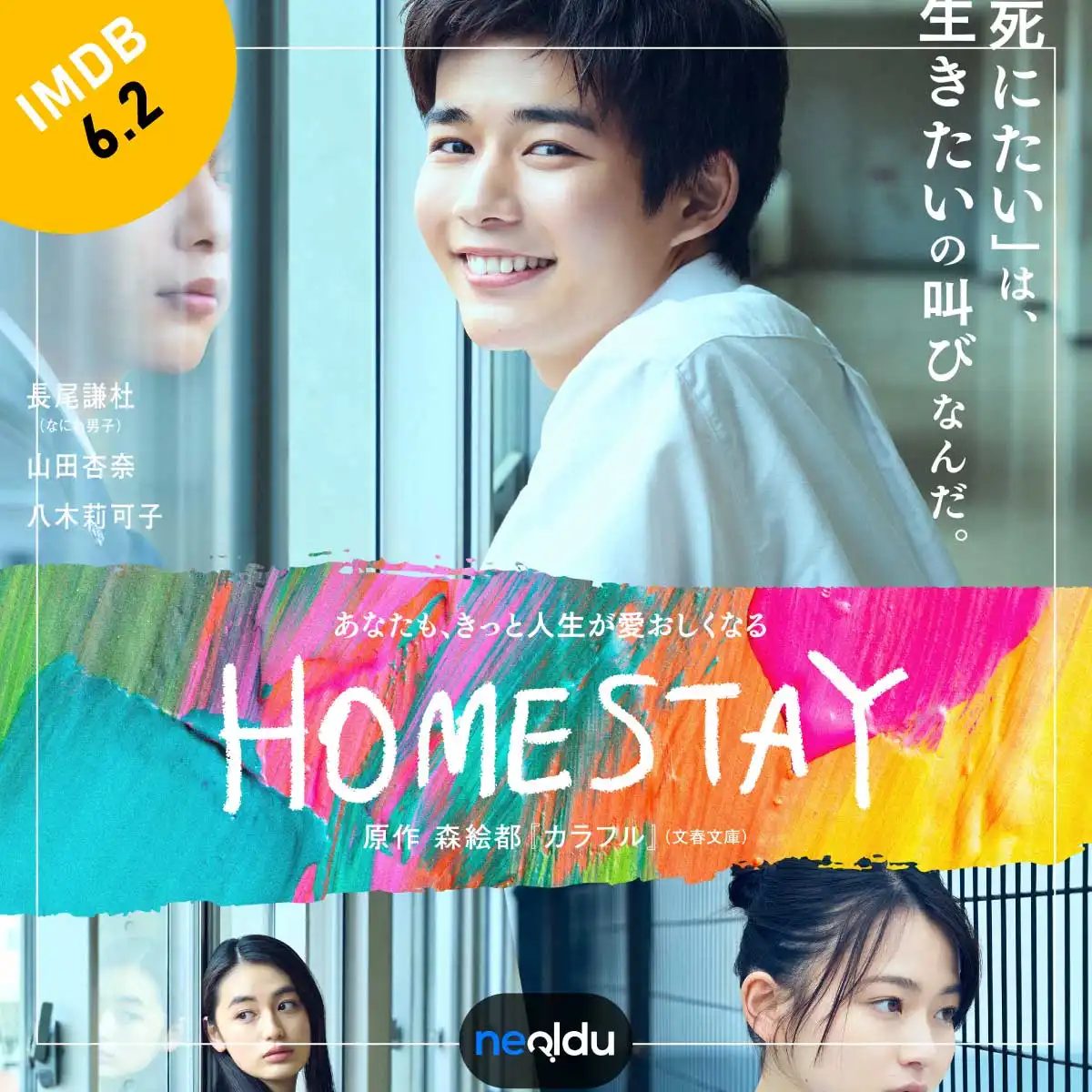
The premise hits hard before the title even appears. A spirit latches onto the body of a deceased high school student. But this isn’t just a ghost story with a romantic twist. It’s a race against the clock. The entity has exactly 100 days to figure out why the student died. Every detail matters. Every clue is a potential lifeline.
As the days tick down, the spirit navigates this borrowed life. It starts with a flash of light. Then, the darkness sets in. A massive, unsettling truth waits beneath the surface. The genre mixes romance with fantasy, rooted firmly in Japanese storytelling traditions. It’s a blend of the ethereal and the grounded, where emotions drive the plot as much as the mystery.
Released in 2022, the film carries an IMDb score of 6.2. That’s a solid, if not spectacular, rating. It suggests a project that works for its niche but doesn’t necessarily break new ground for general audiences. The director, Natsuki Seta, guides the narrative through these supernatural waters. The cast includes Kento Nagao, Rikako Yagi, and Anna Yamada, bringing weight to the emotional core of the story.
Solving the Mystery of the High Schooler’s Death
The core question isn’t just who killed the student. It’s how the spirit will piece together the fragments of a life cut short. The Dardnaak – Waning Moon plot hinges on this investigation. The spirit must inhabit the school environment, interact with classmates, and uncover secrets that were hidden in plain sight.
Why did the student die? Was it an accident? A crime? Something more supernatural? The film forces the viewer to watch the spirit learn alongside the audience. There are no easy answers. The 100-day limit creates a natural tension. If the truth isn’t found in time, what happens? The film doesn’t spell it out early on. You have to stick around to see how the spirit’s mission unfolds.
Where the Fantasy Meets Reality
Japanese cinema often blurs the line between the mundane and the magical. This film fits that mold perfectly. The setting is a typical high school, but the atmosphere is charged with something unseen. The spirit’s perspective offers a unique angle. It sees things others miss. It hears things others ignore.
The romantic element adds another layer. Is the spirit forming a connection with someone from the student’s past? Or is the romance a distraction from the darker truth? The interplay between love and loss is central to the narrative. It’s not just about solving a puzzle. It’s about understanding the human cost of the mystery.
Why Watch Dardnaak – Waning Moon?
If you’re looking for a quick thriller, this might not be it. The pacing is deliberate. It allows the atmosphere to build. The fantasy elements are woven into the daily life of the characters, making the supernatural feel inevitable rather than intrusive.
The cast delivers nuanced performances. Kento Nagao and Rikako Yagi carry the emotional weight. Their chemistry drives the romantic subplot, which in turn fuels the mystery. Anna Yamada adds depth to the supporting roles. The film relies on these performances to keep the story engaging.
The Waning Moon
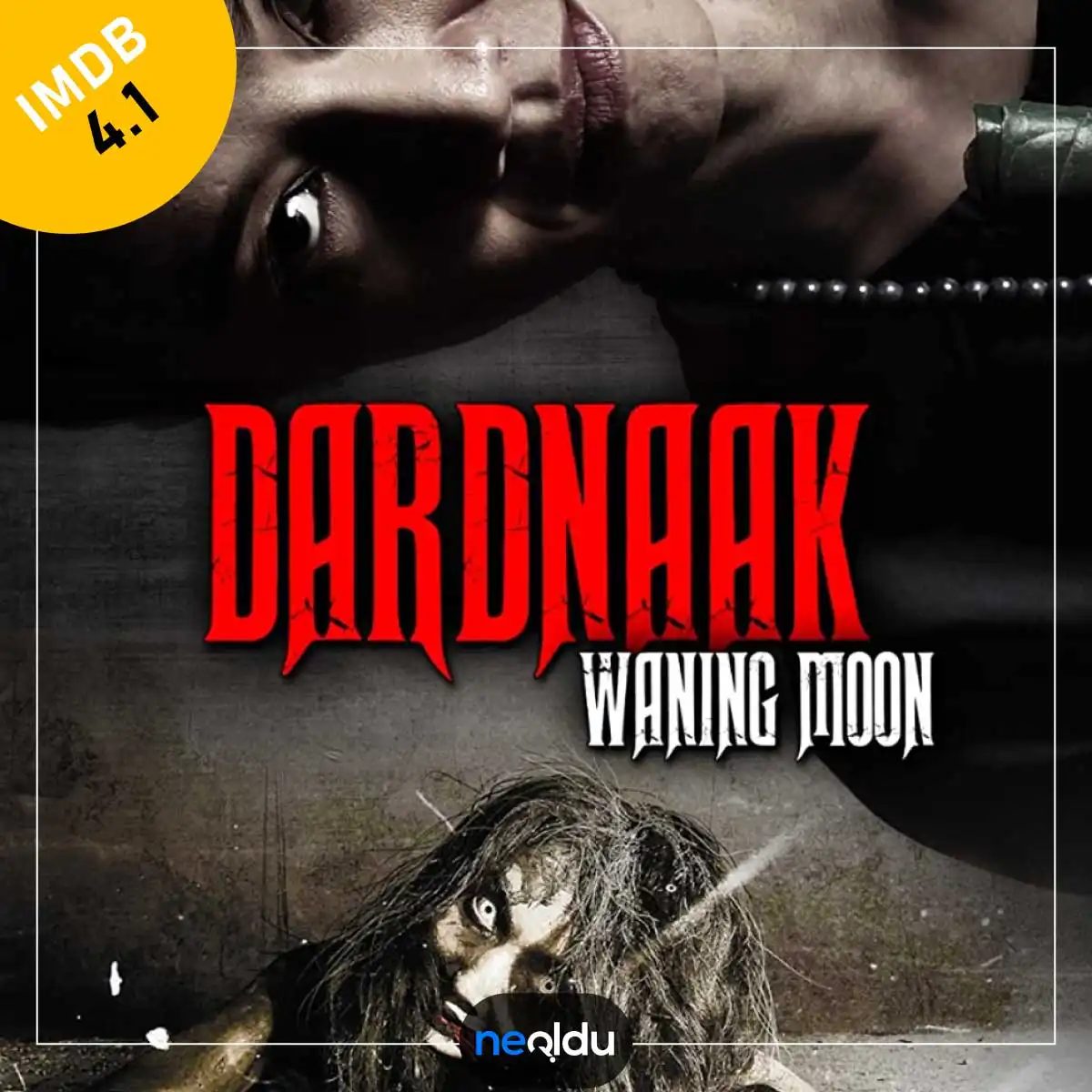
There is a specific kind of silence found in the deep Thai countryside, the kind that feels less like an absence of noise and more like a held breath. Here, the old ways haven’t faded into folklore; they are the daily rhythm. People still believe in the spirits that linger in the banyan trees and the shadows. At the center of this tension stands Nuanchan, a medium whose authority is as heavy as it is respected. He doesn’t just see ghosts; he mediates with them, and in doing so, he holds the power of life and death over his community.
Nuanchan is preparing to perform an ancient ritual. It is a task that requires purity, specifically the purity of a vessel that has never been touched by another. He turns to his niece, Ploy. She is chosen, not for her desire, but for her status. The condition is absolute: Ploy must remain a virgin, her body and spirit untouched, to serve the ritual’s demands. It is a demand that treats her not as a person, but as a sacred object.
But Ploy is young, and youth is a restless thing. She hides her own desires well, or so she thinks. Her secret lies in the person she has known since childhood: her best friend. They are close, intimate in a way that society’s rigid rules do not permit. The pressure of the ritual, the weight of her uncle’s expectations, and the natural pull of their bond create a pressure cooker.
They decide to cross the line.
It is a decision that sounds reckless until you realize how trapped they feel. If they break the rules of chastity before the ritual, the ritual itself becomes a lie. If they go through with it, they condemn themselves to a life of spiritual and emotional suffocation. So they choose rebellion. They engage in the very act that disqualifies them, a secret affair that changes everything.
The movie, directed by Artistaya Arriyawongsa, is a slow-burn entry in Thai horror. It doesn’t rely on jump scares or cheap tricks. It relies on dread. The horror isn’t just in the ghosts; it’s in the social structure that demands such sacrifice. The film explores how tradition can be a cage, and how love, even when forbidden, is a force that disrupts even the oldest spells.
With an IMDb rating hovering around 4.1, the film is divisive. Some viewers find its pacing deliberate to a fault; others find its atmosphere suffocating in the best way. It stars Jiratiya Arriyawongsa, Wikiwee Saebe, and Worapon Tapaopong, who bring a quiet intensity to their roles. Ploy’s internal conflict is palpable. You can see the fear in her eyes, not of the spirits, but of the consequences of her choice.
The film is set against the backdrop of rural Thailand, a location that is almost a character in itself. The lush greenery, the misty mornings, the isolated homes—it all contributes to the sense that this is a place where the veil between the living and the dead is thin. And in such a place, secrets don’t stay buried.
The ritual becomes the central conflict. How does one perform a rite for purity when the vessel is already compromised? The answer the film suggests is that there is no clean solution. There is only consequence. Ploy and
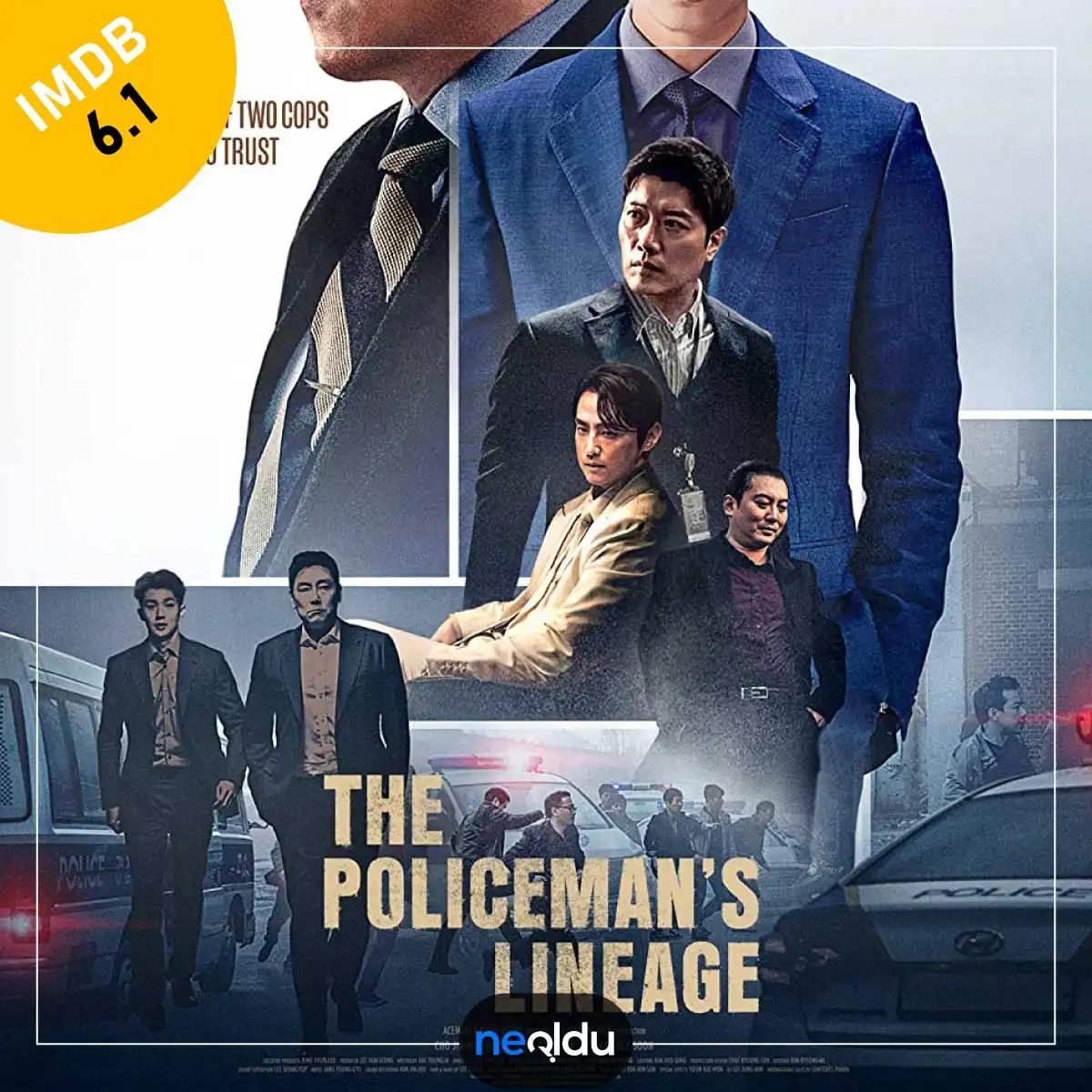
Directed by Lee Kyu-maan, “Special Delivery” (also known as “Prison”) is a gritty Korean crime thriller. It’s 2022 and the genre is already full, but the genre has created a unique and suffocating niche. The story revolves around Gang-Yoon, a detective with a perfect criminal record. What is his arrest rate? perfection. His team? Lethal. He doesn’t just catch criminals. He dismantles them. But this perfection comes at a high price. Gang-Yoon operates in a gray area and uses illegal methods to extract information because he believes that the end justifies the means. He prioritizes results over procedure, which makes him effective, but also extremely dangerous.
Enter Min-Jae. He is a rookie cop with green behind the ears who is haunted by the death of his father. Min-Jae is not interested in ordinary police work. He searches for secret documents that might explain the cause of his father’s death. To find them, he must approach the only person with the power to withhold them, Gang-Yoon. Surveillance became an obsession. The rookie watches the veterans, looking for cracks in the armor. He found a system that didn’t want to break.
The film clearly belongs to crime thrillers and makes good use of the tension typical of modern Korean cinema. It’s not just about who did it. It’s about what the system does to people. Gang-Yoon, played by Cho Jin-woong, is cold, brooding and intense. Choi Woo-sik gives Min-jae a youthful desperation, and Park Hee-soon adds weight to the supporting roles. It has an IMDb rating of around 6.1, which seems appropriate for a film that trades blockbuster spectacle for claustrophobic procedurals. It burns slowly, fueled by the weight of paranoia and the hidden of the truth.
Girl from the 20th century
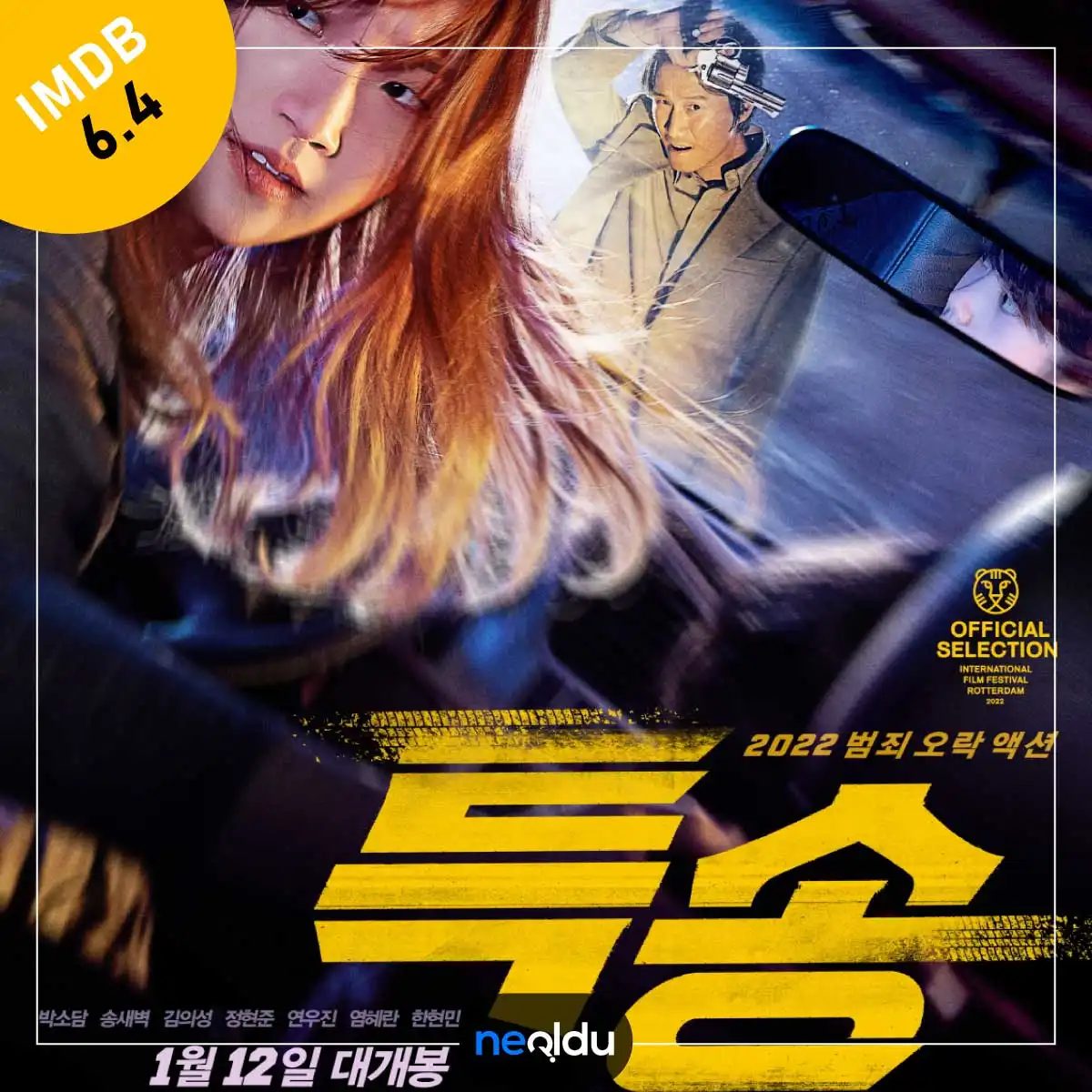
Choi Jin-ho is a just another guy, but his after-hours job involves making deliveries to people who really want to disappear. When a gambling client hires him to smuggle them out of South Korea, Jin-ha heads to Seoul, expecting a normal pickup. Instead, a little boy is waiting for him. The customer doesn’t come. The danger is. Now, Jin-ha’s job description has shifted from logistics to protection. He must keep the child off the police radar while navigating a city that seems to be getting closer. It’s a mix of action, crime and tension based on the unlikely bond between a reluctant courier and a runaway child. Park Dae-min directs with a steady hand, making sure the stakes are raised with quiet moments rather than constant explosions. Park So-dam and Heo Dong-won anchor the film with performances that feel lived-in, not performed. Kim Eui-sung adds weight to the supporting cast. The film achieves an IMDb score of 6.4, suggesting that it is a solid crowd-pleaser territory than high art. Released in 2022, it features K-Cinema’s signature blend of gritty realism and emotional punch. You watch it for a cat and mouse chase. But you stay in silence between the sirens. The boy doesn’t talk much. Jin-ha doesn’t ask anything. They just move. Is it enough to maintain the full runtime? Mostly. The final act leans heavily on conventional thriller beats, but there is texture. You won’t forget the junkyard setting. the look on Jin-ha’s face when he realizes that there is no going back to normal.

Quiet tension between high school classmates
Seventeen-year-old Bo-ra is not just any high school student. She is a taekwondo practitioner whose skills require discipline, but her true strength lies elsewhere. She is really positive. One that lifts the mood in a room without trying. Things are different with her best friend Yeon-du. Yeon-du is completely and hopelessly in love with Hyun-jin.
This is where the plot gets interesting. Yeon-du needs information. She needs to know if Hyun-jin feels the same way, or at least who else could be in the picture. So she asks Bo-ra for help. This is where the tension of the story changes. They start tracking Hyun-jin. It’s supposed to be reconnaissance. Just gathering facts for a friend.
But following someone close enough to see their habits, moods, and ease of interaction with others? It changes things. Bo-ra looks at Hyun-jin more for herself than for Yeon-du. A subtle pull begins to form. It is not explosive. It’s not a dramatic confession in the rain. It’s the quiet realization that proximity breeds something unexpected.
The film directed by Bang Woo-ri leans into the high school romance drama genre. Released in 2022, it captures the particular, painful ambiguity of late adolescence. Kim Yoo-jeong plays Bo-ra and brings a grounded presence to the role. Han Hyo-joo and Byeon Woo-seok round out the cast adding layers to the emotional dynamics.
Why does this story resonate? Because it’s not just about unrequited love. It’s about how noticing someone else’s desire can ignite your own. Bo-ra starts out as a supportive friend. Observer. But observation is a form of intimacy.
“Sometimes the person you follow to help someone else is the one you start to want.”
The chemistry between the characters feels earned , not forced. Bang Woo-ri avoids the typical tropes of Korean youth dramas. There are no exaggerated misunderstandings or sudden amnesia plots. Just three teenagers navigating the messy, confusing space between friendship and romance.
Bo-ra’s taekwondo background isn’t just a character detail. It mirrors her internal state. Controlled exterior. Strong potential under the surface. When that control slips, when the tracking turns into fascination, the impact is real.
The film is in no rush to resolve the triangle. It lingers in the tension. The moment Bo-ra almost looks away but can’t. Yeon-du’s hope casts a shadow over Bo-ra’s growing confusion.
It’s a Korean romantic drama that understands the importance of small gestures. A shared glance. A delayed text. The way one person’s name feels different when it leaves your lips versus someone else’s.
If you’re looking for low-competition romance films that emphasize emotional realism over spectacle, this is the movie for you. It’s short. It’s direct. It doesn’t waste time.
The ending? Well, it doesn’t tie everything up in a neat bow. Life rarely does. Bo-ra has more questions than answers. This is probably the most accurate depiction of being seventeen there is.

Installation before the storm
Before the texts roll into one of the sharpest cinematic satires, we meet Kim Ki-taek. He lives in a basement house that smells like damp plaster and boiled radishes. His job? Sending QR code flyers for English tutoring. It’s a dead end. The family is stuck in a vicious cycle of poverty and hides its existence from the outside.
The turning point comes through his son Ki-woo. A friend from university recommends Park Dong-ik’s daughter a tutor position. The parks are prosperous. You are staying in a modernist mansion designed by a famous architect. The pay is good. The location is remote. It sounds too good to be true.
Ki-woo takes the bait. He lies about his qualifications. He passes the interview. He gets a job.
Soon he won’t be alone. He brings his sister Ki-jung with him. He poses as an art therapist. Then his father Ki-taek. He poses as a driver. Finally, his mother Chung-sook. He appears as a housekeeper.
They infiltrate Park’s economy. They will replace the current staff. Park’s family is unaware of this. They are too busy with their own trivial problems to notice that their lower family is taking over their lives.
Class difference
The parks are beautiful. Too beautiful. They are not bad. They are simply not aware of it. Your money creates a barrier that others cannot cross. They don’t smell. Kim’s family smells like a basement. It’s the smell of a cheap radish. The smell of boiled cabbage. It is the smell of poverty.
Mr. Park mentions this to his wife. He says he doesn’t like the smell of a new driver. This is a random comment. But it cuts deep. It reminds the Ki-taek family of their place. They are servants. They are invisible.
Nevertheless, they enjoy discounts. They eat good food. You sleep in luxurious beds. They bask in the reflected glory of the rich. They are planning to expand their operations. They also want to change the gardener.
But there is a secret hidden in the basement. A secret that has been kept for years. There lives a man named Geun-sae. He was the husband of the previous housekeeper. Mr. Park knew about him. He paid her. He left her a prisoner.
This secret is a ticking clock. It’s a mistake in the complete robbery of the Kim family.
Birthday party
The climax begins on a sunny afternoon. It’s Ki-woo’s birthday. There are parties in the parks. The Kims are working. They are at the peak of their powers. They rule the house.
Then the doorbell rang. She is Mrs. Park’s former housekeeper. He wants his job back. He is desperate. He reveals the secret of the basement.
Chaos breaks out. The Kims are trying to keep a secret. Geun-sae escapes to the garden. He attacks strangers. It’s a nightmare.
Ki-woo tries to save his father. Ki-taek gets into a conflict with Mr. Park. Mr. Park smells the scent again. He catches a nosebleed tissue. He backs off.
This reaction also breaks Ki. The barrier breaks. He kills Mr. Park.
The party ends bloody
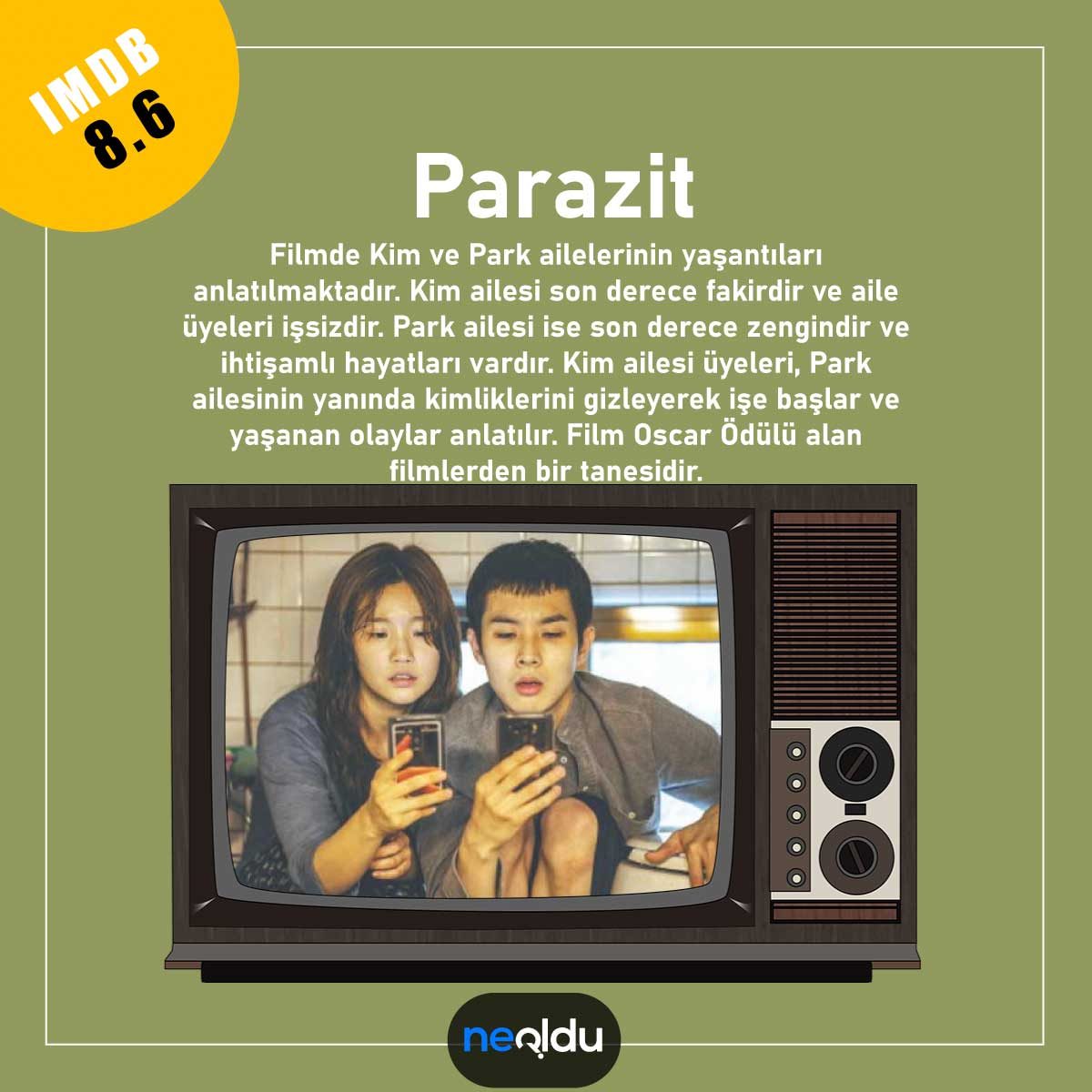
It’s hard to overestimate the influence of Parasite. Released in theaters in 2019, this South Korean drama not only landed at the top of the box office; it rewrote the rules of international cinema. Directed by Bong Joon-ho, the film offers a sharp, darkly comic look at class inequality in the intertwined lives of two families.
The story revolves around the Kims living in misery. They are unemployed and struggling to get by in a semi-basement apartment. Then there are the Parks, a wealthy family who live in a modern, luxurious home designed by a famous architect. The Kims, led by father Ki-taek (Song Kang-ho), plan to infiltrate the Park household. One by one, they falsify credentials and take on the roles of tutor, artist, driver and housekeeper.
The film is a masterclass in suspense that combines comedy, thriller and drama into one devastating story.
What starts as a clever heist slowly turns into something much worse. The contrast between the two worlds is stark. The Kims’ home is damp and shared with strangers. The Parks’ home is airy, flooded with natural light and isolated from the chaos of the city. But the deeper the Kims delve into the Parks’ lives, the more old secrets and buried tensions surface.
A tale of two worlds
The film’s brilliance lies in its ability to make both families feel real. The Kims are not villains. They are desperate people trying to survive. The parks aren’t bad either. They are oblivious and feel comfortable. Their kindness is sincere, but also casual and thoughtless.
This dynamic creates a unique horror. It’s not about monsters or ghosts. It’s about the invisible walls that separate people. The physical architecture of the houses reflects the social hierarchy. To get to the Parks’ home you have to go up. You can leave it by going downstairs. And there are others waiting in the dark below.
Critical acclaim and legacy
Parasite swept awards season. It won the Palme d’Or at Cannes. The film made history by winning four Oscars, including Best Picture. It was the first non-English language film to achieve this. But the numbers don’t tell the whole story. The film sparked a discussion about wealth disparity, immigration and social mobility.
Critics praised the tight script. Plot twists are earned and not forced. The performances are ensemble-driven, and no star steals the show. Song Kang-ho gives Ki-taek a quiet dignity. Park So-dam shines as Ki-jung, the ringleader.
If you haven’t seen it yet, you’re missing out on a modern classic. It’s funny. It’s exciting. It’s heartbreaking. And it stays with you long after the Credits have rolled. It’s not a question of whether you should watch it. It’s about whether you can handle the weight it reveals.
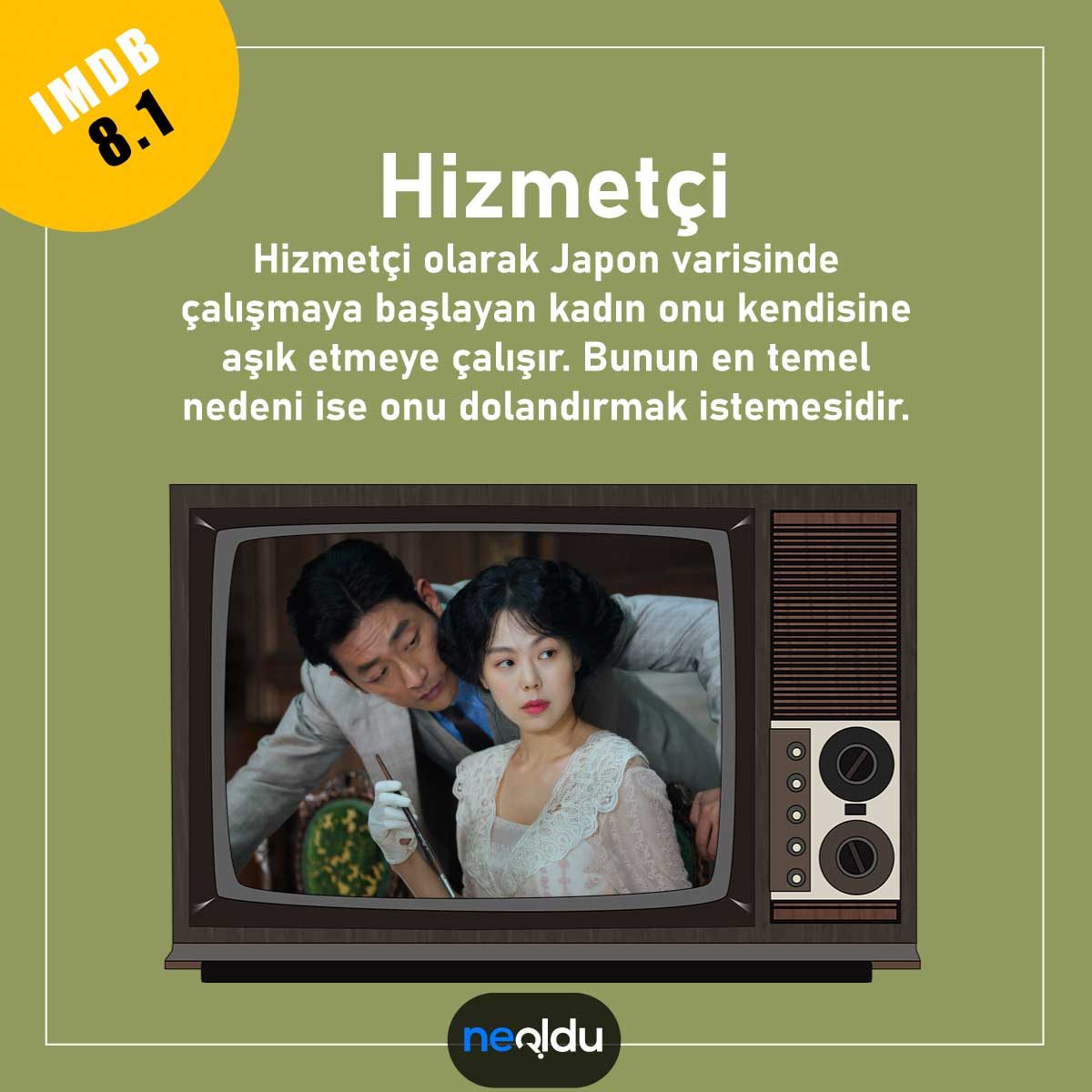
The Queen of Black Magic
If you want to experience a movie that hooks you from the first frame, you have to see The Handmaiden. The story begins simply. A young woman accepts a job as a maid for a Japanese family. But this is not romance. not really. The maid has a matter to resolve. She works with a con man to cheat this wealthy woman out of her inheritance.
It’s a twisted game of cat and mouse.
Then it turned into something completely different.
The film directed by Park Chan-wook combines the elements of drama, romance and psychological thriller into one addictive package. This is more than just a movie. This is a puzzle box. You think you know at the last minute where the pieces fit.
Why it works:
* Direction: Park Chan-wook knows how to add tension. Every shot feels calculated.
* Actors: Kim Min-hee and Ha Jung-woo’s acting is delicate but explosive.
* Genre: Does not lend itself to simple classification. Is this a love story? heist? horror? That’s all of them.
If you’re looking for a high quality thriller that’s worth watching, this is it. This is a masterclass in misdirection.
Movie Details:
* Genre: Drama, Romance, Thriller
* IMDb rating: 8.1
* Year of publication: 2016
* ** Director:** Park Chan-wook
* ** Cast: ** Kim Min-hee, Ha Jung-woo, Cho Jin-woong
This movie requires concentration. Don’t look away.

14. Phone
It is a story that feels impossible, yet it plays out on screen with a quiet, devastating realism. A five-year-old Indian boy vanishes from his home, disappearing into the vast, chaotic sprawl of New Delhi. He is miles away from everything he knows. Years later, an Australian couple finds him. They take him home. They raise him as their own.
Twenty-five years pass. The boy is now a man. But the past does not stay buried. He begins to search for the family he was forced to leave behind.
This is the premise of Phone. It is not just a drama; it is a biographical journey that tracks the long, painful arc of separation and reunion. The film, released in 2016, carries an 8.0 rating on IMDb for good reason. It does not rely on melodrama to make its points. It uses silence. It uses distance.
The Director’s Vision
Garth Davis directed this project. Davis is known for handling heavy emotional material with precision. He does not rush the grief. He lets it breathe. The story hinges on the sheer improbability of connection across such a massive divide in time and space.
The cast anchors the film in reality. Dev Patel plays the central figure, the man who was lost and then found in another country. His performance is restrained, carrying the weight of two lifetimes in subtle glances. Nicole Kidman plays the Australian mother who adopted him. She does not play a villain here. She plays a woman who loved the boy she found, while unknowingly erasing the boy she was born to be. Rooney Mara is also part of the ensemble, adding layers to the narrative of identity and belonging.
Why It Resonates
Viewers ask how a child can be found after so long. The film does not offer easy answers. It offers the messy, complicated truth of adoption, identity, and the unbreakable ties of blood. It explores why we search for our origins even when we are happy elsewhere.
The setting shifts between the sun-drenched streets of Australia and the chaotic, colorful intensity of India. This visual contrast mirrors the internal conflict of the protagonist. He is living two lives. One is safe, privileged, and loved. The other is his origin, his pain, his history.
The Core Conflict
The narrative asks uncomfortable questions. If you are loved by one family but born to another, who do you belong to? The film refuses to simplify this. It presents the Australian parents as people who did their best with the child they had. It presents the Indian family as people who never stopped waiting.
The reunion is not a fairy tale. It is fraught with tension, confusion, and the awkwardness of strangers trying to become a family. Davis captures this with a documentary-like intimacy. You feel the hesitation. You feel the fear of rejection.
A Story of Search and Return
The search itself is a character in the film. It is driven by a single phone call, a trace of memory, a name whispered in a crowded market. The title, Phone, refers to the technology that bridges the gap, but also to the fragile line of communication that connects us to our past.
The film’s strength lies in its refusal
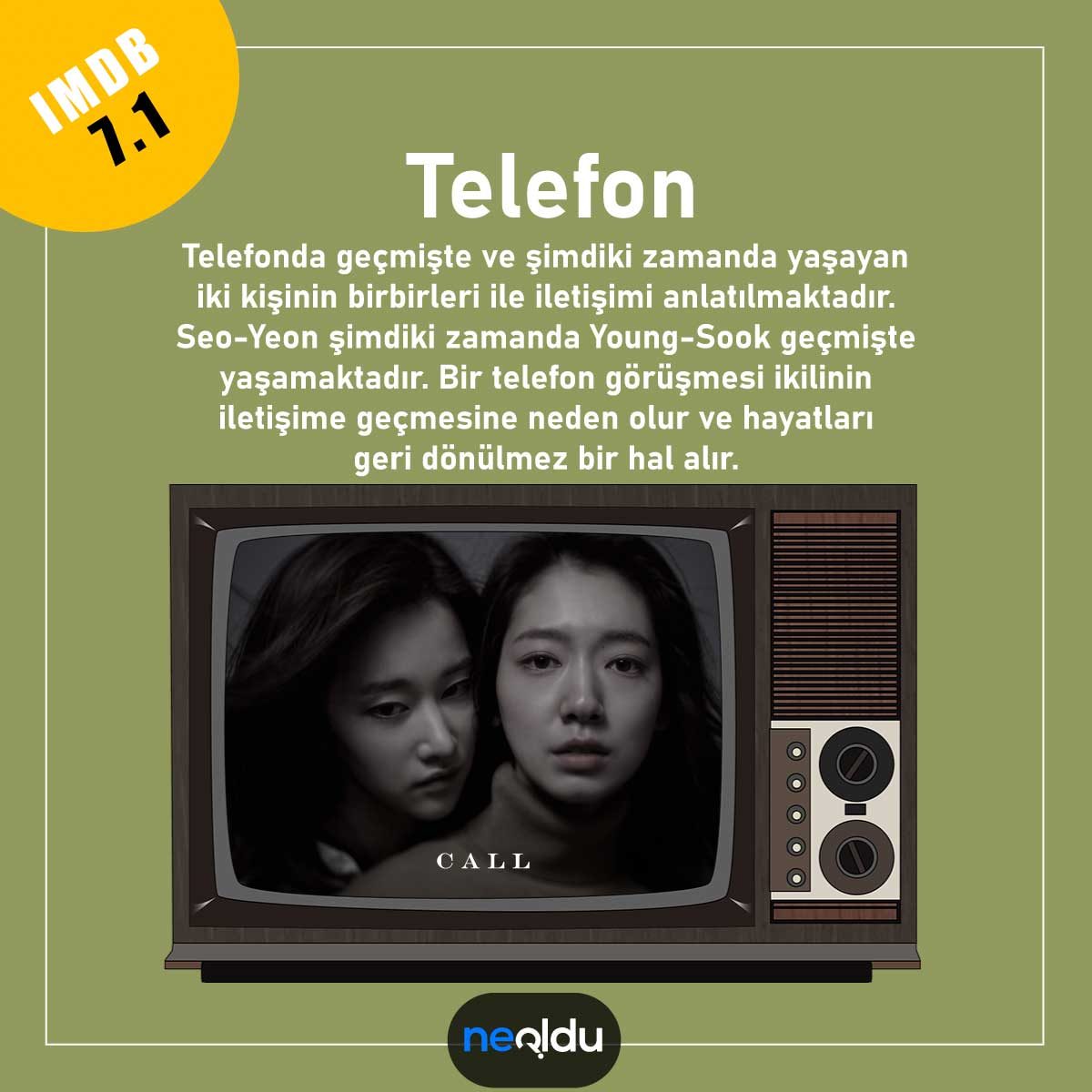
The Phone Line That Tied Past and Present Together
It starts with a ringtone. A simple ringing phone connects two timelines that should not meet. This is a key highlight of the 2020 Korean thriller The Phone, which makes the ghost story feel like a procedural crime drama. The premise is deceptively simple. Seo-yeon lives in the present while Young-sook is stuck in the past. They connected through a wireless phone that shouldn’t exist and established a direct line of communication that lasted for decades.
Once they start talking, things unravel fast. Young-sook calls Seo-yeon and for help in the disappearance case. At first glance, this looks like an ordinary rescue operation. But when you dig deeper, the line between saving someone and destroying them gets blurred. The connection isn’t just a plot device. This is a trap. All information exchanged in the past is ripples forward, which changes the present irrevocably.
The genre labels are a bit confusing. You can classify this as crime, horror, or mystery, but it actually exists in the awkward space of supernatural tension meeting gritty police work. It’s not scary in the jump scare sense. The logic of time travel is very casually accepted, but it becomes confusing because it suddenly closes the minds of the characters.
IMDb users gave it a rating of 7.1, which is pretty good. It is tight, efficient, and doesn’t overstay its welcome. Directed by Lee Chung-hyun, the film relies on atmosphere rather than spectacle. The production design is now colder and more frantic, retaining the former somewhat claustrophobic atmosphere. It helps bridge the gap between the two women.
The cast carries the heavy lifting. Park Shin Hye plays Seo-yeon, a modern woman who just wants to solve the mystery and return home. She brings a grounded energy to the character, even when the situation turns ridiculous. Throughout the timeline, Jun Jong-seo plays a younger version of this character, but the story treats them as separate entities who share a phone line. And then there’s Kim Sung-ryung, who plays Young-sook, the desperate mother of the past. Her performance is raw. You feel the panic of someone who has lost everything and is clutching at straws, both literally and figuratively.
The reason why these elements work is because the movie asks the right question first. Who is missing? Why does the phone ring? How can the two different people communicate with each other without breaking the world? Not all the answers will be given, but that’s part of the charm.
The horror elements are subtle. It is not about monsters. It’s about the fear of the inevitable. Once you know what happens, you cannot un-know it.
Where the film really shines is in its pacing. It’s very fast-paced. There’s no filler. The dialogue is sparse but meaningful. You can hear the weight behind every word spoken into that dead phone line. Sound design has a big role

The premise sounds like it was pulled from a gritty crime thriller script, and honestly, it mostly is. But Under the Open Sky (also known as Under the Open Sky or Gae-bun ) takes that basic setup and twists it until your neck hurts. It’s a 2020 South Korean film directed by Kim Yong-hoon, a director who knows how to make silence scream.
Jeon Do-yeon plays the mother. She’s sick. Not just “needs a checkup” sick, but the kind of sick that drains the life out of everyone around her while simultaneously demanding every last drop of it. Her son, played by Jung Woo-sung, is the one stuck in the middle. He’s not a bad guy. He’s just broke. And in this economy, being broke while caring for a dying parent is its own special kind of hell.
The inciting incident? He finds a duffel bag stuffed with cash inside a sauna locker at his workplace.
Did he steal it? Technically, yes. Did he plan to? No. He just grabbed it, thinking it was lost. Or maybe he thought it was trash. Either way, the money hits his bank account, and suddenly, the gray fog of his life lifts. For the first time, he can breathe. He can pay the bills. He can maybe, just maybe, keep his mother alive.
But here’s the thing about dirty money. It doesn’t stay clean.
The weight of easy money
Kim Yong-hoon doesn’t rush. He lets the tension build in the spaces between dialogue. You watch Jung Woo-sung’s character try to act normal. He goes to work. He tends to his mother. He smiles when he’s supposed to smile. But underneath, the guilt is a physical weight. It sits in his chest. It keeps him awake.
The film is a drama, sure. But it’s also a crime thriller. And the crime isn’t just the theft. It’s the cover-up. It’s the lies told to the people he loves. It’s the paranoia that sets in when you know someone else is looking for what you took.
Jeon Do-yeon’s performance is the anchor. She’s fading, physically, but her presence dominates every scene. She’s aware of what her son is doing. She’s aware of the money. But she doesn’t say it. Not at first. The silence between them is louder than any argument.
Why it works (and why it might not)
If you’re looking for action, look elsewhere. Under the Open Sky is slow. It’s methodical. It’s about the psychological decay of a good man forced into a bad situation by circumstances he didn’t create.
The supporting cast, including Sung-Woo Bae, adds layers to the story. They’re not just plot devices. They’re people who get caught in the crossfire of one man’s desperate choice. Their reactions range from suspicion to complicity, and that ambiguity is where the real tension lives.
The film explores a very specific kind of moral decay. It’s not about evil. It’s about necessity. When you’re drowning, do you grab the nearest thing that floats, even if it’s weighted with lead?
IMDb
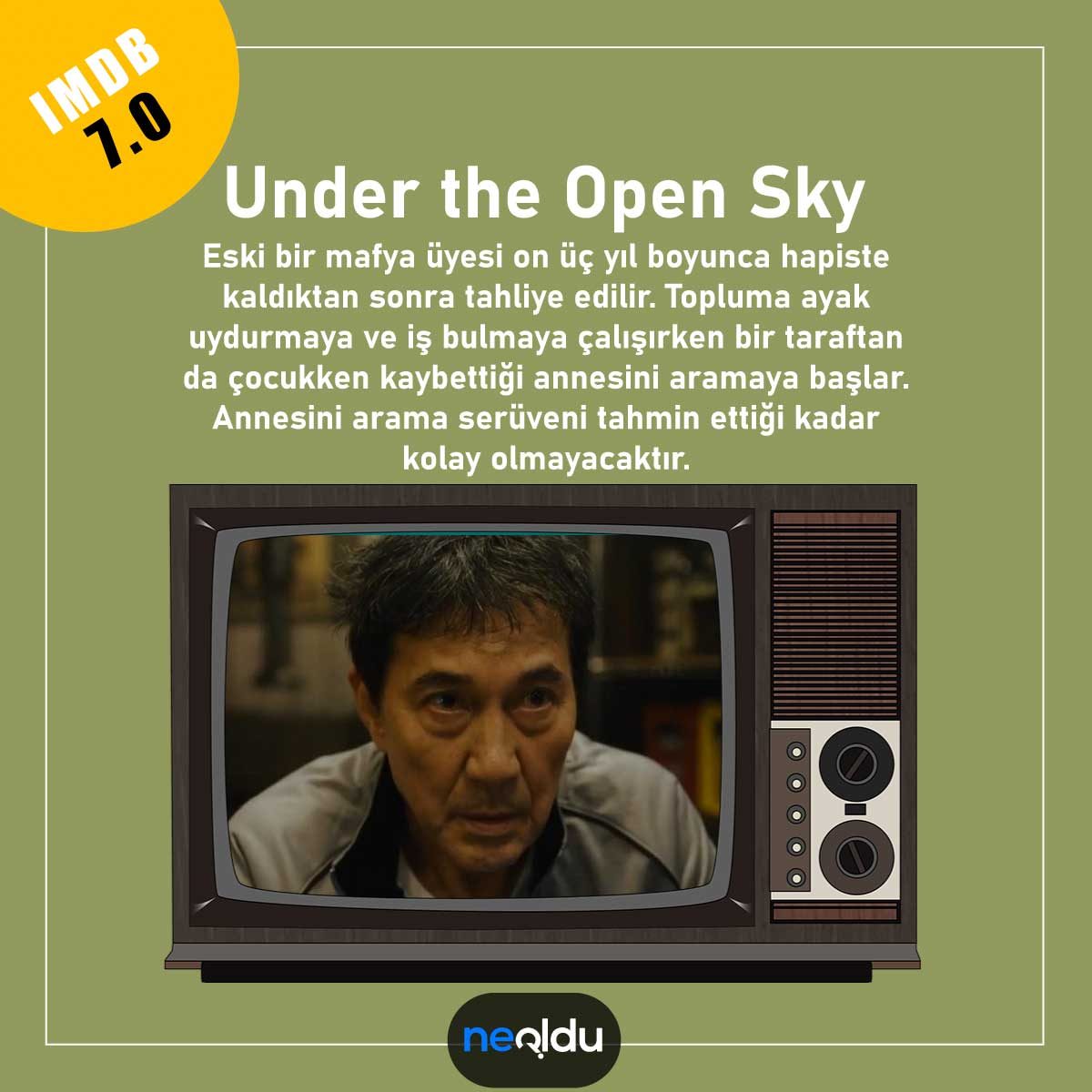
The person standing next to you
The former gang boss is released after 13 years in prison. The system is cold. The street is noisy. He doesn’t know how to live in a world without him. It’s embarrassing to look for a job. Reintegration into society is a nightmare. But his days are haunted by a ghost.
He lost his mother when he was a child. Now he wants to find her.
This seems like an easy task. This is not true. The search was confusing. It’s painful. It cuts deep into his past.
Type : Crime
IMDb Rating : 7.0
Year of publication : 2020
Director : Miwa Nishikawa
Cast : Taiga Nakano, Koji Yakusho
“The Man Standing Next” is not just a story about a criminal trying to live a real life. This is the story of a man trying to find someone to love him before he becomes a monster. Or maybe it was before there was nothing left.
Taiga Nakano plays an ex-prisoner whose face has been hollowed out. Koji Yakusho gives weight to every scene. You look at the two of them. You see the fear. You see the hope. It’s fragile.
Finding his mother after decades of silence takes more than money. It requires digging up graves. Emotional ones mostly. There is still a long way to go. The answers are hard to swallow.
Why do we keep coming back to the gangster genre? Maybe it’s because the code is clear. Cheating is deadly. Loyalty is everything. But what if loyalty is never genuine?
This movie raises such questions. It doesn’t shout it. It whispers it while walking in the rain.
The search for his mother became a mirror. He looks for her to understand himself. Does she exist? Is she even worth finding?
You can’t bury the past. It waits. It watches.
When you finally meet the person you lost, they may not be the same person you remember. They could be someone else entirely.
This is a trap.
You think you’re looking for home. You’re actually looking for absolution.
Sometimes forgiveness doesn’t knock on the door. It just stands there. Watching.
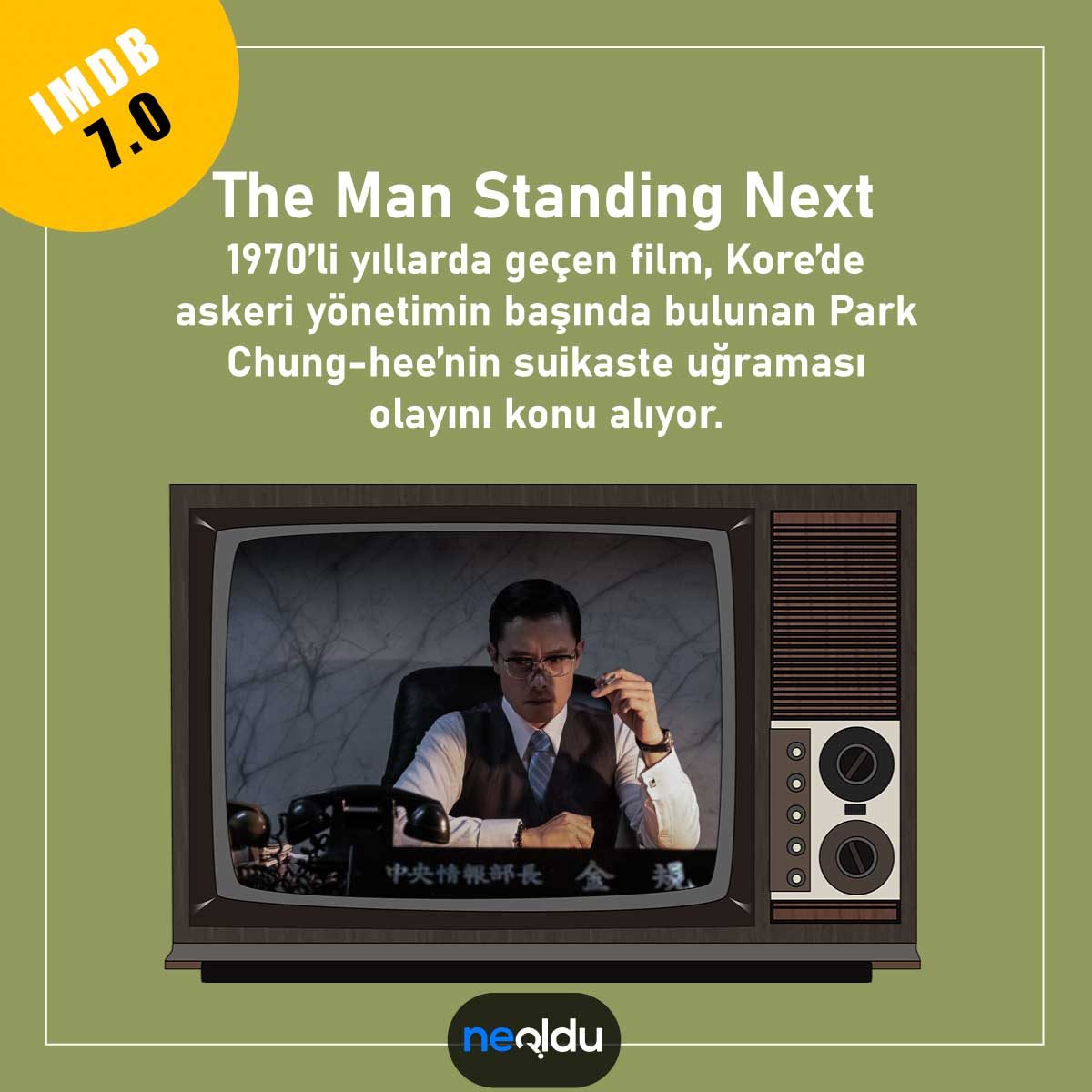
It is easy to assume One Cut of the Dead is just another zombie romp. It isn’t. The film is actually a historical political thriller disguised as a comedy-horror. Set in the 1910s, it centers on the assassination of Park Chung-hee, the head of the military regime in South Korea. The genre blend is sharp. Drama. History. Thriller.
The IMDb rating sits at a solid 7.0. It premiered in 2020. Min-ho Woo directed it. The cast carries weight. Lee Byung-Hun leads the ensemble. He is joined by Sung-min Lee and Do-won Kwak.
Why the genre mix works
Most viewers expect gore. They get politics. The film uses the horror elements to explore real historical trauma. Park Chung-hee’s death was a pivotal moment. It shook the nation. The movie captures that tension without losing its edge.
The 1970s setting is crucial. It was a time of strict military rule. The assassination wasn’t just an event. It was a turning point. The film respects that gravity. It doesn’t shy away from the complexity.
Lee Byung-Hun anchors the story. His performance balances intensity with subtle vulnerability. Sung-min Lee and Do-won Kwak add layers. Their characters reflect the societal shifts of the era.
Beyond the zombie facade
The title One Cut of the Dead suggests a low-budget horror. The reality is far more ambitious. It is a commentary on power. On fear. On how history is remembered. The horror elements serve a purpose. They highlight the absurdity of political violence.
The 2020 release date matters. It arrived when audiences were hungry for something different. Something that challenged expectations. The film delivered. It proved that horror can be intellectual. That history can be thrilling.
The direction by Min-ho Woo is precise. Every frame serves the narrative. There is no wasted motion. The pacing is relentless yet controlled.
Who should watch this?
If you like historical dramas, you will appreciate the depth. If you prefer horror, you will find the twists surprising. It bridges genres effectively. The cast delivers strong performances. Lee Byung-Hun is particularly compelling.
The film does not offer easy answers. It presents a complex picture. One that lingers. You might leave the theater questioning what you just saw. That is the point.
The assassination of Park Chung-hee remains a subject of debate. The film adds to that conversation. It offers a visual interpretation. A dramatic one. Whether you agree with its portrayal is secondary. What matters is the impact.
It is not just a movie. It is a statement. About history. About memory. About the costs of power. The zombie metaphor is clever. It masks the real horror. The real horror is human.
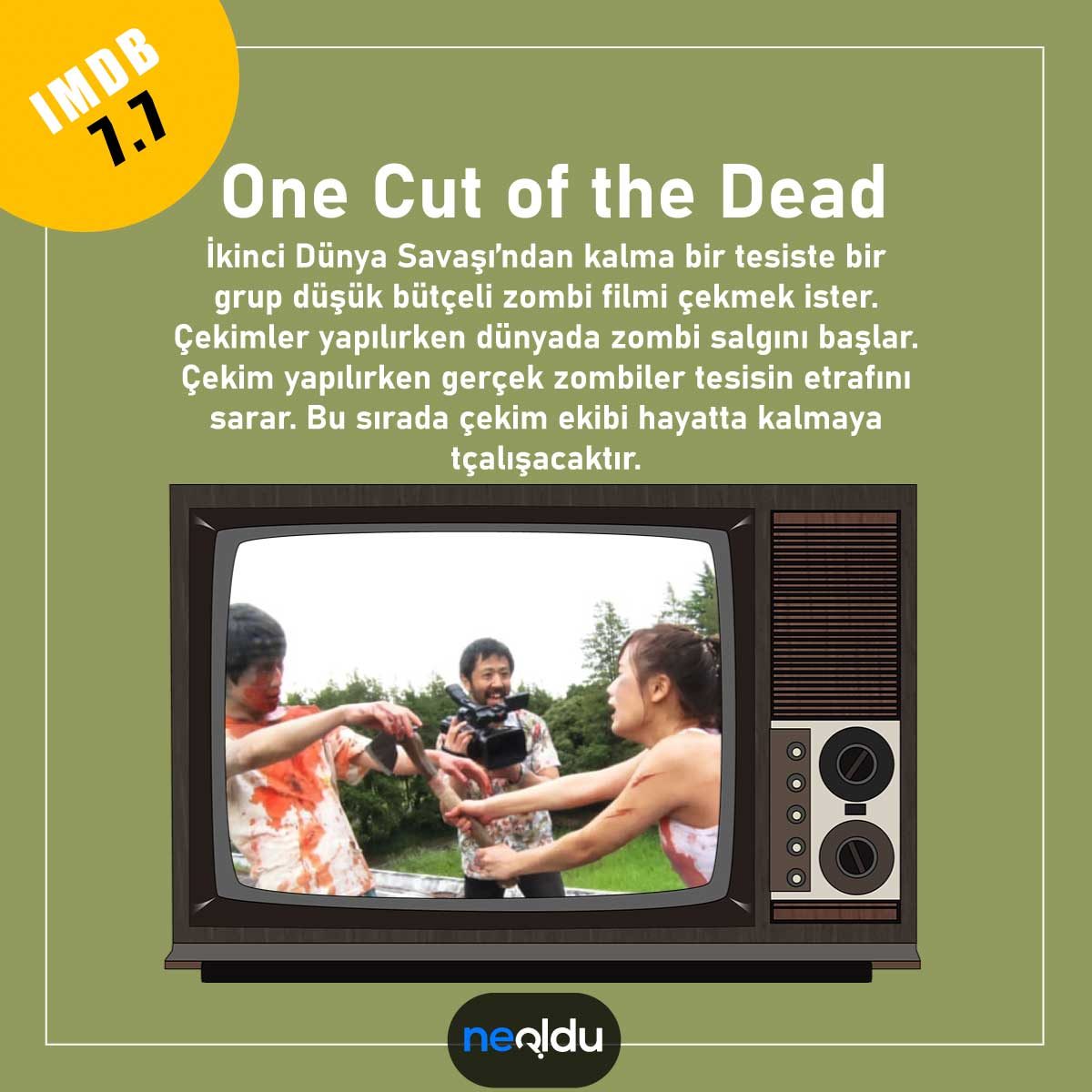
It’s a classic horror-comedy premise that’s dead in the literal sense of the word. But when you combine a low-budget indie film with the genuine, flesh-eating outbreak, the result is strangely specific and amazingly effective. This is the world of 2017’s tense yet hopeful masterpiece Voice of Silence (known as Seijaku no Gengo in Japan).
The film directed by Shin’ichirô Ueda takes us into the turmoil of its production. We don’t watch The Walking Dead. We see a lot of filmmakers trying to make zombie movies on tight budgets. They were in the old facility looking for props, arguing over the line and trying to make things look expensive when they really weren’t. And then the real deal comes out.
When Fiction Bleeds Into Reality
变化不仅仅在于僵尸的出现。 这部电影模糊了剧本和生存之间的界限。 演员和工作人员一开始认为他们正在处理特效。 这种否认就是喜剧的所在。
演员阵容包括Takayuki Hamatsu、Yuzuki Akiyama和Harumi Shuhama。 他们扮演夸张的自己——演员与自我作斗争,导演试图保持控制,而工作人员只想回家。 当感染者开始涌入周边时,动态就会发生变化。 假血看起来与真血非常相似。 尖叫声听起来不再像表演了。
“这不仅仅是一部found-footage style mockumentary。它是对恐怖类型本身的讽刺。”
Why It Works (And Why You Should Watch It)
If you’re looking for the most realistic zombie outbreak simulation, look elsewhere. But if you want to see how the film crew coped when the movie became a reality, Voice of Silence is for you. Humor arises from the absurdity of the situation. Characters are chased as they try to get the perfect shot. They argued over camera angles as the dead man approached.
The film has a 7.7 rating on IMDb, which is not bad for a niche horror-comedy. This shows that audiences appreciates self-awareness. I know it’s stupid. I understand that the budget is small. I am prone to this vulnerability.
The Aesthetic of Chaos
从视觉上看,这部电影有其局限性。 环境幽闭恐怖。 灯光通常很刺眼或昏暗,加剧了恐慌。 这里没有抛光的光泽。 感觉很原始。 制作设计体现了片中影片的低预算,更增添了一层讽刺意味。 他们用来吓唬演员的道具原来是唯一可以拯救他们的东西。
Shin’ichirô Ueda的导演手法稳健。 他不会仅仅为了使用摇晃的摄像头而过度使用。 相反,他通过角色的反应来营造紧张气氛。 你感受到他们的疲惫、困惑和即将到来的恐惧。
这是给谁的?
这并不适合所有人。 如果你想要高强度的动作,你可能会发现节奏是经过深思熟虑的。 但对于元恐怖迷来说,这是一种享受。 它回答了这个问题:“发生了什么
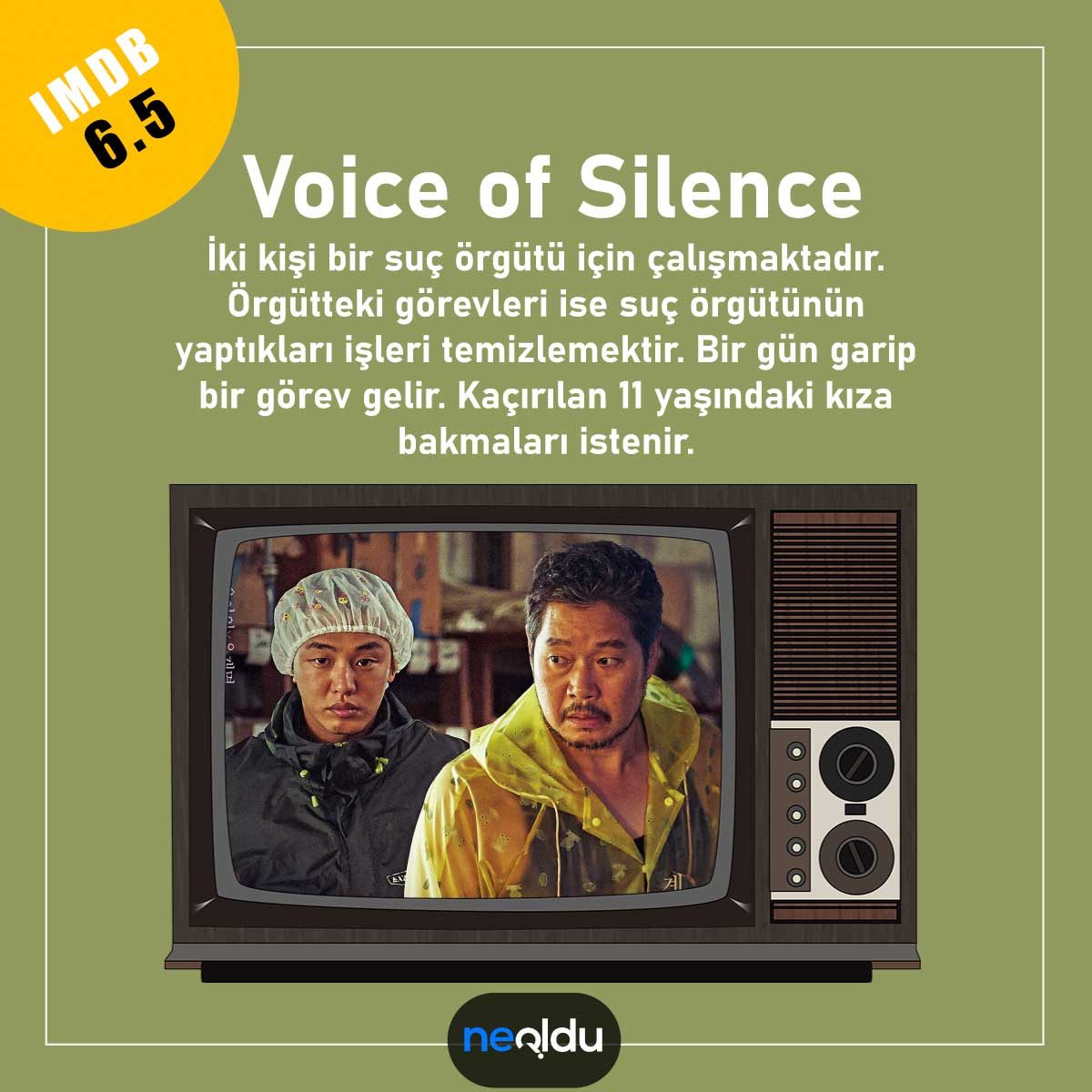
Weight of clean hands
There are two of us. organization. It is not their job to pull the trigger or sign an arrest warrant. This is used to wipe fingerprints off the glass. To eliminate confusion. In a world where crime is a machine, where crime is oil and solvent, the last step in a process that most people try to forget. They are responsible for cleaning.
Next is work that breaks the rhythm.
It started as just a task. But their focus isn’t on body bags or broken hard drives. This is an 11-year-old girl. He was taken away. he was hiding. And now he has to be taken care of.
Real Mother (or Geu-rying-eun Bu-ra-seo ) looks simple on paper. A thriller about people who clean up the tracks of a criminal organization. A drama depicting an unexpected chain of violence. But the twist is not working. Under treatment.
Directed by Wui-Jung Hong, this 2017 film (overall rating around 6.5 on IMDb) takes the cold, logistical nature of cleaning up a crime and puts it against something very human: children.
Why This Job Changed Everything
I have no intention of solving the kidnapping case. You arrange the evidence for it. But are we being asked to “take care” of the victim? This is a different conspiracy.
This film features two actors, Yoo Ah In and Yoo Jae Myung, who transcend the gray areas of their characters with quiet intensity. they are professional. they know the rules. they don’t ask questions. However, when she is cast to care for a frightened and confused young girl in “The Cleanup,” the professional distance collapses.
护理的道德困境
当那些抹去你过去的人被要求保护你的未来时,会发生什么?
叙事并不依赖于高辛烷值的追逐。 它倾向于接近的张力。 由文承雅 扮演的女孩不仅仅是一个道具。 她生动地提醒人们,这些人是受雇来管理混乱的。
对于辛迪加来说,她是一笔资产。 一种责任。 一个需要解决的问题。
对于两个男人来说,她成了一面镜子。
- 刘亚仁 的角色可能是比较冷酷的角色之一,见过太多事情而不敢退缩。
- 刘在明 带来了一种不同的能量,也许更有条理,超前三步思考。
- 文升雅 以一种需要同理心的方式主持这部电影,即使是那些已经卖掉了自己的作品的人也是如此。
问题不在于他们“能”把她救出来。 这就是他们觉得有必要这样做的“原因”。 难道是他们的程序出了问题? 一时的软弱? 还是意识到有些东西是无法清理的?
一部有良心的犯罪剧
《真正的母亲》完全符合韩国犯罪惊悚片的传统,但它偏离了我们通常期待的黑帮战争。 不存在地盘争夺战。 没有黑帮老大通过电话大喊大叫。
冲突是内部的。
“真正的母亲”

The Heartless (2020): A study of silent grief
This is not a story of intense conflict. not much.
A young woman adopts a child. Pretty simple, right? standard procedure. The boy has grown up. he walked away. He found his way back to the person who gave him life. My mom wants to get back together. He had to understand what was going on. So he found an adoptive mother.
It’s a plot. This is a skeleton.
However, Naomi Kawase does not create skeletons. He sets the mood. She adds weight to the mood of the room as the two women try to figure out if they hate each other or if they just miss the same person.
Merciless (Although the name is rarely seen outside the festival area, Mutsuin Toshi ) premiered in 2020. This is a Japanese drama. Starring Hiromi Nagasaku, Arata Iura and Makita. The actors are small. Dialogue is scarce. It was deafening silence.
“This film is not about meetings, but about meetings.”
Why is this important? Mr. Kawase is very good at navigating the world. He didn’t think adoption was a big deal. He didn’t make a big deal out of the deception. He described dust particles. He took a photo of how the light hit the kitchen table. He described his hesitation as he peered into the tea.
Hiromi Nagasaku plays the adoptive mother. he is strong He is very practical. She raised the boy alone. He built his own life. The woman who left decades ago is now questioning her life.
Arata Iura plays a real mother. He was very sorry. He was desperate. He wanted a second chance. However, he failed to achieve a clean record. He is affected by her absence.
Makita plays the boy. grow. Close in the middle. he doesn’t talk much. There is no need for that. His existence is a struggle.
The IMDb rating is 6.3. It is reliable. Not a classic. It’s not a failure. This is a movie that stays with you. This is a silent film. heavy movie.
Mr. Kawase did not answer. he asked a question.
Should the birth parents be forgiven? Does his adoptive mother owe him something? What happens when a child grows up?
This film does not address these issues. It just forces them to look directly into the light.
Do you understand? 緧張感が伝わてっしう。 I wonder if they really understand each other.
END キージマチがなんします。 美国が真っずします。 沈黙が残る。
That’s all that’s left.
Is there a relationship?
Probably not.
But you keep thinking about it.


The Prison Break That Redefined Korean Action
The 2017 South Korean crime thriller The Prison didn’t just arrive; it took over. Directed by Byun Sung-hyun, this high-octane entry in the K-cinema landscape was widely recognized for pushing the boundaries of production value, particularly in how it handled visual storytelling and lighting. It’s not your typical gangster flick. The film earned accolades for best cinematography and lighting, a testament to how the visual atmosphere plays a huge role in the narrative tension.
The story centers on a brutal, overcrowded prison system where power is everything. At the top of the food chain sits Jae-ho, played by Sol Kyung-gu. He isn’t just a inmate; he is the second-in-command of a massive gang operating from inside the bars. He runs the place with an iron fist, maintaining order through fear and respect.
Then comes Hyun-soo, portrayed by Yim Si-wan. He’s young. Brave. And utterly unbreakable. Unlike the other inmates who quickly bow to the established hierarchy, Hyun-soo refuses to submit. His arrival disrupts the delicate balance of power, setting off a chain reaction of violence and survival.
Why It Stood Out
While the plot is straightforward—a clash between the established kingpin and the new challenger—the execution is what made it memorable in 2017. The action sequences were raw and visceral, moving away from the polished, wire-fu style of earlier decades toward something grittier and more realistic.
The dynamic between Sol Kyung-gu and Yim Si-wan drives the film. Sol, a veteran actor known for his intense screen presence, brings a chilling authority to Jae-ho. Yim Si-wan, who had already established himself as a singer and actor, holds his own against the seasoned pro, creating a palpable tension that keeps viewers on edge.
Supporting performances from Kim Hie-won and others add depth to the prison ecosystem, showing how different characters adapt to (or break under) the pressure. It’s a ensemble piece where everyone has a stake in the outcome.
The Verdict
With an IMDb rating of 6.7, The Prison sits in that sweet spot of critical appreciation. It’s not a masterpiece of cinema in the traditional sense, but it is a highly effective genre film. It understands its audience and delivers exactly what they want: relentless action, clear stakes, and compelling characters.
For fans of Korean action movies, this 2017 release remains a key reference point. It showed that local productions could compete with international blockbusters in terms of spectacle and intensity. The film’s success helped pave the way for more diverse and ambitious projects in the coming years.
If you’re looking for a movie where the setting is as much a character as the people, this is it. The prison walls feel like they’re closing in, and the lighting emphasizes every shadow and conflict. It’s a tense, well-crafted thriller that respects the intelligence of its audience.
The legacy of The Prison isn’t just in its box office numbers or awards, but in how it influenced the tone of subsequent Korean crime dramas. It proved that you don’t need a massive budget to create a gripping story if you have strong performances and a clear vision.
So, is it worth watching today? Absolutely.

A Cat, A Code, and A Love Letter in the Mail
The reunion is supposed to be the payoff. Lu has survived the Cultural Revolution. He has endured the labor camps. He comes back to the woman he loves, Feng, expecting to pick up the threads of their life together. The history books call it a tragedy of political persecution. The camera calls it a test of memory.
And then the cat happens.
The feline in question is not just a pet. It is a biological fingerprint. Feng had named him based on Lu’s distinctive handwriting. The cat recognizes the owner by the specific slant of his script. It is a detail so absurdly specific that it feels like a joke. It is not a joke. It is the hinge on which the door of their marriage swings shut.
The Mechanics of Misrecognition
You would think years apart would create a ghost between them. You would think the silence would be louder than the cat’s meow. Instead, the cat’s rejection is the loudest thing in the room.
Feng looks at Lu. She sees a stranger wearing her husband’s face. The man who taught her to read. The man who held her hand in the dark. He is gone. In his place is a man the animal refuses to acknowledge.
This is where the film The Lunchbox (or the story it mirrors, often conflated in streaming metadata) gets dangerous. It is not just about a wrong number. It is about how much of a person is constructed by the things they leave behind. When the tangible evidence—the cat, the notes, the routine—is removed, does the love remain? Or was it never there to begin with?
Why the Cat Matters More Than the Politics
Most historical dramas focus on the grand narrative. The Party. The struggle. The survival. This story focuses on the domestic. The intimate. The mundane.
The cat is a symbol of continuity. It is the living proof that Lu belongs in Feng’s life. When the cat turns away, it is not just an animal acting on instinct. It is a verdict. Feng cannot reconcile the man standing before her with the partner she knew. The political crimes took Lu’s freedom. The cat took his identity.
“The cat did not recognize him. And so, neither did she.”
This is a cruel irony. Lu survived the camps. He survived the hunger. He survived the fear. He could not survive the lack of a familiar scent.
The Lunchbox Parallel
While the prompt references a specific narrative about Lu and Feng, it is inextricably linked to the cultural resonance of The Lunchbox. Both stories explore the same question: Can love survive when the context is erased?
In The Lunchbox, a wrong delivery connects two lonely souls in Mumbai. They fall in love through notes. They never touch. The connection is pure because it is disembodied. In the story of Lu and Feng, the connection is physical, grounded, and then severed by a biological glitch.
One is a fantasy of connection without contact. The other is a tragedy of contact without recognition.
The Aftermath
The film ends not with a dramatic confrontation. It ends with a quiet acceptance of loss. Feng stays. Or she leaves. The metadata says Dram. Romantic. 2014. Yimou Zhang.
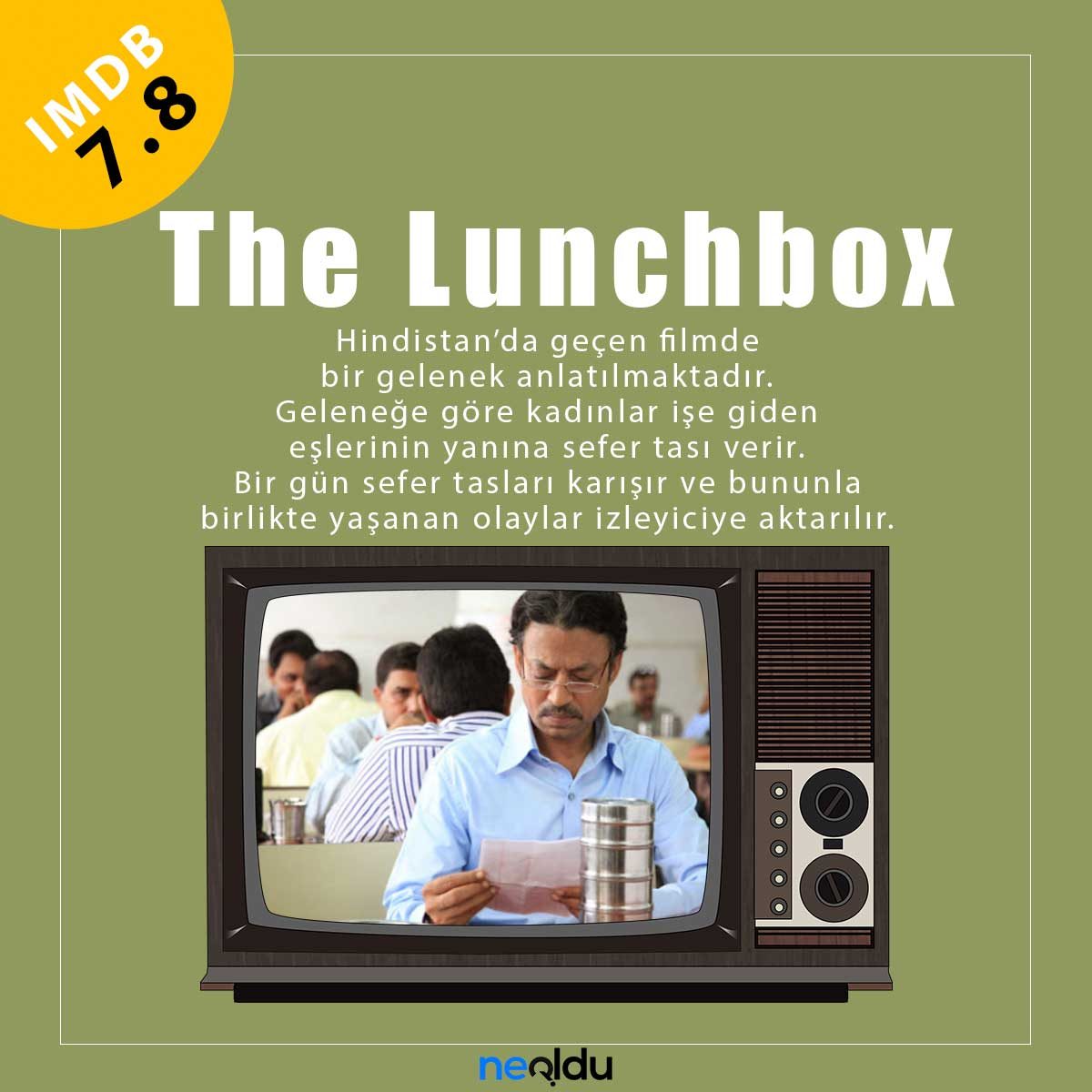
Lunch boxes and connections were lost
The premise is deceptively simple and sounds almost charmingly old-fashioned. Mumbai still has a centuries-old delivery system that relies on the city’s legendary lunchbox delivery men, the dabbawalas, who can deliver thousands of meals a day with near-miraculous precision. The story is about a lonely housewife who tries to connect with her husband by serving him carefully prepared meals in a traditional lunchbox. But when the boxes are mixed up, confusion ensues. Instead of reaching its intended office, the lunchbox ends up in the hands of grumpy widowed office worker Saajan Fernandes, who ends up in an unexpected correspondence with a strange woman.
It’s certainly a romantic comedy, but it’s also a quiet drama that explores the loneliness of city life. The film does not depend on grand gestures or dramatic confrontations. Instead, the emotional weight comes from small details like the care of food, the careful handwriting of notes, and the slow realization that two people find friendship across the chasm of incorrect addresses.
The chemistry between Irrfan Khan and Nimrat Kaur drives this film. Khan plays the soft-spoken Sajjan and brings a melancholic warmth to a character that could easily turn miserable. Kaur, as the protagonist Ila, who expertly navigates her own emotional journey. Nawazuddin Siddiqui, despite his small role, adds texture to the world around him. Together, they create a tapestry of characters, each of whom is searching for meaning in their own way in a bustling, often isolated city.
Directed by Ritesh Batra, the film was released in 2014 and quickly gained a cult following. Its IMDb rating of 7.8 reflects its broad appeal, but the true measure of its success is its ability to make the mundane seem magical. dabbawala The system becomes a character in itself, symbolizing the complex and hidden networks that connect people in unexpected ways.
Why does this story resonate so deeply with people? Maybe it’s because it satisfies a general need for connection. In the age of digital communication, sharing a meal and accompanying notes is almost revolutionary. This movie shows that intimacy isn’t always about proximity. Sometimes it’s all about the right person finding the right box.
The story is not in a hurry to solve the mystery at the center of this confusion. Rather, it is a space between what is said and what is not said. The characters grow not by a dramatic development, but by the gradual accumulation of shared moments.
However, this movie was not without its critics. There are some people who think that this kind of romance is too sweet, too pure, and feels completely unrealistic. Although the system of 「ババワラ」 is charming, there are also people who point out that it is treated as a background rather than a fully explored theme. This is a gentle reminder that curiosity can fill a big gap.
エンディングはすべてをきちんとしたリボンで結びつけるわけではありません。 結局のところ、人生はそうはいかないのです。 キャラクターの動き
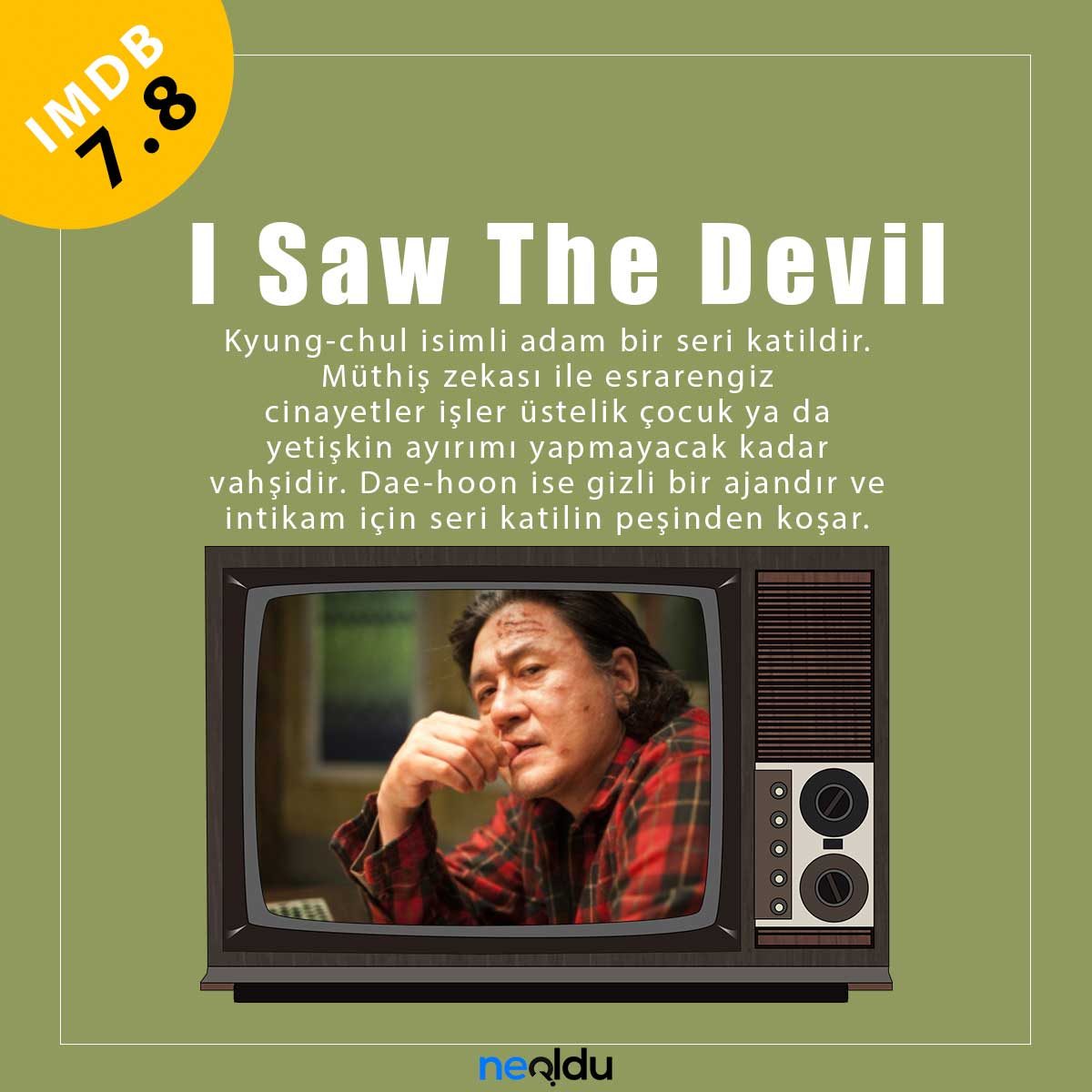
25. Three idiots
Rancho is more than just a student. he is abnormal. Inconsistency exists in any system that requires consistency. Farhan and Raju? They are his anchor. An honest person, a concerned friend. The trio navigate the harsh hierarchy of ICE (Imperial Engineering) while trying to keep their sanity.
silly? Vinod Chaturwar also known as Chatur or Silencer. He was the kind of guy who memorized his lectures, recited them perfectly, and laughed when someone didn’t. He represents the dead end of rote learning. Rancho represents the chaos of creativity in action.
The film satirizes the Indian education system’s obsession with rankings and parental pressure. This is very interesting. This comes from the heart. The final scene is also a bit manipulative, but who cares? No matter what happens, you smile through the tears.
Why it works:
– Aamir Khan’s performance is restrained but charming.
– The soundtrack lingers longer.
– Balances humor with real social commentary.
24. Dark Knight
Christopher Nolan didn’t just make superhero movies. He created crime epics. Batman is the symbol of that. The Jokers are in chaos. Conflict is not about punching and kicking. This is about ideology.
Heath Ledger’s Joker isn’t scary because he’s strong, but because he’s unpredictable. He doesn’t want money. He wanted to see the world burn. He exposes the hypocrisy of Gotham’s elite.
Batman, played by Christian Bale, is trapped. He had to be a hero, but the city needed a scapegoat. The end is tragic. Batman is responsible for maintaining hope. This is a complex moral dilemma.
Important elements:
– Hans Zimmer’s score is relentless.
– Exceed CGI practical effects whenever possible.
– The interrogation scene is a masterpiece of suspense.
23.寄生虫
奉俊昊的杰作堪称流派融合之作。 首先,这是一次抢劫。 然后,这是一部惊悚片。 最后,这是一个悲剧。 金氏家族渗透到朴氏家族。 他们撒谎。 他们操纵。 他们成功了。
但阶级是一堵你无法翻越的墙。 地下室公寓。 气味。 这些细节很重要。 “气味”是让穷人固步自封的无形屏障。 公园很好,但他们很健忘。 他们的友善是金氏家族无法承受的奢侈。
高潮是残酷的。 生日聚会变成了一场屠杀。 太令人震惊了。 这是不可避免的。
为什么会产生共鸣:
– 娱乐中蕴藏着尖锐的社会批判。
– 象征意义浓厚但易于理解。
– 这种转折令人震惊,但事后看来是有道理的。
22.鞭打
这不是一部音乐剧。 这是一部关于野心的恐怖电影。 安德鲁·尼曼想成为最伟大的人之一。 特伦斯·弗莱彻知道路。 弗莱彻打破了他。 字面上地。 身体上。 从心理上来说。
J.K. 西蒙斯太可怕了 他不是导师。 他是一个折磨者。 “不太符合我的节奏。” “你不努力。” 辱骂事件屡见不鲜。 后果是严重的。
迈尔斯·特勒饰演的安德鲁对此很着迷。 他在鼓上流血。 他想念他的
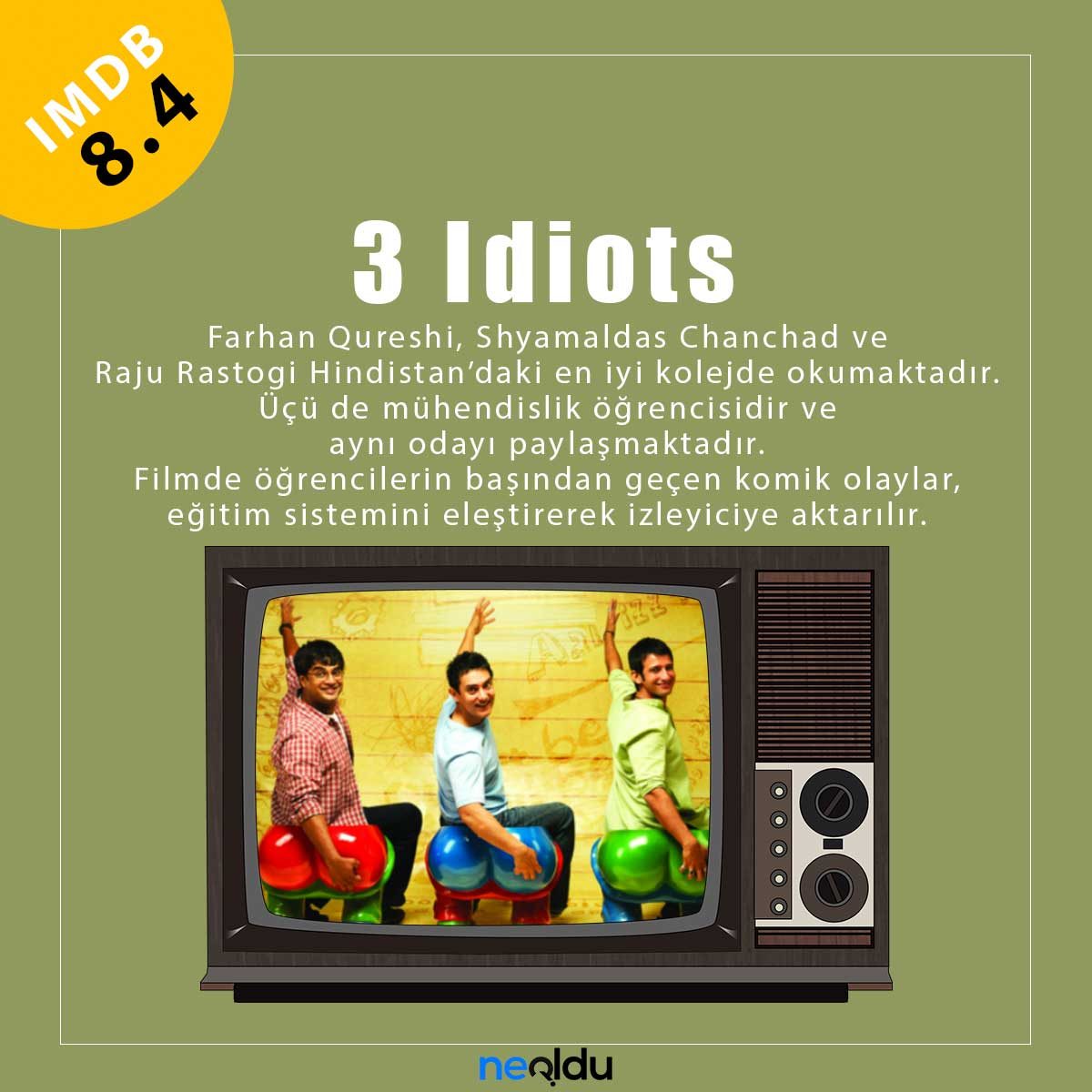
3 Idiots: The anti-establishment comedy that defined a generation
If you’re looking for a movie that balances funny moments with a serious critique of educational pressures, 3 Idiots is the answer. Farhan Qureshi, Raju Rastogi and Rancho (played by Aamir Khan) are engineering students in one of India’s most prestigious universities. They share a dorm and have a tumultuous friendship that drives the story. The story depicts their hilarious adventures while subtly attacking the strict, test-based education system.
This movie is a combination of drama and comedy. It received positive reviews from viewers and was rated 8.4 on IMDb. The movie is directed by Rajkumar Hirani and stars Aamir Khan, Madhavan and Mona Singh. Released in 2009**, the song is still a cultural touchstone for saying it follows a passion for fame.
为什么《三个白痴》仍然很重要
许多观众搜索如何在线观看三傻 或寻找教育改革电影 ,因为电影的主题仍然具有相关性。 这个故事不仅仅是娱乐。 它质疑为什么学生被迫从事他们不喜欢的职业。 兰乔,这位古怪的尖子生,挑战了这一规范。 他相信学习是为了理解,而不仅仅是为了成绩。
The chemistry between the three leads is key. 法尔汉想成为一名摄影师。 拉朱出身贫困,害怕失败。 兰乔鼓励两者。 他们的旅程表明友谊如何能够克服学业压力。 幽默来自于他们与严格的教授和行政官僚的互动。
“一切都好”不仅仅是一个短语。 这是印度工程学院应对压力的一种机制。
影片用讽刺的方式凸显了死记硬背的缺陷。 它询问为什么创造力受到抑制。 这就是三个白痴教育信息 被广泛讨论的原因。 这不仅仅是一部喜剧。 这是一种包裹着娱乐的社会评论。
Where to watch 3 idiots
Live streaming availability varies by region. In India this movie is usually available on major platforms like Netflix India and Amazon Prime Video. Internationally, it is available to watch on Hulu and as a digital rental on Apple TV and Google Play Movies. Checking your local 3 Idiots streaming service is the best way to find out quickly.
The legacy of this film is strong. This affected many students and made them talk about academic stress. The success of this film shows that Indian cinema can handle heavy themes with humor. The acting of the actors, especially Aamir Khan, is often considered to be one of the best in Bollywood history.
3 Idiots Vs Other Bollywood Dramas
Fans often compare 3 Idiots to other Bollywood movies. The film focuses on friendship and career uncertainty instead of the typical romance plot. This is not a traditional romantic comedy. Although there is a love story with Pia (Kareena Kapoor), the story does not progress. The biggest conflict is between the student and the system.
Compared to other college life movies, 3 Idiots stands out for its practical advice. This suggests that success is not linear. This sentiment resonates with young people around the world. The soundtrack of the film, which includes the song “**Aal Izz Well”
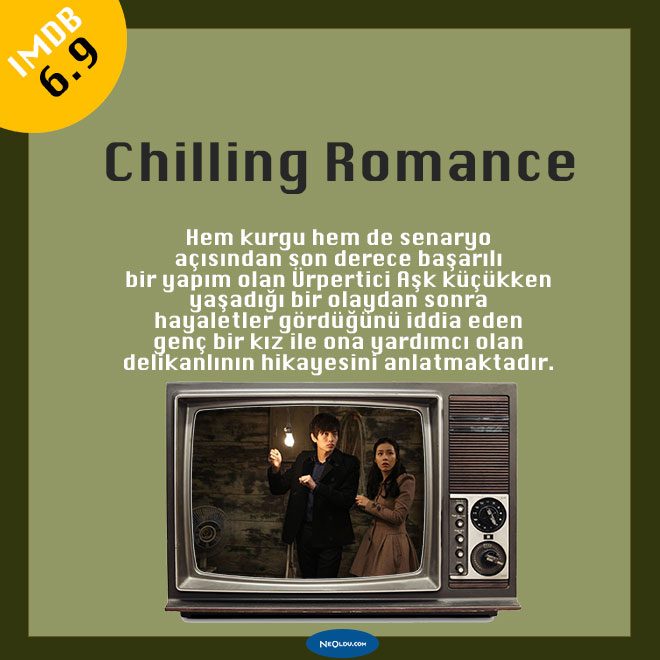
The Sky of Love: The anime that redefines romance
Romantic Comedies aren’t the only thing Korean cinema has come up with. They use heartbreak as a weapon. But before he could finish this tear-jerking piece, another wave of emotional devastation hit from across the ocean. This is not a live-action drama depicting a traffic accident or terminal illness. It’s animated. This is devastating in a way that live Actors sometimes fail, as a cartoon character can have a lifetime of sadness in their eyes without blinking an eye.
Type “Sky of Love ” (or “Koizora”).
This 2007 Japanese animated film is often overshadowed by the heavy hitters of the genre. However, if you’re looking for a definition of bittersweet, here’s the source. This is more than just a movie. It’s the atmosphere. A particularly painful feeling hit me right in the chest.
The story is deceptively simple. It follows of a high school student named Yukiho. She was a girl who always had a smile on her face, even when things were tough. Her boyfriend Kyoichi is everything to her. He’s her first love. Her real love. He works part-time and spends all his free time with her. They are young. They are in love. They don’t realize that time is running out.
This turn is not surprising. It was a slow realization. It’s the fear of knowing the end of a book before you start reading it.
Kyoichi is dying.
It is not due to a sudden accident. An illness that had plagued him for years. he hides it. he lied. He tells Yukiho that everything is fine. He tells her he’s just tired. And what happens to Yukiho? She wanted to believe him. She has to. Because if she doesn’t, the world will collapse.
The animation style is fresh and bright. clean. It is in stark contrast to the nasty, ugly reality of this disease. The colors are very bright. The sky is always blue. It’s called Sky of Love for a reason. The sky is the only thing that stays the same. It doesn’t get sick. It doesn’t leave.
“The sky is the same for everyone.”
This line has become a mantra. This is a promise. But promises are fragile.
Why did this movie do so well? Because it is not based on melodrama. No shouting matches. A dramatic hospital scene without a flat heart monitor for dramatic effect. Tragedy happens in quiet moments. Kyoichi paused before answering the question. Like Yukiho trying to laugh at jokes that aren’t funny.
The performances of the voice actors are very satisfying. The Japanese voices are nuanced. subtle. You can hear the fear behind the cheerfulness.
Critics often compare it to “Your Name” and “5 Centimeters Per Second”. This is a fair comparison. The director is Makoto Shinkai. The same goes for our obsession with distance. bright. What separates people. But “Sky of Love” is different. It’s older. It’s rawer. It doesn’t have the fantasy elements of Your Name. There are no fantasy elements. It doesn’t have the abstract sadness of 5 Centimeters. There are only two children. And the dying boy.
The runtime is short. About 57 minutes. No

If Sky of Love relied on the ethereal pull of dreams, Steel Rain trades romance for the heavy, metallic clank of geopolitical survival. It is a far cry from simple romance. This isn’t about finding a mysterious boy in your sleep. It is about preventing a nuclear apocalypse while trapped in a room with two leaders who don’t trust each other. The premise is high-stakes, the dialogue is sharp, and the tension is palpable.
A Political Thriller Built on Tension
Directed by Yang Woo-sung, Steel Rain (originally titled Gangnam-ui Gamgi ) arrives with the weight of a nation on its shoulders. It stars Kwak Do-won and Jung Woo-sung as North and South Korean intelligence agents, respectively. They are forced into an uneasy alliance when an assassination plot throws them together with the leaders of both Koreas and the United States.
The film doesn’t waste time with exposition. It drops you into a situation where a coup is underway, and the only way to stop it is to keep the presidents alive. The chemistry between Kwak and Jung is electric, born of necessity rather than affection. They argue, they fight, and they rely on each other in ways that feel earned.
Why It Stands Out in the Genre
Most political thrillers get bogged down in jargon. Steel Rain keeps it visceral. The action sequences are brutal and grounded, lacking the CGI gloss that plagues many Hollywood counterparts. The script, written by Yang Woo-sung and Shin Dong-il, balances humor with horror. One moment you are laughing at the absurdity of the situation; the next, you are holding your breath as a bomb timer ticks down.
The film explores the fragile relationship between North and South Korea, not through propaganda, but through the eyes of men who see the human cost of division. It asks a simple question: can enemies work together when the alternative is extinction? The answer, surprisingly, is yes.
Key Cast and Crew
- Director: Yang Woo-sung
- Starring: Kwak Do-won, Jung Woo-sung, Yu Hae-jin, Lee Jung-jin
- Genre: Political Thriller, Action, Drama
- Release Year: 2017
- IMDb Rating: ~7.4
The Verdict
Steel Rain is more than just a movie. It is a statement on the absurdity of conflict. It shows that even in the darkest corners of political maneuvering, humanity can peek through. The performances are top-tier, the direction is confident, and the story grips you from the first frame. If you are looking for a thriller that respects your intelligence while delivering genuine thrills, this is it.
The ending leaves you thinking. Not with a neat bow, but with a lingering sense of unease. The world didn’t change. The politicians still scheme. But for a moment, just a moment, the right people did the right thing. That is enough to make it memorable.
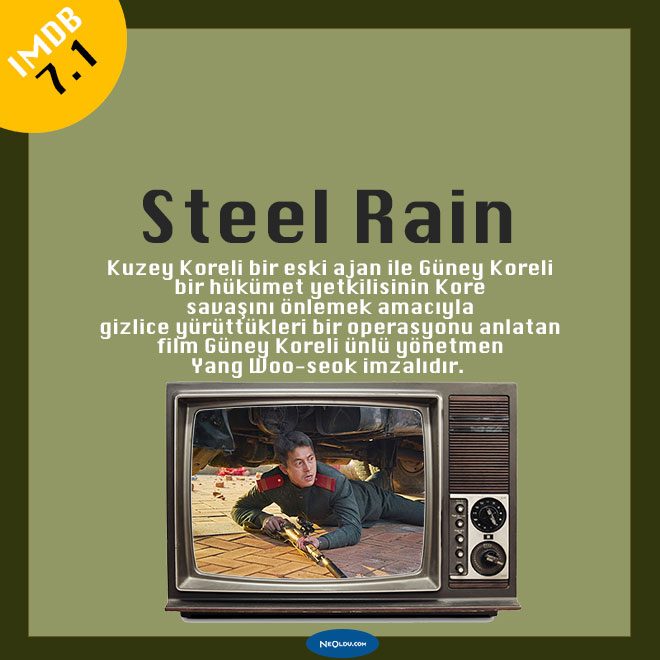
The Quiet Diplomats of DMZ
Forget the explosions and the trench for a moment. The real thrill in this movie isn’t just the bullets. This is the story of the terrifying silence between two men who spent their lives being lied to by their own governments.
Yang Woo-seok, the director of South Korea’s most fascinating thrillers, does an unusual trick here. He takes a story that could easily devolve into generic spy nonsense and grounds it in harsh bureaucratic reality. The premise of the story is deceptively simple. A rogue North Korean defector and agent who knows too much crosses the border into South Korea. He reached out to exhausted South Korean government officials. They are not doing this for the flag or the national anthem. They do this to prevent a war that neither side seems to want, but in which both sides seem to be stuck.
It’s a tightrope act without a net.
Released in 2017, this movie was a success in theaters as well as theatres. Its implementation caused a sensation throughout the industry. It received rave reviews from critics and audiences, cementing its place as one of the best far east films of the decade. Why? This is because the Korean War is not considered a footnote in distant history. It treats it as an open wound that never quite scabbed over.
Chemistry is life or death.
The North Korean defector played by Jung Woo-sung is cold and empty. he is not a hero. He was a man who saw the machines of his country grinding people to pieces and decided to stop. Opposite him, Kwak Do-won plays the South Korean official with a fatigue that feels heavier than any weapon. You can see decades of suspicion in his eyes. they are not friends. They are not allies in the traditional sense. They try to prevent disaster while their governments watch with suspicion or, worse, indifference.
Kwak Kap-su adds even more complexity and reminds us that there is no such thing as a clean side in this world. They are just trying to survive the fallout of the choices made by others.
A sharp combination of genres. This is a war movie in the sense that the threat of conflict looms in every scene. But this is also a thriller, driven by the ticking clock of political maneuvering. You know the stakes. If these two fail, millions of people could die. However, Yang Woo-seok kept the camera close and intimate. When violence occurs, it is sudden and brutal, not glorious. It serves the story, not the other way around.
At first glance, an IMDb score of 7.1 may not seem very high, but in the context of a political thriller, this is a solid indicator of quality. This shows that the film resonates with discerning viewers who values substance over spectacle. This is not a movie you watch to forget your problems. The film looks at the delicate and often absurd diplomatic machinery and makes you wonder what really keeps the peace.
Could the greatest battles take place not on the battlefield, but in a windowless room? This movie certainly thinks so.
The execution is tight. No scene is wasted. No filler. Just the two of us, a secret and the terrifying possibility of being too late. History is a stark reminder that it is not.

30. I Can Speak
South Korean cinema has always had a knack for dressing up horror in domestic drama, but I Can Speak flips the script entirely. Released in 2017, this isn’t a ghost story or a slasher film. It is a comedy-drama that tackles one of the most sensitive subjects in East Asia: comfort women.
The film stars Na Young-sil, played by Yeom Jeong-eun. She is an 80-year-old woman who spends her days baking tangerine cookies and dealing with a grandson who is a bit of a mess. Her grandson, Kim Min-ho (played by Lee Min-ho ), is a rising star with an ego the size of Seoul. He is rude, dismissive, and refuses to listen to his grandmother’s stories about her past.
The turning point comes when Na Young-sil decides she wants to learn English. Not for travel. Not for business. But to deliver a testimonial at the US Embassy. She wants the world to know what happened to her and other women during the Japanese occupation.
Min-ho is horrified. His career is on the line. He doesn’t want a scandal. So, he agrees to tutor her. This sets up the film’s central dynamic: a spoiled celebrity and a stubborn elderly woman, forced together by duty and eventually by empathy.
Why the Title Matters
The title I Can Speak is literal and metaphorical. For decades, these women were silenced. They were told to forget, to shame themselves, to keep quiet so the nation could move on. The act of learning English becomes their weapon. It gives them a platform that transcends language barriers. It allows their stories to reach an international audience that might otherwise ignore them.
The Performance That Carried the Film
While Lee Min-ho provides comic relief and growth, the heart of the film lies with Yeom Jeong-eun. Her performance is raw. She isn’t just playing a victim. She is playing a survivor who refuses to be erased. There are moments of genuine humor—her attempts at English slang, her clashes with Min-ho’s assistant—but they are undercut by the weight of the subject matter.
The film doesn’t shy away from the brutality of the past. Flashbacks to the comfort stations are harrowing. They are not shown for shock value, but to contextualize the trauma that defines the present. The contrast between the bright, modern Seoul and the dark history it tries to bury is stark.
Where It Fits in Pop Culture
- Genre: Comedy / Drama
- IMDb: 7.2
- Director: Kweon Soo-hyeon
- Release Year: 2017
- Key Cast: Yeom Jeong-eun, Lee Min-ho, Kim Go-eun
Kim Go-eun, as the activist Kang Mi-rim, adds a layer of youthful idealism. She challenges Min-ho’s superficiality and pushes Na Young-sil toward her goal. The trio represents different generations, all grappling with history in their own way.
The film was a box office hit in South Korea, proving that audiences were ready for this conversation. It wasn’t just entertainment. It was a cultural moment. It forced

Park Min Jae is a civil servant. He was transferred to the countryside. There, an old woman needed help. She wants to learn English. The teacher was reluctant at first. However, they develop an unexpected friendship. I Can Speak (2017) captures this dynamic perfectly. The director of this movie is Kim Hyun-seok. It combines humor with heavy social commentary on aging and loneliness.
The story resonated with the audience.
It has a high score of 7.4 on IMDb.
The actors anchor the emotional weight. Na Moon-hee plays the determined senior.
Park Cheol-min and Lee Jehoon play supporting roles. This movie was released in 2017 and is a standout among Korean movies.
The Weight of 1987
But there is another title on the list. One that hits harder. 1987: When That Day Comes changes the tone completely. This is not a lighthearted tale of language lessons. This is a historical drama about democracy.
This movie mainly depicts the story of Park Jong-chul’s death. He was a university student when he was taken into police custody in 1987. His death sparked massive protests. It changed Korea forever. The film recounts the events that led to his death. It also shows the results. Public anger forced the government to hold direct presidential elections.
Why 1987 Matters Today
なぜこの時代が映画に値するのか疑問に思うかもしれない。 答えは簡単です。 それは現代韓国の民主主義の基礎です。 1987年の抗議活動がなければ、この国はまだ軍事政権下にあったかもしれない。この映画は、普通の人々がどのように立ち上がったかを示しています。 学生、聖職者、労働者が団結します。 彼らは残忍な警察国家に直面した。
物語は複雑です。 複数の視点を使用します。 警察の取調官が見えます。 検察官が見えます。 私たちは悲しんでいる両親の姿を目にします。 この複数の視点からのアプローチが緊張感を生み出します。それは権威に疑問を抱かせます。 また、真実のコストも浮き彫りになります。
Comparing the Two Films
我会说话 和1987 似乎无关。 一部是喜剧。 另一部是政治惊悚片。 然而,他们有一个共同的主题。 两者都处理语音。 在《我能说话》中,一位边缘化女性通过语言找到了自己的声音。 1987 ,一个沉默的国家通过抗议发出了自己的声音。
对比是鲜明的。 朴敏载的旅程是个人的。 1987 的故事是集体的。 两者都很引人注目。 两者都基于真实的动态,即使情节细节有所不同。
Who Should Watch?
如果您喜欢角色驱动的故事,请从“我能说话”开始。 罗文熙的表演令人难忘。 她扮演的角色打破了刻板印象。 这部电影很有趣。 这也是悲伤的。 它挥之不去。
如果您更喜欢历史重量,请观看1987 。 产值很高。 剧本很紧凑。 节奏是无情的。 它让你保持专注。 这部电影既具有娱乐性,又具有教育性。 它解释了历史上的关键时刻。
这两部电影都凸显了韩国人的韧性。 一种是通过个人联系。 另一种是通过集体行动。 他们提供不同的口味。 但深度相同。
这个清单还在继续。 还有更多标题可以
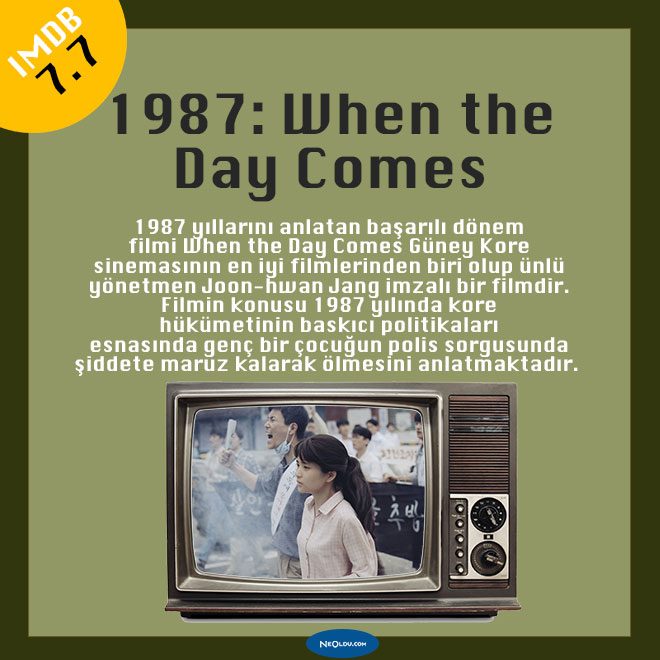
A man without a past
In 1987, South Korea was suffocating under the weight of a dictatorship and fear was in the air. On Jang Jun-hwan’s “When the Day Comes,” the title feels more like a warning than a prophecy, cutting through this melancholy with scalpel-like precision. This is not just a historical drama. This is one of the best Korean movies of all time, depicting an ugly truth that was largely erased from the record.
The story begins with a cruel reality. The boy was arrested during police interrogations. The government’s methods were brutal, to say the least. They didn’t just hit him. They broke him. The child died under their hands. The authorities began to panic. This is more than just death. This is a political liability waiting to explode. So they called. No autopsy was performed. No inquiries were made. Burn the body and pretend nothing happened.
The prosecutor appears. He is expected to rubber-stamp the cover-up and sign the order. But he didn’t. Instead, he became the most dangerous person in the room. He started digging. He pulls the strings that others try to cut. He wanted to know “who” did it, “why” they did it, and “how” the system allowed this to slip through.
This is where the film earns its keep. This is a historical political thriller that refuses to look away. It’s hard to combine genres. Although it’s called Drama and Action, this action isn’t about car chases or gunfights. It’s about silent violence. It’s a story about the physical damage that comes from speaking truth to power. It’s not the explosions that create tension, but the quiet, terrifying realization that the law is being used as a weapon against the very people it’s supposed to protect.
With an IMDb rating of 7.7, viewers are already aware of the film’s impact. But numbers alone don’t convey the importance of what’s happening on screen. The performances of Kim Yoon-seok and Ha Jung-woo (Yoo Hae-jin and Jung Woo-sung also anchor the cast) are both restrained and explosive. You can see the fear in their eyes. You see the anger they have to swallow every single day.
Why is this story important now? Because the mechanism of elimination does not disappear. Only the shape has changed. The film shows the government trying to turn its mistakes into ashes, but ash still settles. It still covers everything.
The prosecutor’s journey is not a straight line. It’s so dangerous. It’s dangerous. He went into a room full of people, knowing that he would be torn apart if he talked to them. But he talked anyway.
There’s a moment in the movie where you feel like you’re sitting around a table. They’re drinking.
Jang’s direction is

The stakes were personal. A young girl. Snatched by the mob. Her mother had dipped her toes into the drug trade, and the syndicate decided the child was the perfect leverage. She was gone. Taken from the only life she knew.
Enter Tae-sik.
He isn’t the same man he used to be. Once a highly skilled agent, he’d since retreated into the shadows. Quiet. Distant. Sitting in his corner, letting the world blur by. He had cut every tie to his past. Or so he thought.
But this little girl? She mattered to him. Maybe because he saw himself in her vulnerability. Maybe because the mob’s cruelty struck a nerve he thought he’d numb years ago. Either way, he couldn’t just sit there.
He made a call. Demanded her return. Simple, right? Hand over the girl, walk away.
The mob didn’t care. They laughed. Or worse—they ignored him.
That’s when the old Tae-sik woke up.
The polite ex-agent vanished. The killer emerged.
The Action Is Raw and Unforgiving
This isn’t a polished superhero romp. It’s gritty. Real. The action feels heavy, like every punch carries the weight of years of regret. Director Lee Jeong-beom keeps the camera close. You feel the impact. You hear the breath. It’s visceral.
The genre blend works because it grounds the spectacle. It’s not just fists flying. It’s police procedure colliding with underground crime. The lines are blurry. Corrupt cops? Sure. Ruthless gangsters? Absolutely. The moral compass spins, but Tae-sik’s doesn’t. He’s focused. One goal. One target.
The 2010 release date matters. This was right in the sweet spot of Korean action cinema’s golden era. Post-Oldboy, pre-The Man from Nowhere. It had that same desperate, emotional core but with a rawer edge. Less stylized, more desperate.
Who Played Who?
The casting isn’t about star power. It’s about presence.
Kim Won-bin leads as Tae-sik. He doesn’t need to speak much. His eyes do the work. You see the trauma. The skill. The sudden, violent awakening. He’s understated until he isn’t. And when he strikes, it’s devastating.
Kim Tae-hoon brings the heat as the antagonist force. He’s not just a thug. He’s a symptom of a broken system. Cold. Calculated. He understands the value of the girl. Not as a person, but as a tool.
Sae-ron plays the kidnapped child. Her silence speaks volumes. She’s small. Terrified. But she’s also the catalyst. Without her, there’s no story. Without her, Tae-sik stays buried.
Why It Holds Up
Years later, it still lands. Why?
Because it’s simple. A man. A mission. No convoluted plot twists. No government conspiracies that require a whiteboard to follow. Just cause and effect.
The mob takes. Tae-sik takes back.
The IMDb score of 7.8 tells you


